What do you get when you collect some of the synth industry’s top people, and bring them into a new company devoted to pushing digital synthesis to its limits?
You get Ashun Sound Machines.
Do you know this brand? ASM are making synth lovers go nuts, frankly. As a fellow synth lover, I fully get it. Affordable, portable synthesizers that are feature-laden, go deeper than the competition, offer new ways to achieve and express sounds, and yet are still pretty straightforward to use? I’m interested!
Today, I’ll briefly introduce you to the brand, and shed some light on why they’ve created such a buzz both across the scene and within the industry.
What are ASM Synthesizers?
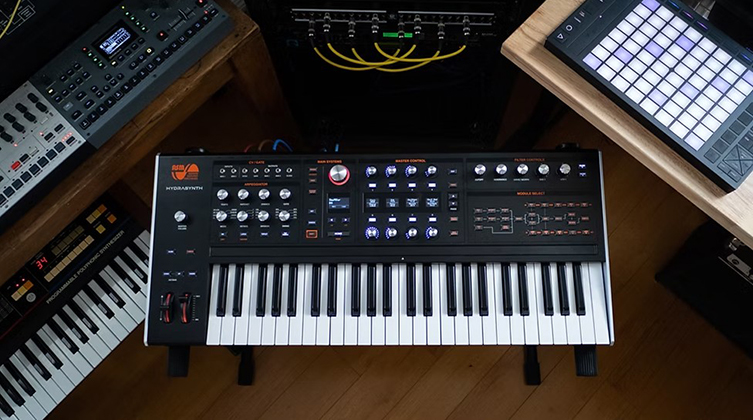
ASM synthesizers are a fairly new brand of digital synthesizer, created from the ground up with some exciting and innovative features. The main focus is on their flagship synth, the Hydrasynth, which I’ll show you in just a second.
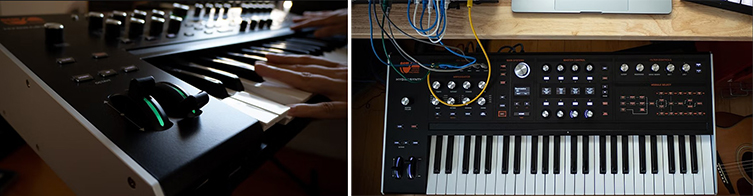
ASM are a hardware synth brand, so they make keyboard synthesizers, desktop models and portable synths. Software is part of the story for sure (these are fully digital synths, after all) but the emphasis is on physically playing an instrument and enjoying a real time interface of control knobs, polyphonic keybeds (more later) and even a CS80-style ribbon controller!
It’s impressive stuff on paper, but of course the real story of any synthesizer only happens when you get your hands on one. The physical design of ASM synths is one of my favourite things about them. They feel solid, useful and ready to go. They invite the player to get involved and make decisions via hands-on manipulation, which is how all the besat sounds happen anyway!
Pedigree
One of the most impressive things about ASM is the team behind the brand. Hand-picked from some of the best companies in the synth industry, there is an incredible pedigree of talent involved, all working to squeeze the most out of every opportunity offered by the hardware and DSP.
I’m talking about people who were significantly involved with Arturia’s Minibrute and V-Collection (and Arturia generally), AKAI MPC units, ex-Elektron staff and product specialists for Novation! There’s an ex-Alesis sound designer on board, and several team members who both DJ and create their own electronic music.
In terms of a collective CV, that’s about as impressive as it gets! Several of these brands are market leaders with countless innovations to their name, so to have them working together under one roof is a beautiful thing indeed.
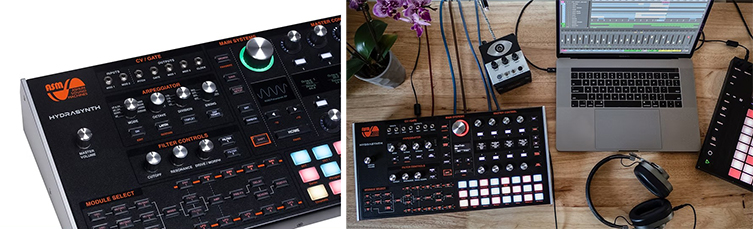
What Does ‘Ashun Sound Machines’ Mean?
So, what does the company’s name even mean? It’s a good question, and one I had to do a little investigating to find out. The ‘Sound Machines’ bit is self-explanatory, but to understand the ‘Ashun’ part, it’s helpful to know a term called Pinyin Transliteration. Sounds fancy, but it’s also relatively straightforward. This is an official system that’s used to write out Mandarin Chinese sounds using our western Latin alphabet. In other words, it uses letters from the Roman alphabet to approximate the sounds of Chinese words. Pinyin exists because Chinese isn’t a phonetic language, so this method allows people who are more familiar with words looking how they sound to understand Chinese.
As for the word ‘Ashun’ itself? It relates to a company owned by ASM’s parent company, Medeli. From what I can get, it’s pinyin of this word: 阿顺 . The first part is an ‘affectionate prefix’ and the second figure can mean ‘smooth, favourable or obedient’. So, is it maybe Obedient Sound Machines? Favourable Sound Machines? I’ll admit, I’m not sure.
Now that was a long way of saying ‘it doesn’t mean too much’!
The ASM Hydrasynth
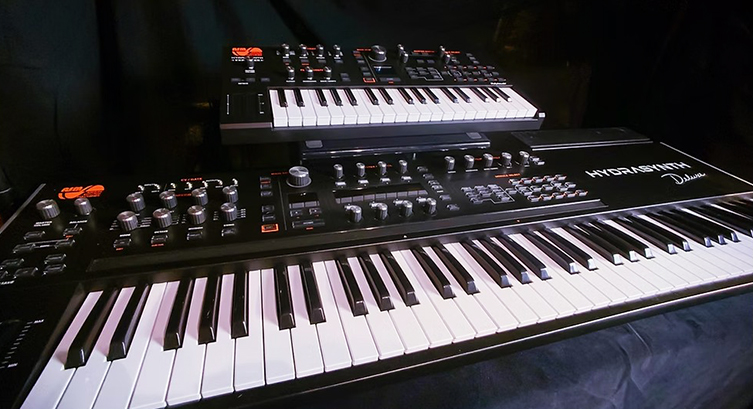
The ASM Hydrasynth is the centre of Ashun Sound Machines’ universe. Available in 4 forms - Keyboard, Deluxe (still a keyboard), Desktop and the more compact Explorer, the Hydrasynth brings together a very interesting selection of elements, and a dual sound engine that allows you to go as deep and extreme as you feel like going.
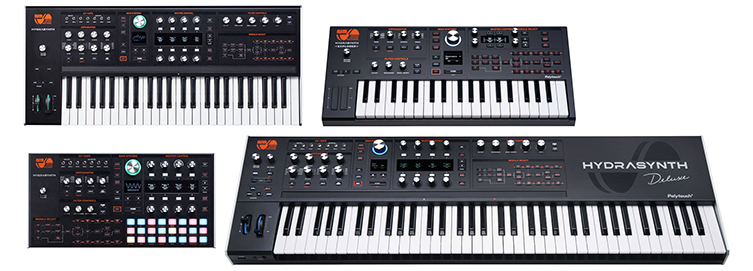
- Dual Sound Engines: It’s a 16 voice synth, but that can be split into two 8 voice synths (either split or layered), each with their own fully editable parameters AND their own balanced outputs.
- Wavetables: the architecture is built on wavetable synthesis, and there are 2 filters on board that can be applied in series or parallel.
- 3 oscillators with Wavemorphing: choose each oscillator from 219 waveforms, 2 of your 3 oscillators have wavemorphing capability, where you can line up 8 different waveforms in your preferred order, and have them morph from one to the next. You just do not see this level of depth in most synths!
- Polytouch keys: More on this below, but we are talking about polyphonic aftertouch on all keys here!
- Amazing control: as well as the usual pitch and mod wheels, the Hydrasynth has a pretty excellent ribbon controller above the keybed that covers four octaves! This is a big thing for a lot of players who want more expression in their sounds.
- Intuitive interface: despite all of this power, the Hydrasynth is pretty straightforward to understand and operate. There’s very little menu diving and no feeling of overwhelm when learning new functions.
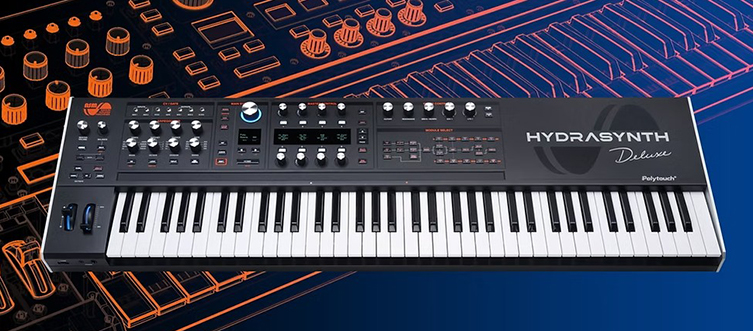
That’s just the tip of the iceberg as well. As a ‘brain’, it's a very powerful and exciting piece of work. As a tactile piece of gear, they are all pretty exceptional. The Hydrasynth has obviously been a labour of love for the creators: you can tell from using one that they’ve seen both the potential and the problems in the gear they’ve used before, and gone out of their way to fix those problems with the Hydrasynth.
Polytouch
Polytouch is a proprietary concept/invention from ASM and it is applied to all Hydrasynths with keybeds. Interestingly, the technology also appears on Korg’s Keystage controllers, which is an immediate green flag: if your competition wants your tech, then it’s good tech!
Polytouch is basically polyphonic aftertouch on all keys, using a keyboard that is specially engineered, assembled and calibrated for it.
Now, polyphonic aftertouch is not in itself a new concept. The difference here with Polytouch is in the feel: older keyboards with polyphonic aftertouch often felt soft and mushy under the fingertips, which then meant something of a compromise in terms of general playing. The meticulously crafted nature of the Polytouch keys gets rid of that squirm-factor and makes polyphonic aftertouch an enticing proposition again. Sound designers rejoice!
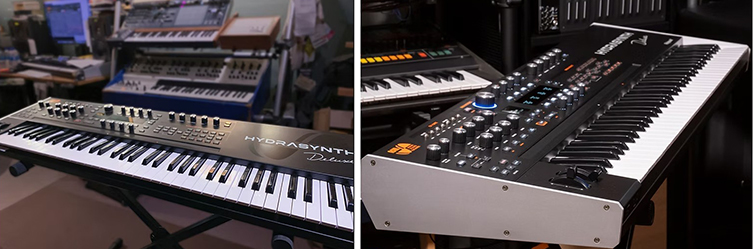
ASM: Inspiring Sound Machines
This little skip through some of ASM’s main attractions is hopefully enough to get you excited about the brand. They are doing genuinely interesting things in an area where lots of brands tend to rest on their retro laurels.
They have the right people, the right ideas and the skill to put it all together into an inspiring collection of instruments that are just ready for visionary music makers and sound designers to take advantage of.
Why not let that be you?
Click to View our ASM Synthesizers