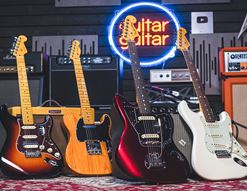
‘The Fender Sound’. There is definitely such a thing as the Fender sound, isn’t there? Bright, jangly, expressive and dynamic, it’s one of the fundamental cornerstones of electric guitar sound. Whether you play a Strat, Tele, Jazzmaster or any of their other classic guitars, each one presents a variation on that inimitable sound.
Today, I’d like to zoom in on one important element of that sound: the pickups. Fender are pioneers in this field, and have a relatively large variety of pickup types in their guitars. I’ll check out the main designs, and discuss significant variations and editions that have helped create the Fender sound over the decades.
I feel like the easiest way to attack this is to go by guitar model, and refer backwards when I’ve already covered a particular angle. That way, I can talk about them in a specific context - the pickup being inside a Strat, Tele or whatever - and that’ll hopefully make my text connect more effectively with you as you read.
Okay, Fender lovers, twang this way please!
What is a Pickup?
In simple terms, a pickup is the part of the guitar which ‘picks up’ the movement of a guitar string and transforms that into an electrical signal. We manipulate that signal in various ways (volume, filters, gain, pedals etc) and the end result is our electric guitar sound.
Pickups can generally be said to be passive or active. Passive pickups require no additional power in order to work, and are the older, original method. Most of what I’ll talk about today regards passive pickups. Active pickups are made differently, have a somewhat different agenda (more output, less background noise or both) and require extra power via a source such as a 9-volt PP3 battery. Again, that’s maybe outside today’s focus but there’s the info for you anyway!
How do Pickups work?
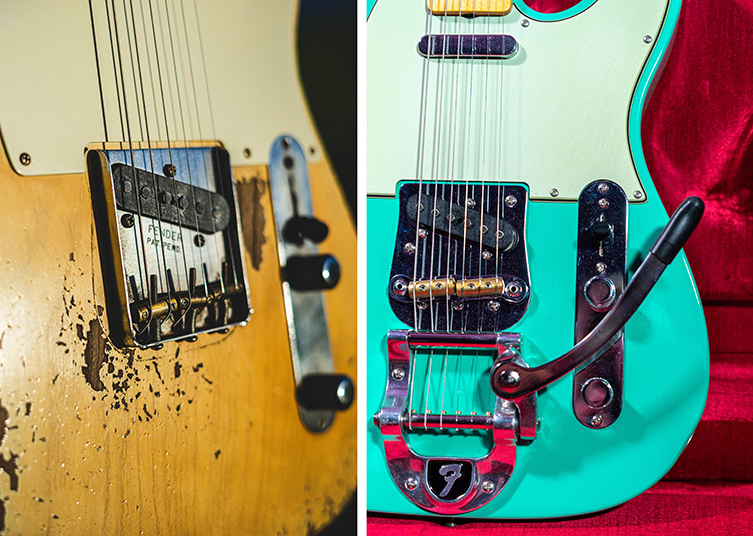
Single coil pickups are just that: a bobbin that is wound with copper wire (to make a ‘single coil’ of wire), and which has magnetic ‘pole pieces’ within the bobbin. You see these polepieces in the Tele bridge pickup, but the neck pickup is hidden by a metal cover. Anyway, the polepieces create a magnetic field around the pickup and string area. You play a string and the energy of the string movement disrupts this magnetic field, which creates a very small electrical current in the copper coil. This travels out of the guitar and into your amp, where it becomes an electric guitar sound.
Humbuckers behave slightly differently, but I’ll address that directly when we look at them.
Telecaster pickups
In its first and most iconic iteration, the Fender Telecaster comprises two single coil pickups. The bridge pickup - what most players will agree makes the classic Telecaster ‘twang’ - is mounted into the metal bridge plate and then onto the solid body. This concentration of metal and wood plays a direct part in translating the string’s energy into a strong, bright tone.
Conversely, the neck pickup in early 50s Teles was made to sound darker on purpose, in order to allow a distinctly bassier sound for contrast when two guitarists used identical guitars. This was achieved by wiring the capacitors in a certain way, but it wasn’t hugely popular after the Precision and Jazz basses took off. By 1968, the wiring had fully become what we know and love today, allowing the Tele’s neck pickup to become warm but full of chime.
Both pickups were made using alnico magnets and relatively low numbers of copper winds, and this combination also plays a part in keeping the guitar snappy and bright sounding.
Custom and Deluxe Teles: The Wide Range Humbucker
In the early 70s, Fender had understood the renewed popularity of the Gibson Les Paul, brought to the fore by British Invasion artists after years of obscurity. Fender needed to compete, and so enlisted Seth Lover, the engineer who created the PAF humbucker for Gibson, to make something for them.
Lover’s response was the Wide Range humbucker, an original rethink on his own design. I’ll talk about regular humbuckers a little later since they factor more with Strats than Teles, but basically, the Wide Range varied from a PAF in both its look and its approach. Instead of having a magnet underneath the coils as humbuckers do, the Wide Range pickup has them through the pickup as polepieces, just as I explained at the beginning of the article with single coils. In this case, the polepieces are made from an alloy known as CuNiFe, which is not a real word at all but a combination of the periodic table codes for copper, nickel and iron.
Wide Range pickups have larger bobbins than humbuckers (hence why they are physically bigger) and more copper windings around each coil since the CuNiFe magnets themselves are individually weak. All of this combines to create a sound which does ‘buck’ the hum, but which does not sound much like a typical humbucker. Wide Range pickups sound more open and twangy, and therefore still very ‘Fender’!
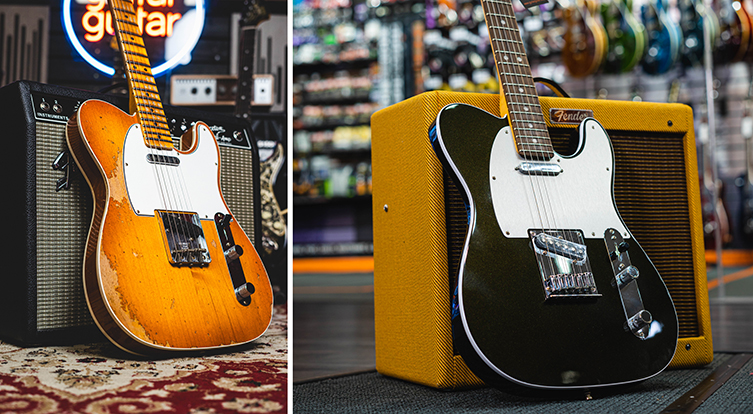
These pickups were made for the early 70s Telecaster Custom, which had one in the neck and a single coil in the bridge; and the Telecaster Deluxe, which had two Wide Range humbuckers and an oversized Strat headstock.

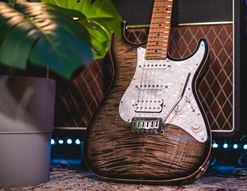
Stratocaster Pickups
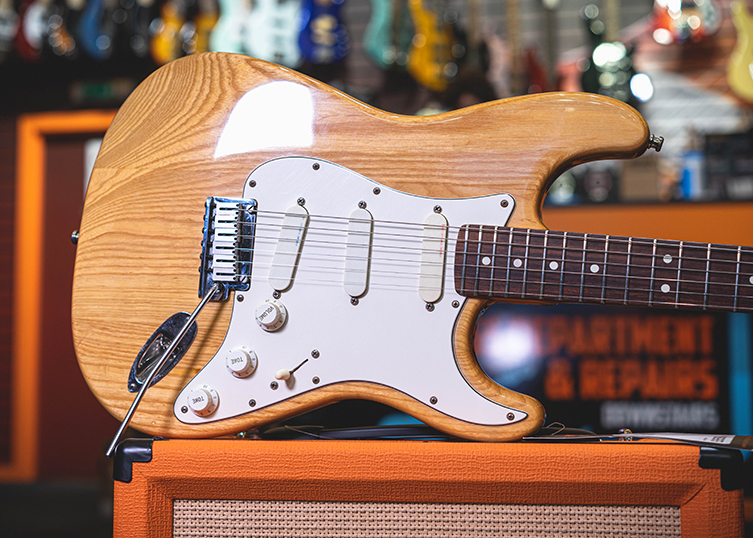
Strat pickups are probably the most definitive sounding of all Fender pickups. For me, when people talk about ‘Fender clean sounds’, it’s mostly a Strat (a 50s one, as I’ll explain) into a Fender amp with a ton of reverb.
Generally speaking, Strat pickups themselves are made in a very similar way to Tele pickups, but they sound ‘skinnier’, particularly earlier examples. Why is this? There are a few reasons, and I’ll briefly outline them here:
- Less windings: As we’ll see, Strat windings can differ significantly, but in general terms, Strat single coils have around 8000 turns of copper wire around the bobbin, compared to roughly 10,000 for a typical Tele pickup. More windings tends to add more output and midrange to a guitar’s sound. Less windings mean more chine and jangle.
- Less wood: Stratocaster bodies are pretty deeply routed out for both the pickups and the tremolo. The tremolo goes right through the body, and some Strats have a ‘swimming pool route’ which means the whole pickup area has had the wood removed. All of this affects the sound, since there is simply less wood to vibrate.
- Different magnetic pull: three pickups, all with their own magnetic pull, mean that there are different forces in play. There’s more of a magnetic field, which means there is a stronger overall pull on the strings. This field is therefore ‘interrupted’ in a different way to the field on a Telecaster, since there’s one pickup less.
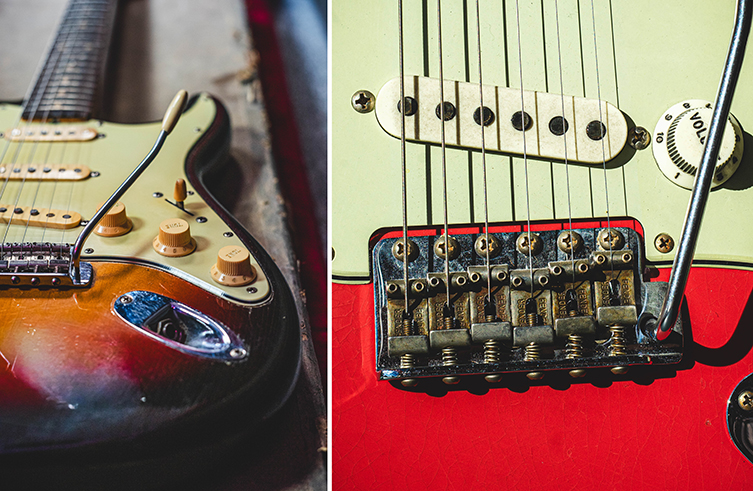
- Mounted onto plastic, not metal: speaking about the bridge pickups here, the metal bridge plate that houses the Tele’s pickup has a large influence on the sound. Again, it's about the magnetic field: the steel plate increases the inductance of the pickup, which increases output, adds lower mids and intensifies that famous Tele cut and twang. Strats don’t have this: their bridge pickup is attached to a plastic pickguard, and the bridge is separate. Those elements add to the Strat’s distinctive ‘hollow’ sound.
50s and 60s Strat Pickups
We live in an age of historic reissues, and when it comes to Fender Strats, the 50s and the 60s are the general eras that most fans gravitate towards. This is partly because they are both ‘golden era’ periods, partly because the 1970s have only recently started to gain collector credibility, and mostly because there is a fairly distinct difference in the pickups from each decade.
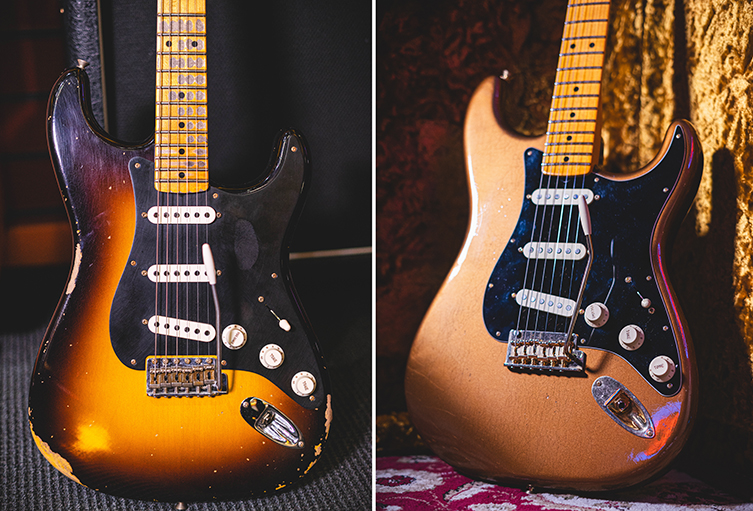
I don’t imagine it happened overnight, but it is generally accepted that Strat pickups in the 60s had more windings around them, resulting in hotter sounds. This is attested to by famous players such as John Mayer and Stevie Ray Vaughan who all prefer 60s Strats over 50s variants, partly due to the hotter sound.
Of course, it’s a matter of taste and perception: with more output, you do lose a little of that famous Strat chime and ‘glassiness’, but we’re talking about small increments here. Both 50s and 60s Strats sound like vintage Strats, after all! What this means is that a 50s Strat will deliver more of that characteristic Strat clean sound beloved of Hank Marvin fans!
Humbuckers in Strats
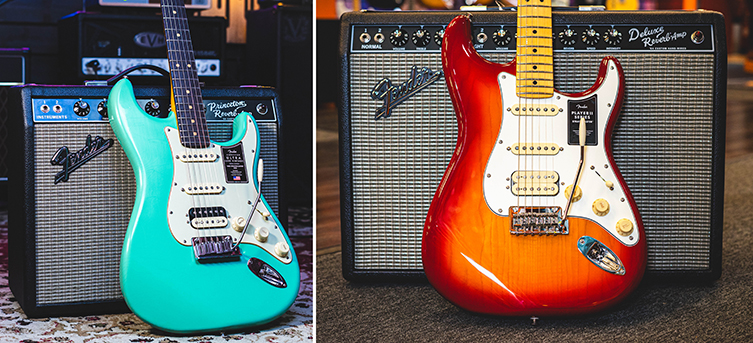
You can largely thank Eddie Van Halen for the explosion of Strat mods in the 80s. He famously built his Frankenstein Strat from various spare parts, and popped a Gibson humbucker into the bridge position. People had been modding Strats for years by that point (MC5’s Wayne Kramer had a middle-position humbucker in the late 60s) but it was Van Halen’s revolutionary approach to playing (and the band’s success) that made him so influential.
Suddenly, everyone wanted their Strats to have a humbucker at the bridge, and the trend has never gone away. We talk about them being HSS Strats (Humbucker-single coil-single coil) and the fact is that they are probably the most versatile electric guitars on the market.
What Actually is a Humbucker?
Briefly speaking, humbuckers were created in order to ‘buck the hum’ suffered by single coil pickups. 60 cycle hum (electromagnetic interference) drove guitarists mad, so Gibson hired Seth Lover (whom we met earlier in this article) to fix the problem. His idea was to put two coils together, with one of those coils wound in reverse with the opposite magnetic polarity. The reverse polarity is what allows the unwanted noise to be cancelled, without also getting rid of the string noise.
The magnets themselves are bars that sit directly underneath the coils, rather than bring the polepieces within the pickups. Steel slug screws pass through the pickups and touch the magnet, which charges the screws to act as magnetic poles.
So, humbuckers are pretty different to single coils, and the resulting tone is thicker, higher in output and mostly free from the annoying hum. Compare what you’ve read here to my description of Fender’s Wide Range humbucker and you can see how different they actually are. Humbuckers sound fat, midrange-rich and very ‘rock’.
Early examples of Strats with humbuckers saw the guitars fitted with pickups by manufacturers such as DiMarzio and Seymour Duncan, but Fender themselves started making HSS Strats in 1984 via Fender Japan. These Contemporary Strats were the first official Strats with humbuckers, and it would be the 90s before any USA-made Fenders were made with humbuckers. Today, they make a high number of humbuckers, often developed by their in-house pickup guru Tim Shaw.
Fender Offset Pickups
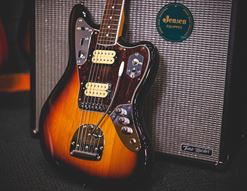
Fender’s most popular offset guitar is the Jazzmaster. Offsets get their name from their body shape literally having an offset - i.e. non-symmetrical - waist. Fender’s offset guitars include the Jaguar, Jazzmaster, Mustang and older variants such as the Duo-Sonic. These are collectively seen as an alternative choice to the mainstream Fenders, which would be the Strat and Tele.
Anyway, offsets have their own pickup designs which differ slightly from what I’ve already covered with you. I’ll briefly go over the basics of each style, so that you’ve got a good understanding of the differences.
Jazzmaster Pickups
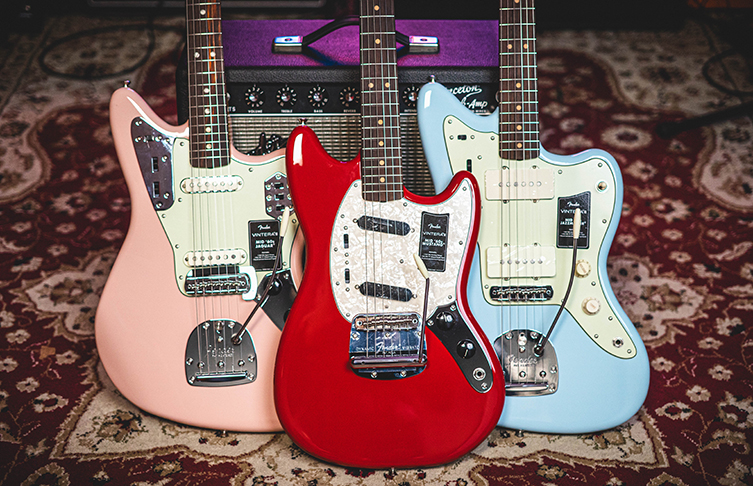
Lots of players see a Jazzmaster and assume that it has P90 pickups. This is not the case! In reality, P90’s are made in a fairly particular way (which isn’t really relevant to Fender guitars), and Jazzmaster pickups are really more like large Strat pickups. They are larger, wider and shallower, as opposed to Strat pickups being narrow and taller. They operate in the same manner, but because the Jazzmaster pickup’s coils are wider, they pick up a larger area of the vibrating string. This means a wider range of frequencies is being picked up, resulting in a fuller sound. It’s still recognisably ‘Fender’, but there’s more body and size to the sound. If Jazzmasters occasionally sound brighter than Strats, that may be more to do with the 1 meg pots used in the circuit rather than the pickups being inherently brighter.
Jaguar Pickups
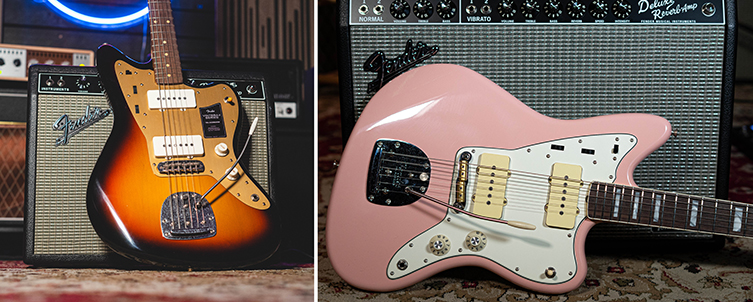
The Jaguar is the most idiosyncratic electric guitar that Fender make, in my opinion. The short 24” scale, dual circuit design, extra switching and unusual tremolo system all add up to make the Jag one unique guitar! This applies to the pickups too, which are slightly different again than standard single coils.
Look at the side of a Jaguar pickup and you’ll see a metal claw contraption. I call these ‘Faraday Cages’ for a laugh, but they kind of do the opposite: they focus the electromagnetic field back towards the strings, resulting in a lively sound. This claw operates in a sonically similar way to the metal bridge plate of a Tele.
Jaguar pickups are also a different shape to Strat pickups - they are more obviously rectangular - so they can’t easily be swapped out for Strat pickups. Typically, Jaguar pickups are also fairly hot in terms of windings and output, so the overall sound is quite distinct.
Modern Fender Pickups
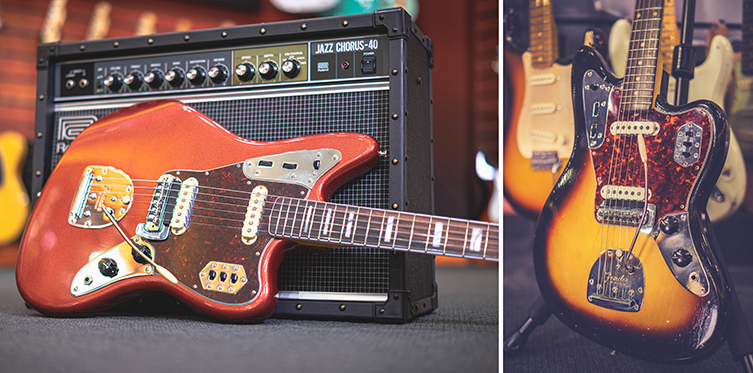
Since Fender are a very retro-embracing company, most of the pickups you’ll encounter will relate to what’s already been written in his article. However, some Fender guitar models are pointed towards the future, and incorporate modern advances in their makeup. Without delving too far into third party pickups, here are a few instances of notable modern Fender pickups…
Fender Lace Sensors
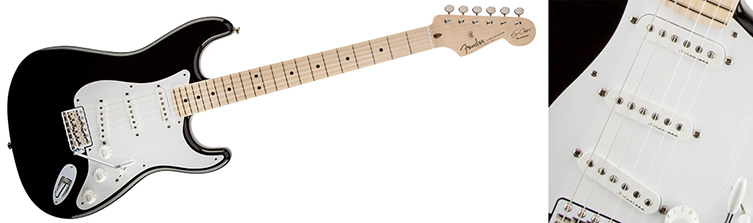
Don Lace created Lace Sensor pickups in 1985, and Fender quickly got involved. Fender had an exclusive contract with them from 1985 until 1996, when the pickups were then made available as Lace Sensors. They are unique pickups, and use several patented inventions to achieve their low-noise single coil sound. Briefly, a Radiant Field Barrier system blocks the 60 cycle hum, traditional bobbins are replaced with Micro Matrix Combs for balanced string output, and 36 individual magnetic sensor fields are used to ‘read’ the string vibration. This is instead of typical pole pieces. These magnetic fields exert less of a pull on the strings, resulting in greater sustain.
Lace Sensors come in various ‘colours’ (the logo indicated the color) with Gold for vintage 50s tone, Silver for hotter 70s tone, Blue for a PAF humbucker sound and Red for a hot bridge humbucker-like tone. These pickups were used in lots of Fender guitars such as the original Strat Plus models, Jeff Beck and Eric Clapton signature Strats.
Fender Noiseless
Fender noiseless pickups were developed by Fender and replaced the Lace Sensors once their contract with Lace was up in 1996. Fender Noiseless pickups are designed to cut the 60 cycle hum, but do not use the same technology as the Lace Sensors at all.
Fender Noiseless pickups are what we call stacked humbuckers, or stacked dual-coil pickups. Basically, two single coil pickups are used, one directly on top of the other. The top coil interacts with the string and captures the string vibration, whilst the one underneath is wound and wired in reverse to buck that hum. This lower coil is positioned low enough to cancel the hum without interfering with the actual string sound. The sound remains single coil in character.
Fender Tone
So, those are the main Fender pickups that exist, without going down the road of naming and describing endless variations of single coils and humbuckers! I hope this has been a useful and illuminating reference for you, and that this article has maybe cleared some fog from the subject!
Fender guitars are famous for a number of reasons, but the sound is the major one. However you approach them, you’ll always get Fender tone from a Fender guitar. Strats don’t sound like Teles, and they don’t sound like Jaguars, but they all share a clear, jangly, adaptable and dynamic sound. It’s just a matter of finding the version that works best for you!
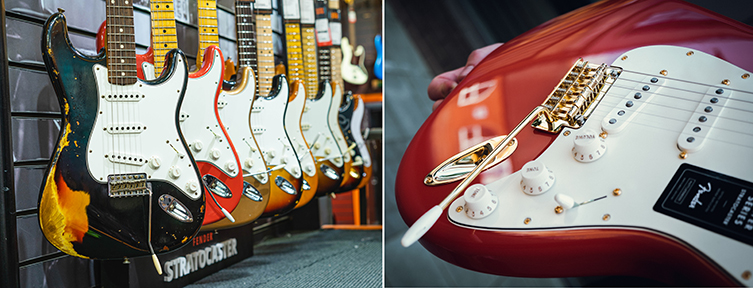
And don’t forget, Fender pickups are available as replacement pickups, too. Change your tone, upgrade stock pickups or just try something new! Hit the button below to see what we have in stock, and browse all of our Fender guitars too.
Click to View our Fender Pickups