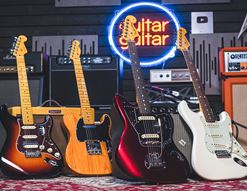
Which electric guitar types are the most versatile? Is there even one simple answer to this question?
I ask this, because I - like yourself, I’m willing to bet - have a number of guitars already, and am always searching out for that one single instrument that does it all. Does such a guitar exist?
That’s what today’s article is about. Versatility is an important factor in guitar choice for most of us, unless we are focusing entirely on one particular genre. Even then, it may be that the best guitar for that genre is something that’s highly versatile! I’ll look at a few things today, but I can tell you from the outset that yes, we’ll get an answer to this question.
What is the Most Versatile Guitar Design?
Some guitar designs are more versatile than others. This is no secret, as some guitars excel at particular sounds (Rickenbackers are a good example here), whilst others are naturally able to cover more ground. I’m going to look at a few versatile guitars today, from a number of manufacturers and at a number of price points. There is one design, however, which stands out as being more useful in more musical styles than perhaps any other guitar…
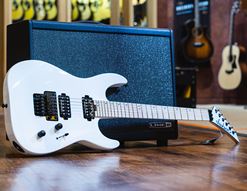
The HSS Strat-style, or HSS S-type. You’ve heard of a Superstrat? It’s kind of like that, but less ‘80s hair metal’ and far closer to a traditional instrument. It just has one particular modification that makes it massively useful…
What is an HSS S-type?
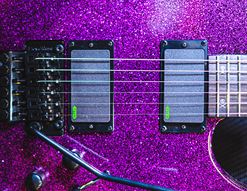
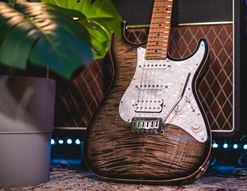
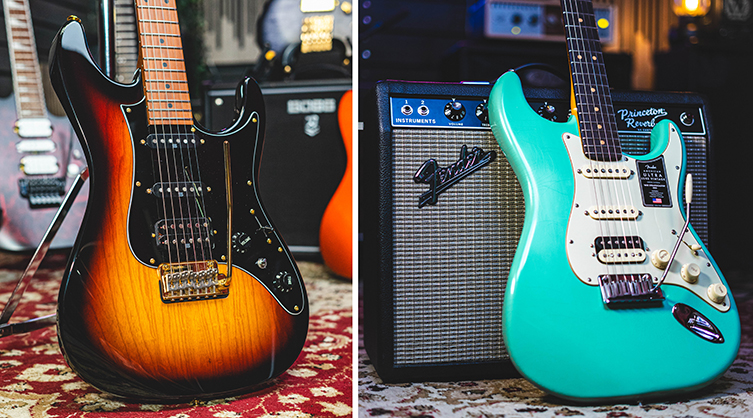
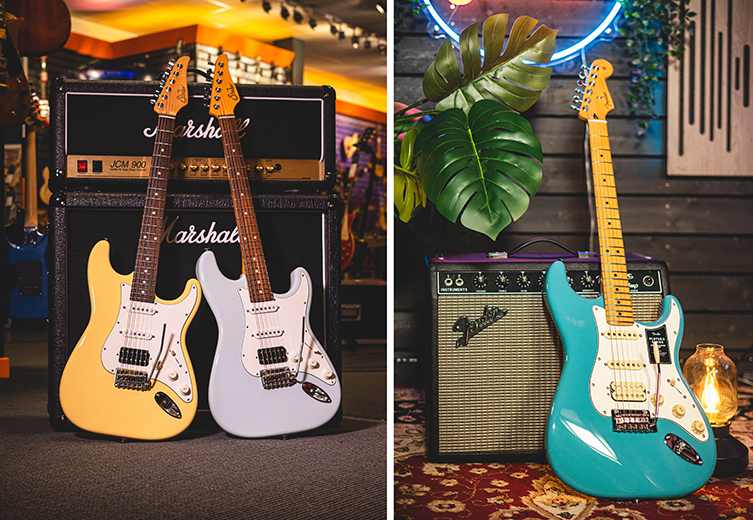
HSS S-type is the nickname we use in the industry for guitars that are built in the mould of the Fender Stratocaster, but that also feature a humbucking pickup in the bridge position. We talk about HSS in relation to the pickups: HSS stands for humbucker/single coil/single coil, arranged with the humbucker replacing the usual bridge single coil that you’d find on a Strat.
We use S-type so that we can include non-Fender guitars of this type in the conversation. Strats and Stratocasters are specifically Fender instruments, so the general name of ‘S-type’ stands in for it when the guitar is made by someone else.
Why are HSS S-Type Guitars So Versatile?
Why are these guitars so versatile? Well, that comes down to the hybrid nature of the instrument. At its heart, you have a Stratocaster, or S-type. This is already a uniquely versatile instrument, with its broad selection of sounds from 3 pickups and a 5-way selector allowing more tones than most other guitars. All of these sounds are expressive and full of character, thanks to the pickups themselves, the build style (bolted-on neck, lots of body routing for the tremolo bridge) and the inclusion of a tremolo/vibrato/whammy bar in the bridge design.
From pop to blues, jazz to funk, rock to heavy rock, there’s very little that can’t already be achieved with a Strat. Adding a chunky, thick, powerful sounding humbucker to the bridge only increases the versatility: hard rock, to my ears at least, is always more satisfying and convincing when humbuckers are involved.
Indeed, lead guitar playing in general requires a level of output and sustain that is difficult to achieve without a humbucker. So, with the selection of sounds available, the extra expression afforded by the whammy bar, and a useful set of volume and tone controls onboard, there’s really nothing the HSS S-type can’t do!
So, which one should you be checking out? Let me introduce you to a few…
HSS S-Type Buying Guide
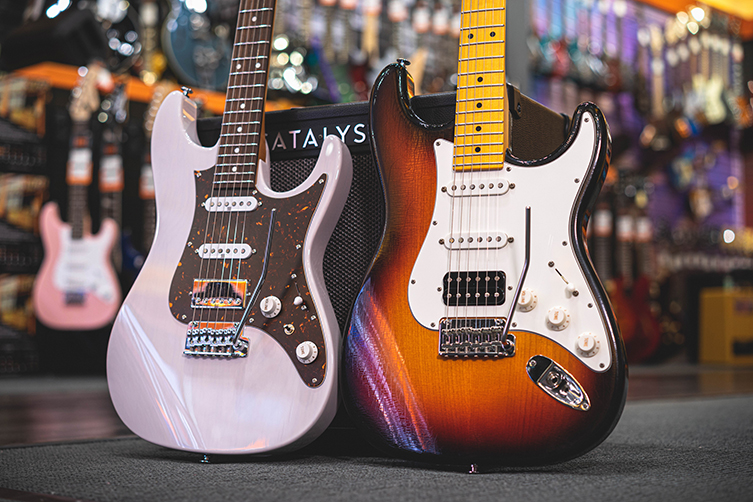
There are absolutely loads of good HSS Strat-types out there, far more than any article could hope to cover. I’m going to curate a small selection of guitars here for you though, ones that I believe will give you an understanding of how this style fits into different brands. I’m choosing different price points for this blog - for example, the two from Fender represent ‘very affordable’ and pretty high-level - so that it’s less of a direct comparison and more of a ‘this is what’s out there’ type of situation. They are all personal recommendations from me to you, though.
Fender Standard Stratocaster HSS
This first model is from Fender’s cheapest F-logoed guitar range. The Fender Standard Stratocaster HSS is Indonesian, which isn’t something you’ll often find from this brand. Guitars from Indonesia are better than ever, and less costly to produce than those from Mexico or California, so this makes sense from Fender’s point of view: they can offer these guitars to the market at prices that Mexican-made guitars can no longer hit.
The Fender Standard range, then, is very affordable, and occupies that ‘modern/traditional’ space that Fender often employ on their non-retro instruments. A small selection of classic styles is available, but our eyes are fixed on the HSS Strat of course! 22 frets, a 9.5” fingerboard radius and C-shaped neck carve all deliver the expected ‘regular Fender’ feel, and it’s one that’ll satisfy most guitarists.
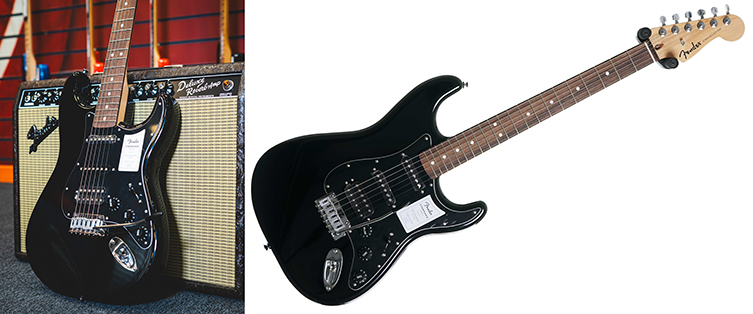
This HSS Strat is a consistently good performer, with the ceramic pickups (for both humbucker and single coils) preferring a little bit of overdrive to start really coming into their own. So, you might not get authentically pristine Hank Marvin chimes out of this one, but then if that’s what you were after, there are MANY other Strats that’ll cater to those needs!
For players on a relatively tight budget, but who still want that authentic Fender outline and logo, this is the first choice. It’s versatile and will get you through the gigs with style.
Fender Ultra II Stratocaster HSS
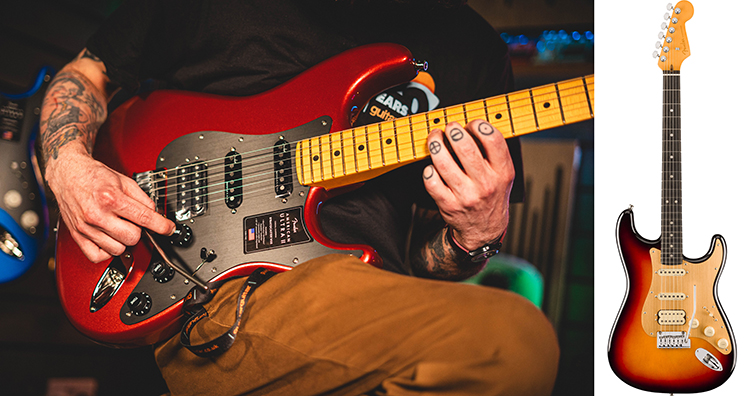
Jumping quite significantly forward into the top-range Ultra II series, we have a great example of modern USA Strat building. Fender’s Ultra II series is for the guitarist who wants their guitars to conform mostly to classic looks, but they need more ‘performance’ features built in. By that, I mean compound radius fingerboards, modern D-profile neck carves and noiseless pickups.
Because this Ultra II Strat is an HSS model (Fender do it with three single-coils too), you also get the Tim Shaw-designed Haymaker humbucker, a moderately hot pickup that covers all bases well without losing balance with the other pickups. There’s also an S1 switch here, which is almost hidden, built into the volume control knob itself. This feature’s function can vary from Fender to Fender, but on the Ultra II Strat, it brings in the neck pickup to whichever pickup selection you’ve made. This means you can have the bridge humbucker and neck single coil on simultaneously, which is useful as well as unique!
These Strats are the best that you can get from Fender before venturing into Custom Shop territory. They have cool finishes, anodised pickguards, and a great feel that matches their unsurpassed versatility.
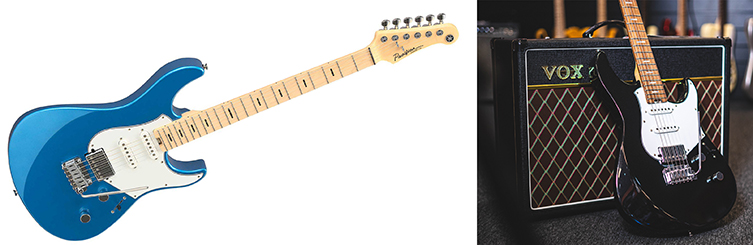
Yamaha Pacifica Standard Plus PACS+12
Rupert Neve is one of the music world’s most revered audio engineers. His Neve mixing desks are guarded like Holy Relics in the few recording studios lucky enough to have them, and his work is heavily replicated by other brands.
I say this because it is none other than Rupert Neve who has collaborated with Yamaha to create the new Reflectone pickups that you’ll find on some of the more expensive Pacifica guitars. If you’re one of the many who thought that Pacificas were merely great beginner guitars, it’s perhaps time for a reassessment!
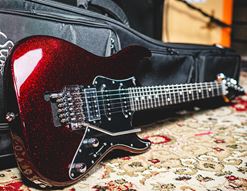
I’ve chosen the Pacifica PACS+12 today, in order to represent a pretty large range that goes in both directions, price-wise. The original Pacificas were developed in Los Angeles in order to supply the LA session scenesters of the day with the ultimate ‘Superstrat’ which wasn’t neon green with a pointy headstock. That design brief largely continues today, with a range of guitars that are similar to Strats but distinctly leaner looking.
The PACS+12 is in the mid-to-upper reaches of the Pacifica line. It’s impressive, with hardware from Gotoh and Graphtech alongside those exclusive Reflectone pickups. Build, fit and finish are typically high (it’s a Yamaha after all) and there’s a push-pull coil split in order to get even more out of those Neve pickups.
For the guitarists who want to carve their own path and not follow the herd, the Yamaha Pacifica PACS+12 is a wise and learned choice.
Ibanez AZ24P1
Ibanez are another company with iconoclastic charm, despite the fact that they are one of the biggest guitar brands in the world. For most of their history, Ibanez have made a virtue out of not copying other brands as much as they’ve adapted popular ideas into their own steadfastly well-made, slightly eccentric designs. This is an attitude that has made them one of the ‘top three’ in many respects, and this Ibanez AZ24P1 is ample proof of that.
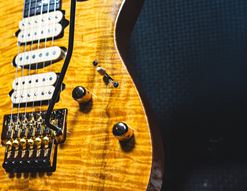
Look at the body and it’s close to being a standard S-type, but there is a twist in the shape. Look at the top and on this model you’ll see a genuine quilted maple top alongside a very cool and unique colour scheme.
More significantly, check out the spec and you’ll find custom-made Seymour Duncan Hyperion pickups (very cool), Gotoh bridge & tuners, and a general level of excellence. This is from the brand’s Indonesian-made Premium series, which sits above the Standard range and below the Japanese-made Prestige guitars.
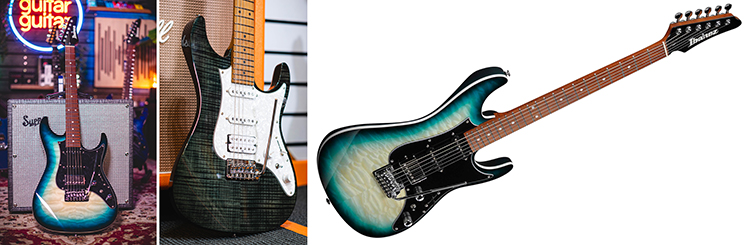
An HH (two humbuckers) model AZ42 was one of our favourite studio guitars here in the office for years, so I can tell you with some confidence that these are excellent instruments, with an obscene level of versatility on offer. And those pickups! Expressive, dynamic and just everything you’d reasonably ask for from a guitar that’s designed to cover a lot of ground.
Other Versatile Electric Guitars
So, I’ve hopefully sold you on the notion that an HSS S-style guitar is the way to go for maximum versatility. I believe they are, but that doesn’t mean that every other guitar is a one-trick pony by comparison. Here is a brief shout-out to some other readily available guitar styles that are more versatile than you may first expect…
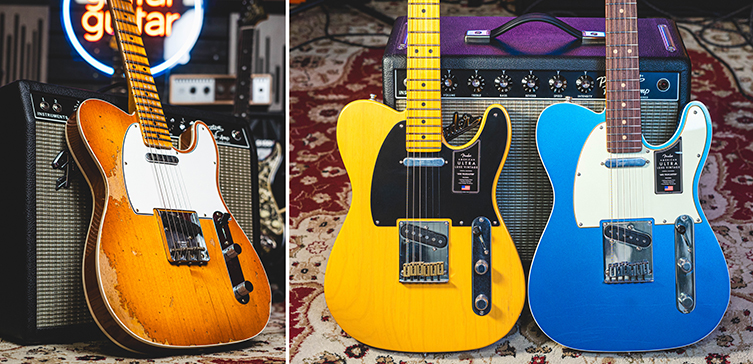
Fender Telecaster: the humble Tele is one of the most versatile guitars around. Tougher sounding than a Strat and sharper than a Gibson, both of these elements can be tamed by simply working the volume and tone knobs. If you don’t need a tremolo arm, then a Tele might be your ideal choice.
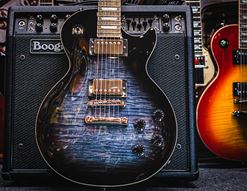
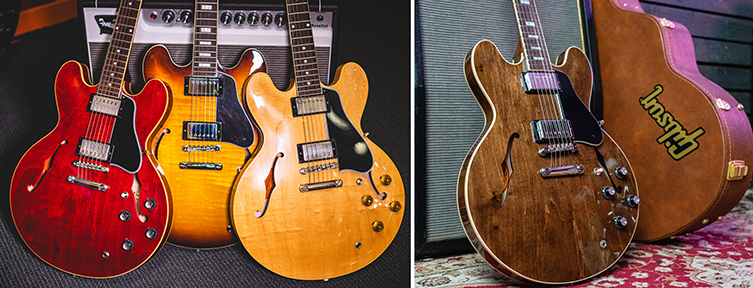
Gibson ES-335: the gorgeous 335 is a more versatile instrument than you think. The sound is gentler than a Les Paul or SG but just as big, with a sonorous voice that carries sustain easily. It’s good with clean funk, wooly jazz, crunchy indie, soulful blues and classic rock.
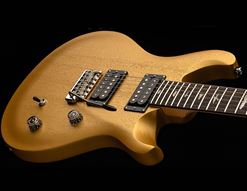
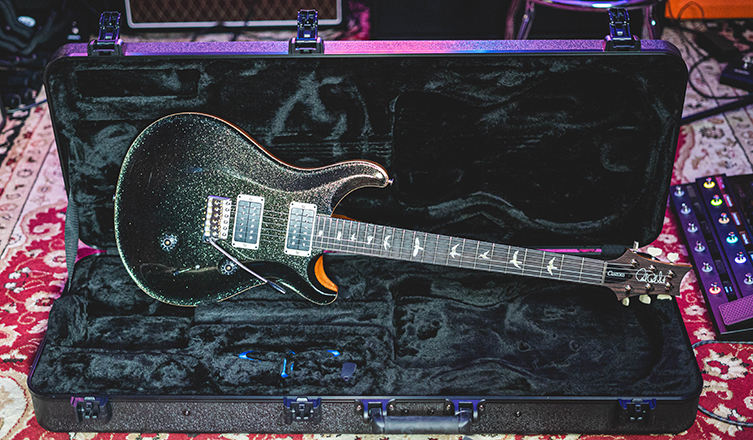
PRS Custom 24: designed expressly as a middle point between the Strat and the Les Paul, the PRS Custom 24 is one of the few guitars that has successfully achieved that tough balance and found acceptance in the market. By pinching the best bits from both Fender & Gibson, and striving to be neither, the Custom 24 is the definition of a versatile modern day classic.
The Case For Versatile Guitars
Are you the sort of player who likes the guitar to ‘play them’ somewhat? As in, the instrument does not bend to your will, but makes you fight it a little in order to get the best from it? I can see the attraction in that for sure, and in a world where homogenisation is more and more rampant, I think there’s something to be said for choosing certain guitars for the one job they do well.
But, having said that, I also think there is something incredibly liberating in owning a good guitar that can take anything you can throw at it and make it sound sweet, correct and musical. It takes versatility for that to happen, and some guitars just have more of that built in than others. Versatility means not stopping mid-flow to change guitars; it means not compromising for the sake of a certain look; it means being able to articulate exactly what you want to say, with a voice that has authority in every subject.
That’s worth having for sure, isn’t it?