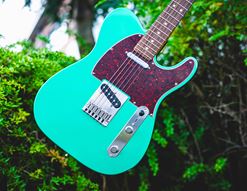
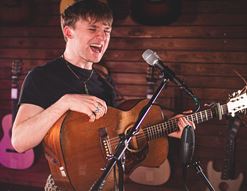
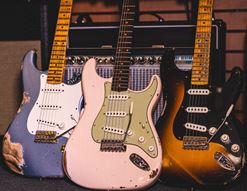
What’s your favourite Gretsch guitar? We all have one, don’t we? They are such indecently good looking guitars, and they have such a cool, unique sound, that us guitar fans just can’t help but love them.
But what’s the story of Gretsch? That’s what I aim to explore today in this brief history. Nothing huge and heavy, just a light skip through the last century (and then some) of one of the world’s favourite guitar brands.
Whether you’re a country picker, a punk strummer, a moody goth or a rockabilly twanger, you’ll be into this blog, so grab a comfy space and let’s find out about that ‘great Gretsch sound’!
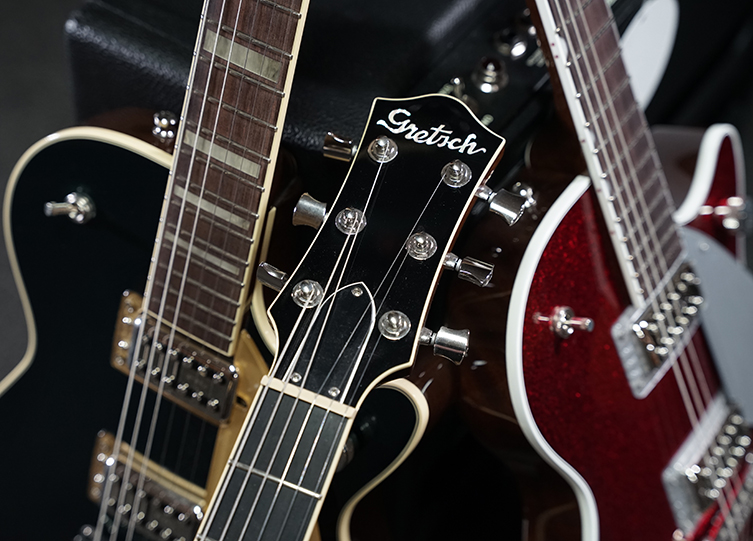
1883 - One Man’s Dream
The story of Gretsch begins way before the story of their guitars, or even electric guitars in general. We need to go back to 1883, a couple of decades after the end of the American Civil War. We’re in the middle of the Wild West, date-wise, but staying firmly East for this part of the story!
A young man named Friedrich Gretsch arrives in New York, a 27 year old immigrant from Germany. Friedrich sets up shop in Brooklyn, building and selling banjos, drums and other percussion instruments. The shop is a success, though Friedrich sadly won’t live long. By the time of his death in 1895, he has bequeathed his business to his teenage son, Fred, who appears to be a chip off the old block, as they say. He knows his business, and had a head for expansion. By 1916, the Gretsch company has become a full 10 story premises in Broadway, importing instruments from all over the world.
Business is good, and a post-World War One climate sees the world wanting more music. Gretsch reacts to demands from the public and begins making and selling hollowbody archtops in the 1930s. There is competition from other NYC guitar makers such as Epiphone and D’Angelico, but Gretsch holds its own.
1950s - Electric Guitars and Chet Atkins
The 1950s brought with it the dawn of rock ‘n’ roll, of course, and a whole new post-WWII culture that pointed at an optimistic future. This new rock ‘n’ roll sound needed electric guitars and so Gretsch began creating some of what became history’s most beautiful looking electrics. Their ‘Atomic Age’ designs were clearly original, and also paid stylistic debts to both their own archtop guitars of the 30s, and the trappings of the Art Deco period from a few decades before.
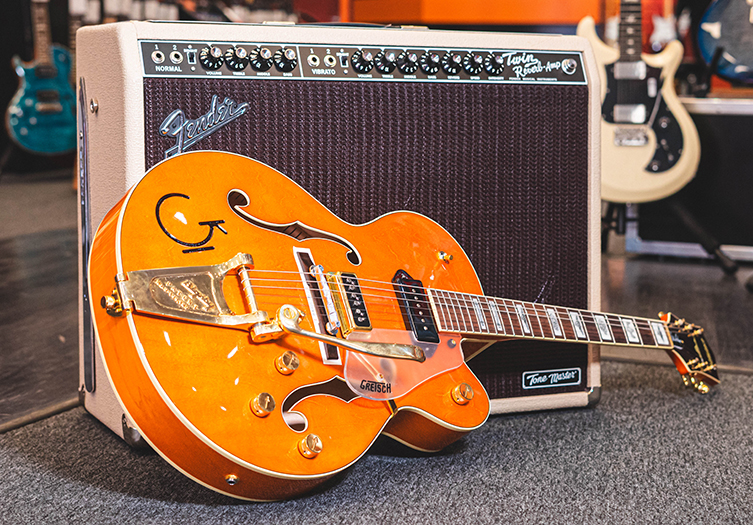
Gretsch continued to build other instruments, including, notably, drum kits. You’ll probably know this, but it was Gretsch who objected to Fender’s use of the name ‘Broadcaster’ for their fresh new electric guitar design, because they already had a drum kit called the Broadkaster!
In 1954, a Gretsch promoter approached guitarist Chet Atkins about working together. Atkins was an early doors guitar hero, known for playing on records by the Carter Sisters and performing regularly on TV. He’d go on to be one of the most influential early electric guitarists in the world, but back to the story!
Gretsch’s first signature model with him was the 6120, a large, beautiful hollowbody which is still very much in production today. Interestingly, sources report that Chet himself wasn’t too keen on some of the more overtly ‘cowboy’ aspects of the 6120, and was not a fan of Gretsch’s Dynasonic single coils. For his next signature guitar - the Country Gentleman, there would be a significant change…
1957 - Filter’Trons
1957 saw the introduction of Filter’Tron pickups. I have a fun story about those, but before I get to it, it’s worth talking about these pickups. They are well known for having a unique sound - indeed, that ‘Great Gretsch Sound’ is arguably due to these more than any other factor - which doesn’t fit easily into the sonic categories of straightforward single coil or humbucker pickups. Filter’Trons were developed by amp designer Ray Butt and, whilst they are definitely humbucking pickups in design, they don’t really sound like them.
Why is that? Well, their overall design follows the humbucker principle that Seth Lover set down, but almost every detail is a little different…
- The bobbins (around which the copper wire is wound) are narrow and tall;
- The alnico bar magnets are almost twice as thick as typical humbuckers;
- The polepiece screws themselves are much longer;
- The DC resistance readings measure between 3-5k ohms, which is even less than a Stratocaster single coil!
For context, a Strat pickup generally reads 5.8-6.5 kOhms, a PAF humbucker is normally 7.2-9k and a hot pickup like a Seymour Duncan JB reads 15.4k resistance! So, whilst Gretsch Filter’Trons are ‘weak’ by this measurement (which doesn’t mean tons, admittedly), the strong magnet still gives them a strident, clear sound.
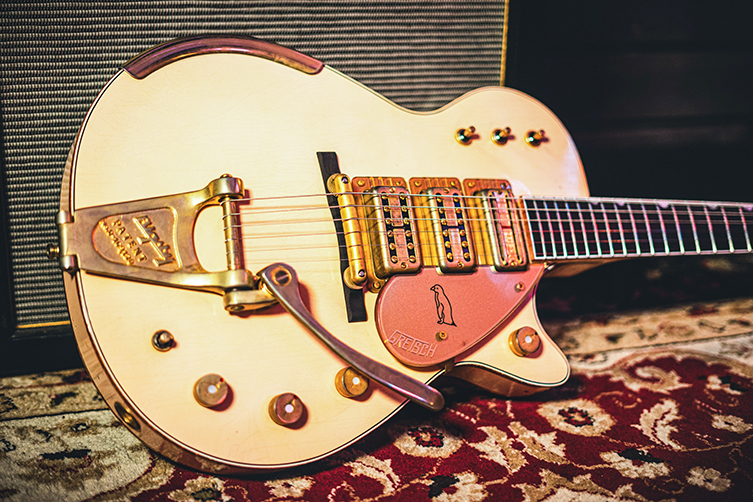
All of those elements together help to deliver a sound that does ‘buck’ the hum, but also has a characteristic twang and high end response, quite unlike the mid-rich tones of a typical humbucker. They don’t sound like humbuckers, they don’t sound like single coils, and they don’t sound like P90s. They sound like Filter’Trons.
And now to my brief anecdote…
Me, Jason Isbell, Chet Atkins & Ghosts: A Short Interlude
A few years ago, I had the honour and privilege of chatting to Amanda Shires, the alternative country singer, songwriter and fiddle player. She was also, at that point, married to country megastar Jason Isbell. Amanda and I spoke on Zoom - she at their farm outside Nashville and me in my kitchen in Glasgow - and talk turned to her recording sessions at the famous RCA Studio B, where a certain Elvis Presley worked his magic. Jason was at the studio too, as guitarist for the session.
However, the group ran into a problem, when every single electric guitar they plugged in had ground hum issues that would spoil the recordings. Amanda mentioned the story but wasn’t sure on details. Towards the end of our conversation, I asked if Jason was around, just to get his take…
Amanda: When we were recording, why was that guitar easier to play than the others? The power, the electricity? What was happening?
Jason: Yeah, the power was weird, so no matter what I did, I was getting a hum, a cycle hum. And I tried power conditioners, brown boxes and even a Kemper, and I was still getting a hum. Eventually I figured out, the only thing that worked in there was the Gretsch. And so that was probably why Chet Atkins loved playing Gretsch guitars so much, because the Filter’Tron pickups don’t pick up that hum.
Me: Oh, right! So, it’s actually relative to the Filter’Trons themselves: they weren’t picking up what the Telecaster or the Les Paul would have?
Jason: Yeah, the Filter’Trons were the only pickups I could find that didn’t pick up the hum in that particular room, for whatever reason. Even PAFs picked it up.
Me: Wow! So, obviously the studio was haunted, and the ghost that was in there, only approved of Gretsch guitars!
Jason: The ghost is a Gretsch endorser! (laughs)
Me: Haha, that’s brilliant, thank you for answering that!
Jason: No problem at all.
Amanda: And tell me about Filter’Trons later!
1967 - The Baldwin Era
The late 60s saw the Gretssch family sell their business to Baldwin, a brand of piano makers. It’s a fairly significant part of Gretsch history, because production moved down to Arkansas, and the guitar designs changed somewhat.
Some fans compare this with Fender’s ‘CBS-era’ due to similar issues with production and quality, but in reality, lots of Gretsch aficionados (not all) are actually fans of the Baldwin era.
One high-profile player is The Cult’s Billy Duffy, who is easily one of the most visible Gretsch players in the world. Duffy is the one who explained the differences of the Baldwin-era Falcons to me, and in particular the smaller f-holes that they have. He has brought that detail to his own range of signature guitars, and he’s right: it not only makes a big visual difference (once you notice the small f-holes, the ‘normal’ ones look a bit oversized!) but helps with feedback.
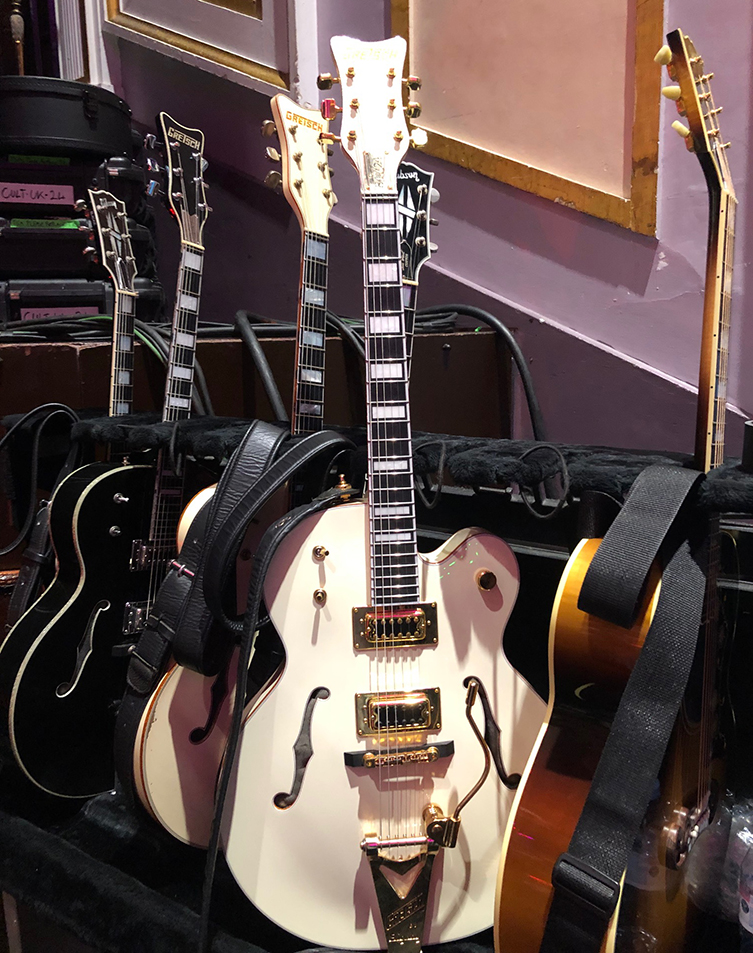
(Pic: Ray McClelland)
One thing he doesn’t like about Baldwin-era Gretsches is the pickups, and always changes them out of any guitars he acquires. This is illustrative of the era’s reputation for poorer quality parts and construction.
In the 1970s, these issues plagued the brand. In addition to this, a series of factory fires hampered production of the guitars, who’d already started to seem anachronistic in the hard rock heaven of the 1970s. By 1981, the factory closed its doors for good.
1985 - Brand Resurrection
Well, it closed its doors for four years, I should’ve said! Behind the scenes, Fred W Gretsch - the great grandson of Freidrich - made moves to acquire the brand. Whilst he did that, the 80s had seen a turnaround for Gretsch in terms of artist association. In addition to the aforementioned Billy Buffy, Brian Setzer of the Stray Cats did a lot to not only put Gretsch back on the map, but to remind everybody just how unspeakably cool they were!
Alongside Setzer, lots of guitarists from the burgeoning goth scene (The Mission, Fields of the Nephilim, Death Cult etc) took to Gretsch, no doubt for their pose-friendly looks as much as their spectral, chiming sound. 80s pop bands like Bow Wow Wow, Depeche Mode and Aztec Camera began using them, then Johnny Marr and John Squire made them the primary choice for cool indie bands.
Gretsch were back.
Second Golden Age
Nowadays, Gretsch are looked after by Fender, with Gretsch family members deeply involved in the business too. Since the brand started building quality Japanese guitars and then some custom USA builds, Gretsch have been considered to be enjoying a second golden era.
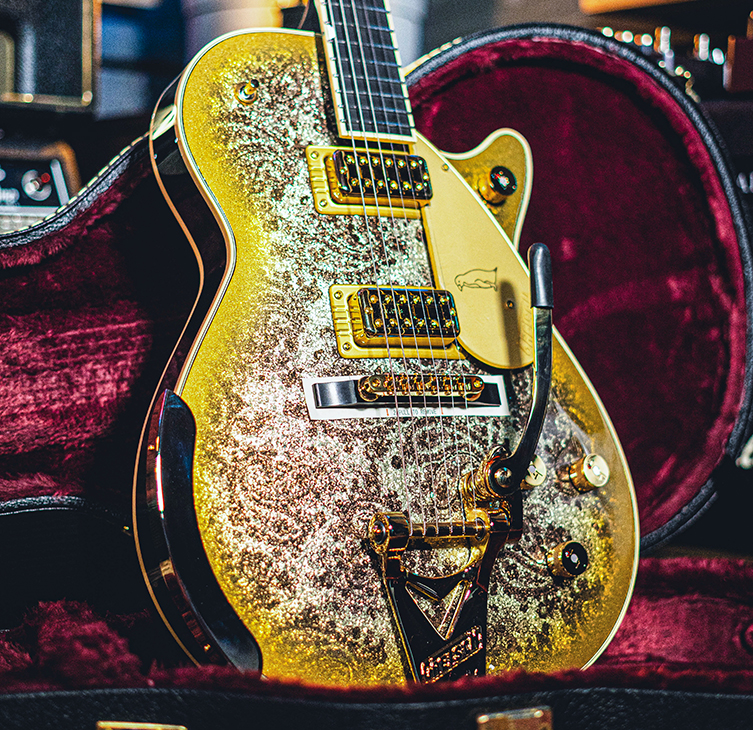
Today, you can buy a genuine Gretsch guitar at almost all price points. Streamliners cost a few hundred pounds; Electromatics are mid-priced and impressive; and Professional Collection guitars are available, made in Japan to high standards. USA-made Gretsch guitars are made in extremely low numbers, often as special orders or limited edition runs. More recently, the Chinese-made Synchromatic series has made waves by offering spectacular models like the White Falcon and the Nashville at very agreeable prices. The fact is, there has never been a better time to become a Gretsch owner: it is a second golden era indeed!
Notable Gretsch Guitars
Gretsch G6120 Chet Atkins
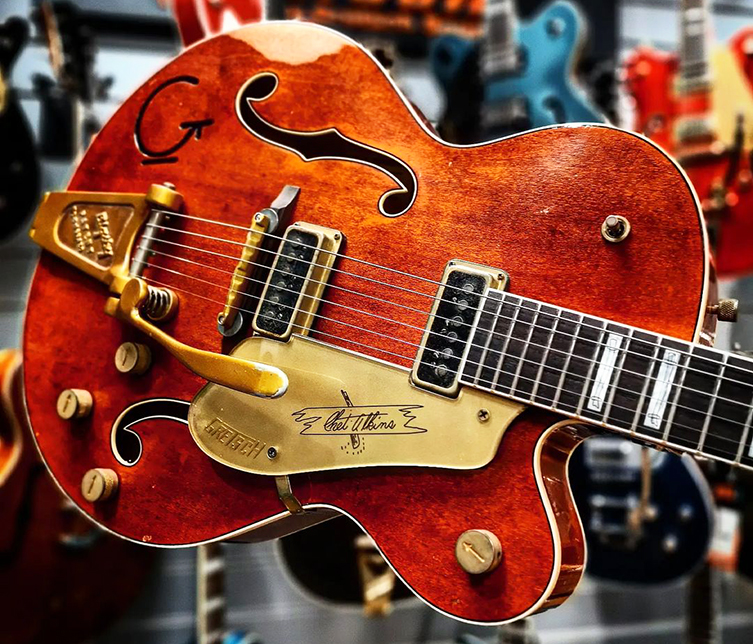
The Gretsch G6120 typifies the ‘Country & Western’ Gretsch vibe so beloved of people like Duane Eddy and Eddie Cochran, as well as Chet himself! As mentioned earlier, Atkins had the odd reservation about initial models, but it seems that everyone else gets on with it very well: it’s one of the brand’s most successful designs by quite a margin! Several key Gretsch details are found here, from the body size to the decorative elements. The definitive Gretsch? Maybe, or perhaps it’s this one…
Gretsch White Falcon
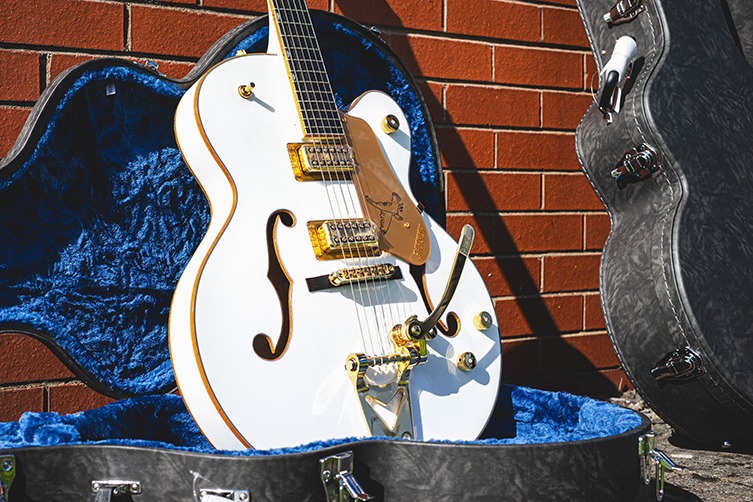
If you ask me, the White Falcon is the ultimate Gretsch. It’s so defiantly its own thing, and coolness just seeps from every fibre of it. Large body, white and gold colour scheme, associations with several rock legends…if ever a guitar had an ‘X’ factor, it’s the White Falcon. We can argue all day on whether the Black Falcon is actually cooler (I go back and forth) but this is the iconic one, and will bestow its special magic on whomever chooses to wear it into battle.
Gretsch Duo Jet
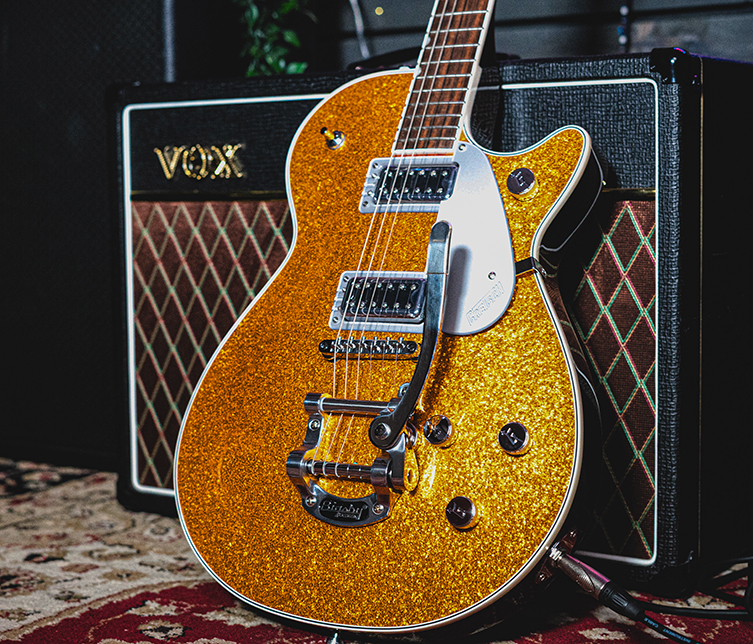
It’s not all just huge hollow body beauties with Gretsch. The solid (sometimes chambered) Gretsch Duo Jet gets just as many cool points from its associations with The Beatles, Soundgarden and of course AC/DC.
Superficially similar to a Gibson Les Paul, the Duo Jet in fact feels quite significantly different to it, not to mention bringing a more top-heavy tone that makes it maybe the more versatile choice of the two. If that sounds like fighting talk to you, then I suggest you have a good long try of one yourself, and see how you feel afterwards!
Top Gretsch Players
The History of Gretsch guitars is littered with extremely cool guitarists, from the 50s until right now. For details, please have a look at my Legends of Gretsch blog, but here’s a few names to get you into things…
- Poison Ivy
- Neil Young
- Brian Setzer
- Chris Cornell
- Angus Young
- Chet Atkins
- Billy Duffy
- Stephen Stills
- Billy Gibbons
- Manu Chao
Gretsch: Timelessly Cool
You can’t out-cool a Gretsch. They are designed beautifully, in a timeless way that never seems out-of-date, or too far away from what’s going on. Gretsch exist somewhat outside trends, much like jeans and biker jackets. They cross cultural barriers and musical trends whilst still being strongly distinctive, which is something almost no other guitar brands have ever managed. They have an immediately distinctive look, feel and tone, and in my opinion, are an essential part of all guitarists’ paintboxes, as it were.
When you play a Gretsch, you play differently than if you were on a Strat or Les Paul. In case it wasn’t clear, that is precisely the point - and the great value - in Gretsch guitars.
Click to View our Gretsch Selection