Do you love Gretsch guitars? Of course you do! They are classic, super-stylish and excellent tools to boot. Do you want to get involved, but find the cost of the top-end models too much of a stretch? Well then, friend, I think you should be checking out the Gretsch Streamliner line! This is a much more affordable ranges that still carries a lot of that special Gretsch DNA. Tough and hardy as well as gorgeous, these Gretsches are perfect for gigging players who want the style without the fear of damage or loss on the road.
In today's blog, I’ll introduce you to the Streamliner range. Before we move on, if you want to know more about Gretsch Electromatic guitars, please click through to the dedicated Gretsch Electromatic blog. For a general overview on everything Gretsch, why not peruse the Gretsch Ranges Explained blog?
That's a lot of Gretsch, so let's keep our focus! I want you to know about the Streamliners! Let's go...
Contents
What are Gretsch Streamliners?
What are the Different Types of Gretsch Streamliner?
What is Different About Gretsch Streamliners?
Who Are Gretsch Streamliners for?
Streamliner: A Welcome Refresh of the Classics
Gretsch Streamliner
Okay, you’re here to learn more about the Gretsch Streamliner range. Let’s get to it!
The Streamliner guitars offer the most affordable way into that inimitable Gretsch vibe. They use historical Gretsch designs and details, making them a legitimate part of the ‘Gretsch universe’ at large, rather than some afterthought to fill a price bracket.
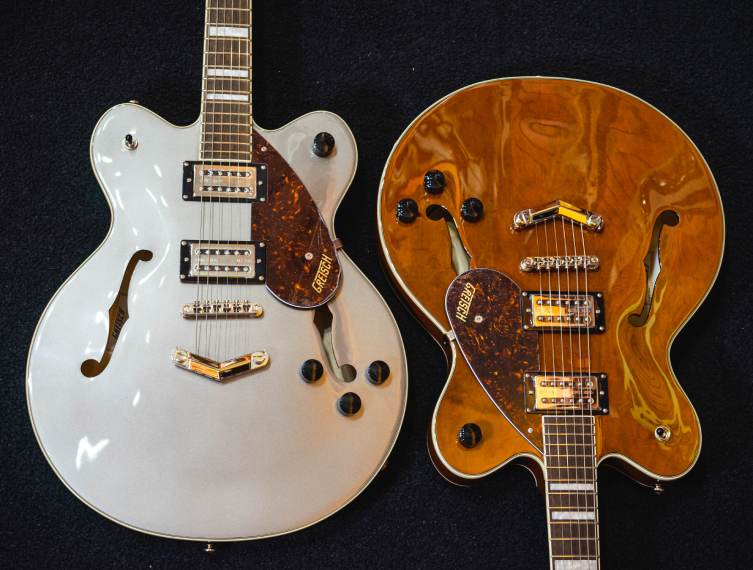
In fact, there are lots of cool details on Streamliner models from classic Gretsches that don’t appear on more expensive designs (small f-holes from the Baldwin era, for example, and black inlays), so they are not just ‘cheap’ Gretsches, despite being the most affordable range.
What are Gretsch Streamliners?
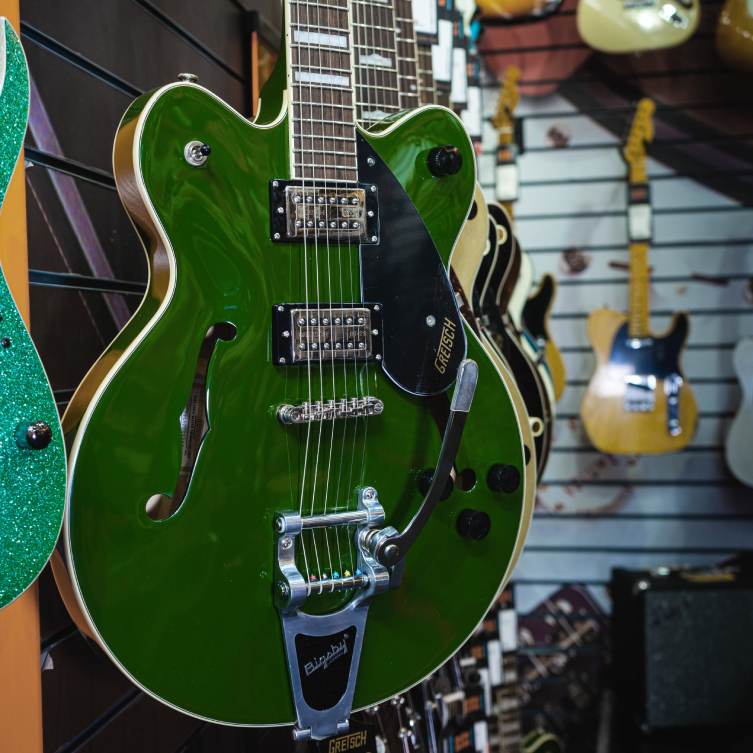
Gretsch Streamliners are eminently affordable electric guitars and basses with classic Gretsch styling. Streamliners are available in a wide range of designs and body shapes, including hollowbody, semi-hollow and solid body guitars.
Though the distinctive Gretsch design style is strong throughout the Streamliner range, the guitars themselves are not directly related to any particular models from Gretsch’s history. All Gretsch guitars, in fact, can be seen to have evolved from a core group of guitar designs from the 1950s, but that’s a larger subject than this blog requires. What’s important is that, even though these are ‘new’ designs, they are as retro and ‘classic Gretsch’ as most of their overall lineup.
What are the different types of Gretsch Streamliner?
There are three basic types of Streamliner: hollow, centre block and solid. Here’s what makes them different…
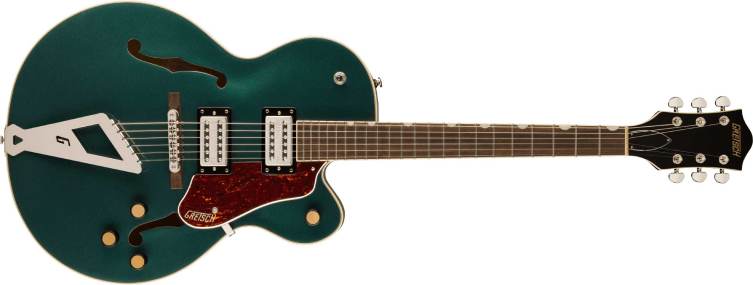
- Hollow: The bodies are large and entirely hollow. This is the most traditionally ‘Gretsch’ approach to guitar making, and is perhaps the most traditionally ‘correct’ Streamliner style. Check out the Gretsch G2420T for a great example of this.
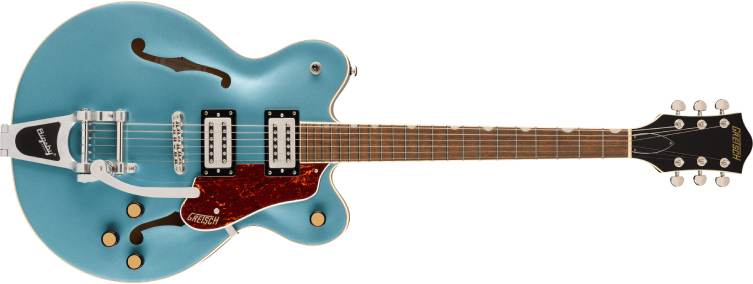
- Centre Block: If you are familiar with the Gibson or Epiphone ES335, you’ll know what this is. The bodies are ‘thinline’, which means not as deep as the hollow body guitars, and there is a block of maple running through the centre of the guitar, which anchors the pickups and helps prevent feedback. This probably makes them more versatile in terms of sound, but also maybe less ‘Gretsch’. Have a look at a G2622T model for this type of guitar. Drop the ‘T’ from the code name there if you’d rather not have a Bigsby tremolo: it is optional.
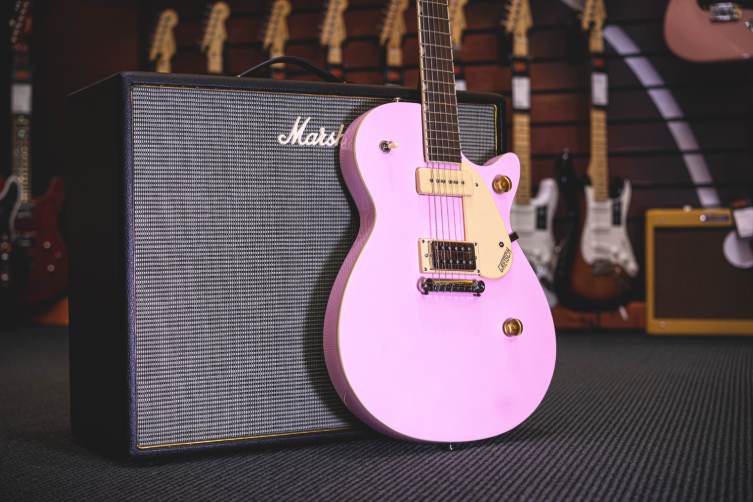
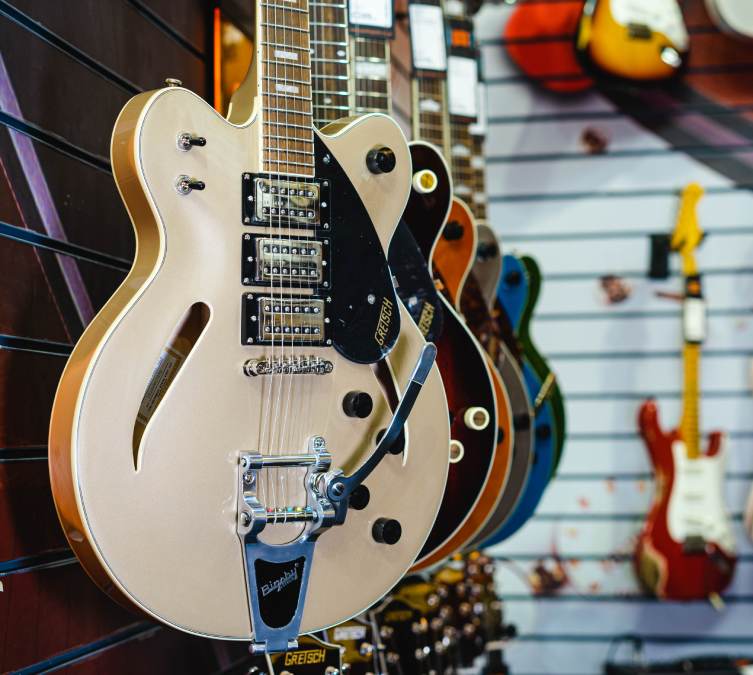
- Solid: This just means a regular, solid body guitar like a Telecaster or a Les Paul. Solid Gretches have been around for decades, and are popular with a large cross-section of guitar players. The G2215 is a very affordable and effective solid body Gretsch Streamliner model.
.jpg)
What is Different About Gretsch Streamliners?
Apart from the value, which I’ve already mentioned, one of the main differences between the Streamliner range and the rest of Gretsches offerings is the inclusion of high output pickups. This is reasonably significant for two reasons:
- Gretsch don’t normally have high output pickups, and so this makes the Streamliner range able to produce a bigger, more rock-orientated sound.
- The extra versatility is perhaps at the cost of sounding a little less like a vintage Gretsch, since those guitars tended to have less powerful pickups.
Who Are Gretsch Streamliners for?
- Gretsch fans on a budget
- Players looking to try the Gretsch style
- Eye-catching backup guitar for gigging
The Streamliner range is Gretsch’s most affordable, so anybody on a tight budget looking for a Gretsch can find something cool and decent in the Streamliner range. Whether a guitarist needs a large hollowbody, a solid single cut or something in-between, there’s plenty here to satisfy.
Guitarists looking to dip their toes into the idiosyncratic world of Gretsch would do well to begin with a Streamliner model: these guitars give a great introduction to the overall Gretsch vibe without having to commit a large sum of money.
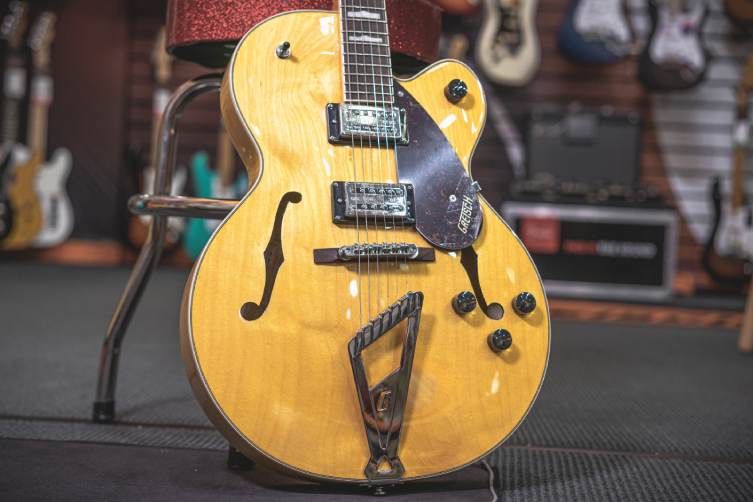
Whilst it isn’t fair to say that these guitars are the same as a Pro Jet or White Falcon (which cost thousands), there is actually a good deal of ‘Gretsch’ available in these affordable Streamliners.
Also, guitarists who love the Gretsch style but need a slightly harder sound might prefer these Streamliners, thanks to the inclusion of higher output pickups.
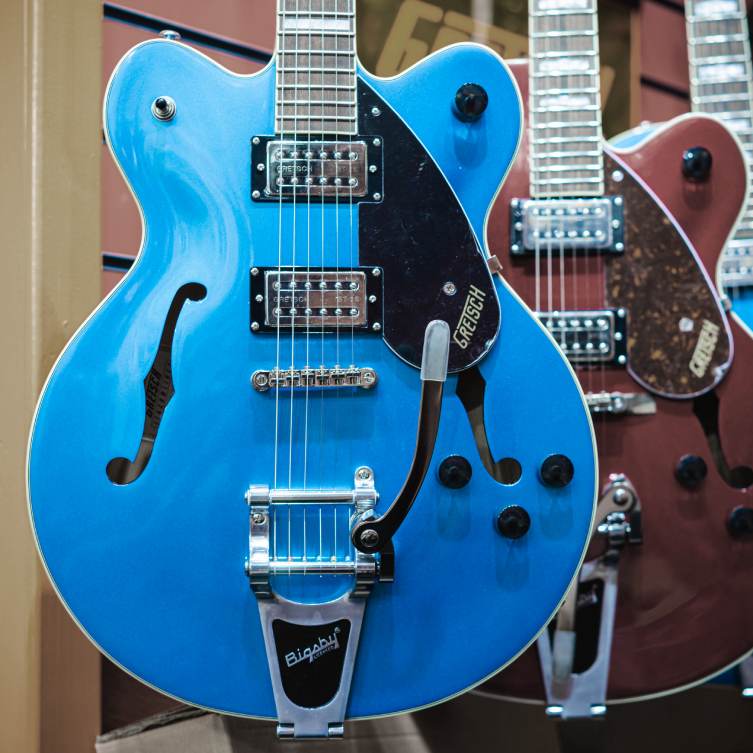
Streamliner: A Welcome Refresh of the Classics
To round up, I’d say that Streamliner guitars are obviously a good, affordable way to get some Gretsch into your life, but there’s more to it than that. Hard rockers who want something a bit different will love these, as will anybody looking to make a statement. They are gorgeous, they are Gretsch through-and-through, and they will not break the bank!
Browse the Gretsch Streamliner Range