This year marks 75 years of the Fender Telecaster. It’s a timeless classic and an ageless beauty with a sound and vibe as relevant now as it was back in 1951. Across all styles of music and spans of taste, the Tele has reigned supreme as one of the very few truly essential electric guitar designs.
Elsewhere, I’ve looked at the History of the Telecaster, and some of the best Tele riffs out there. Today, I want to talk more about sound. I’ve gathered together ten examples of Telecaster tones that are essential for any true fan of the instrument. From pop to jazz to hard rock, there’s something here from most corners of modern music. If you have a Tele, then it’s time to put it through its paces! And if you don’t have a Tele, this blog might be the catalyst to a new guitar purchase!
Some of today’s choices are for specific songs, and others are more general ‘classic Tele tones’. All are worth your time, in my opinion. What are you waiting for? It’s twang time!
Classic Tele ‘Nashville’ Country Twang
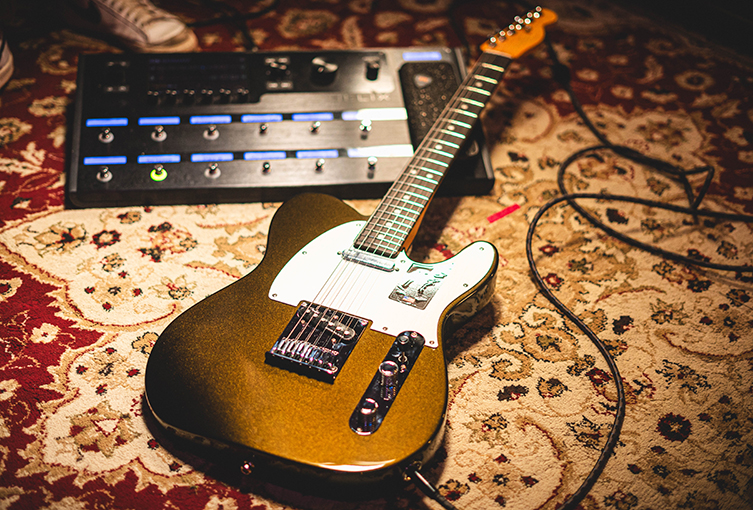
For many guitarists, country music ain’t country music unless there’s a Tele twangin’ away in the background. The Telecaster is the preeminent country guitar, whether you’re chickin pickin’ or just holding down a rhythm.
The classic country sound is to put your Tele in its middle pickup position (which should put a little scoop in the midrange) and plug it into an MXR Dynacomp pedal. No, not a compressor pedal, an MXR Dynacomp pedal. Don’t be messin’ with anything else if you want that Nashville tone, ok?
From there, you want it to go into a lovely clean tube amp with preferably plenty of headroom. Pepper with a dash of reverb. The rest is handled by your fingers, naturally.
Jeff Buckley’s Hallelujah Tone
Jeff Buckley was a guitarist of insane ability, and he was a master of tone to boot. His most famous song - a cover of Leonard Cohen’s Hallelujah - has a clean Tele tone so gorgeous that entire online forums are dedicated to arguing over how it was achieved.
I’ll add my two pence’ worth right here…
Jeff’s Tele was a borrowed 1983 model with a top-loader bridge. This was part of a range designed by Dan Smith, and people will say that the toploading bridge makes a difference to the tone. As an owner of such a bridge, I’d say ‘not really’, but it does change the feel a little.
Anyway, Jeff’s actual guitar (which was off-white, not truly ‘blonde’) is now owned by Matt Bellamy from Muse. It was strung with gauge 10 strings and played with fingers for this track. Otherwise, Jeff used .73mm yellow Tortex picks.
For Hallelujah, Jeff plugged into a reissue of a Fender ‘63 Vibroverb amp, and his sound went through an Alesis Quadraverb rack effects unit, set to a pretty huge hall reverb. Chuck a capo on fret 5 and get going!
Andy Summers’ Moonwalking tone
See this famous sound? It’s a flanger, okay? Don’t listen to your uncle’s pal down at the pub who says it’s a chorus. It’s a flanger, and a delay and maybe some reverb.
More details.
Andy Summers used a Telecaster that was quite extensively modified before he bought it. It had a PAF humbucker in the neck and an onboard boost preamp, so the output could be pretty hot for a Tele. I hear a Tele bridge pickup here in this song, don’t you?
He’s another one who swore by the MXR Dynacomp, which you’ll definitely need if you don’t have an onboard preamp in your Tele (unlikely). The sustain this adds is important.
Set your flanger to a slow sweep, until you almost don’t hear any movement. That’s why your uncle’s pal thinks it’s a chorus when it isn’t. Summers used an Electric Mistress, but you can actually buy an Electro-Harmonix Walking on the Moon Flanger, so do that!
Next, use an analog delay for that lush ambience. Deluxe Memory Man? Echoplex? Yes, either.
I reckon a little reverb won’t hurt here either, but don’t overdo it. Maybe a plate reverb, to simulate something a studio engineer might run the guitar through?
The amp is an old Marshall, so anything with a nice immediate attack will do here. Keep the gain low, you want the Marshall’s EQ, not its grunt. Don’t play too many notes, it’ll spoil the effect!
Prince’s Purple Rain Tone
Does Prince’s Hohner Mad Cat guitar count as a Telecaster? I hope so, since I’m including it in this Telecaster blog. Prince’s Tele copy had fancy wood and Strat pickups, so I suppose it’s pushing it a bit. Never mind, you can definitely get the Purple One’s classic intro tone from Purple Rain on a Tele! Here’s what you need…
Get your genuine Telecaster guitar (and not a fancy looking copy) and select the middle position on the pickup selector.
Prince used BOSS pedals a lot, which is good news for us all! You need an overdrive (eventually), a chorus and a stereo delay. The tone is definitely compressed too, but that may be studio compression. Have one handy just in case.
There’s no overdrive for the intro: the slight ‘push’ in the tone is from compression.
For the chorus sound, I’m led to believe that Prince used the BOSS VB-2 Vibrato pedal, which is pretty annoying since it’s now mega rare. It did get a reissue from BOSS’s Waza imprint, but it seems that that is also discontinued. Rats! Let’s get real and just use the CE-2W or the DM-2W pedals. They’re going to be super-close, let’s be honest.
A stereo digital delay is great if you happen to have a stereo setup, and entirely pointless if you don’t! Just get a medium digital delay sound from the likes of a BOSS DD unit, and keep it subtle.
Prince’s amp back then was a stupidly loud and really quite fancy MESA/Boogie MkII C+ set up, which matched outrageous volume with loads of clean headroom. If you can stretch to a Boogie then you’ll have a great time, but if not, go for a clean valve sound that isn’t being pushed by the power amp section. In other words, get as much headroom as you can and use the compressor to squeeze the front end of the sound.
BOSS SD-1 or - more likely - a DS-1 for the solo.
No, I can’t help you with the singing.
Late 70s Punk Tele
If there’s one area in which the Tele excels outside of country music, it’s…well, all genres. But the Tele is a great punk guitar, and all you have to do is check out Wilco Johnson or Joe Strummer for proof. The famous twang becomes pretty big and full-on once played with chords of righteous fury, and so it’s just the guitar to deliver punk’s message.
This one is simple: bridge pickup, volume up full, use a solid state amp if you can, since it'll be slightly faster and harsher sounding, and play with maximum attitude. No, don’t use pedals and don’t overtly distort your amp with preamp gain. You want raw honesty, and that can only be gained (sorry) from pushing the volume far into antisocial levels.
Jimmy Page’s Hard Rock Tele Tone
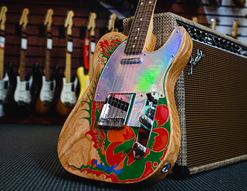
Yes, yes, we all know that Jimmy Page, that great practitioner of the Les Paul, actually headed straight for his ‘Dragon’ Tele during many recording sessions. This was both whilst he was a face on the 60s scene and once he got his act together and started a proper band.
Jimmy’s Tele tone convinced the masses to buy Gibsons and Marshall stacks, when all it was was a late 50s Tele into a Surpo combo. To make your own authentic early Zep tone, plug into a valve combo that can be pushed into natural overdrive, and then play with an aggressive attack. Use a silver Herco .75 pick (which is actually 1.01mm thick, go figure) if you have one, and thin strings. Like, gauge 8 thin.
Violin bow is optional, but why not?
Muddy Waters-style Chicago Electric Blues
Now I’m not for a second saying that Mr Page (see previous) was something of a magpie. I’m not, but if you were to ask me how to get that great Muddy Waters guitar sound, I’d pretty much copy and paste what was written for Jimmy Page. Tele with rosewood fingerboard. Tube combo. Volume up until the signal is naturally breaking. Bridge pickup, play with attitude (use fingers for authentic Muddy Waters vibe). Classic Telecaster tone achieved. Job done!
Telecaster Jazz Tones
Is the Telecaster the first guitar you think of when it comes to jazz? Possibly not, but that hasn’t stopped contemporary legends like Bill Frissell from adopting it as their go-to instrument. Lots of jazzers love a warm tone, and here’s my position: almost any guitar will deliver such a thing when you engage with its tone control knob! In fact, a bright sounding guitar like the Telecaster is perhaps more suitable, since it doesn’t descend into tonal murk and ‘darkness’ when you roll back the control.
So, for a brilliant contemporary jazz tone, go to your Tele’s neck pickup, roll back the tone and volume a little (it takes some of the edge off the attack) and play into a nice, compressed clean tone. Add a plate reverb if you want a more classic jazz sound, or multiple delays if you are chasing Frissell.
Tom Morello’s Killing In the Name Sound
Teles can do hard rock with the best of them, as evidenced by Rage Against the Machine’s Tom Morello. A highly unusual soloist, Morello’s riff and rhythm work is pretty straightforward by comparison. As a rule of thumb, anything in standard tuning will be his ‘Arm the Homeless’ guitar, and anything in drop-D is his black American Standard Tele.
Now, the focus here is not on Killing In the Name’s crazy solo (which you can achieve by setting a Whammy pedal to +2 octaves up and playing a D minor pentatonic scale) but the main riff parts of the song. You’ll require a classic crunchy rock tone from something in the Marshall neck of the woods, tonally - Tom favours a 50-watt JCM800 head and a Peavey cabinet - but there’s a secret trick involved that is pretty necessary.
What’s the trick? It’s simple: use the guitar’s NECK pickup only. Yup, do not play with a bridge pickup at all for Rage Against the Machine stuff. I know, it sounds counterintuitive, but have another listen now that you’ve learned the secret. Can you hear it? Right enough, it’s a neck pickup from a Tele in drop-D.
Danny Gatton’s Harlem Nocturne - BEST TELE TONE?
Is this the greatest example of Telecaster bite and twang ever? This tone is the type of thing you can play around on all day and never get tired of. Bite, body, expression, texture, space…it has it all.
Obviously it helps if you are an exceptional guitarist (can’t help ya there), but this sound is great for anything, really. Grab your Tele (if the pickups are slightly hotter than vintage, then all the better) and choose the bridge pickup. If you have the special Joe Barden JBE Danny Gatton pickups, then so much the better.
What we want here is a sound that’s almost like a Marshall preamp tone (breakup, midrange) going into the cleanest and most classic of Fender sounds (Deluxe Reverb, Super Reverb etc), with added spring reverb from the amp. Suggestions for the gain could include a Tubescreamer, or a Tube Driver. All pickup selections, all volume and tone changes included. Dynamics are there, pick attack response is there, body and expression are there. It’s sheer, beautiful, Tele tone.
Essential Tones from an Essential Guitar
It should be pretty obvious from this selection of tones that the Telecaster is an essential addition to your guitar arsenal. There’s no genre it can’t tackle, and no mix that it can’t be a part of. Make it sound sharp, or warm it up using the onboard controls. Colour it to your liking and let it sing as an expression of your own musical tastes.
The Telecaster is not an easy guitar to master, but it gives back what it’s given, and leads to a really rewarding experience. Try these essential tones at home for yourself and you’ll be hooked for life.
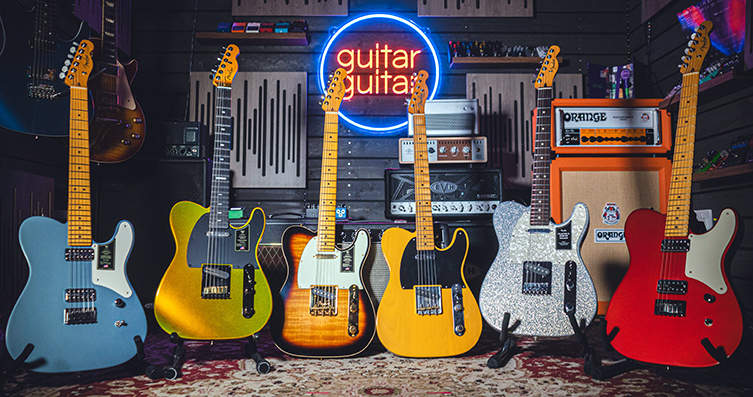
Click to View All of Our Fender Telecasters