Do guitar cables matter? Well, of course they do, since you can’t make much of a sound without one! But aside from that, does the quality of a guitar cable matter? Do expensive cables make a positive difference? Is it all snake oil?
That’s what this blog is about. Read on, for the plain truth.
Contents
Guitar Cables Matter
I’ll get straight to the point. Yes, guitar cables matter. They do make a difference to your sound. How much difference? It can be loads, frankly. If you are particular about your guitar sound, and wonder where all of your wonderful, crisp brightness is disappearing to, then invest in a good cable.
Do that before you start swapping out things like pickups and capacitors. Why? because, if your cable is cheap and cheerful, those changes won’t even register. You need cables that deliver all of your guitar’s signal without interfering with that tone. You need a cable that adds nothing, takes nothing away, and isn’t noisy. Here’s some tips and info on cables for you!
Cheap Cables
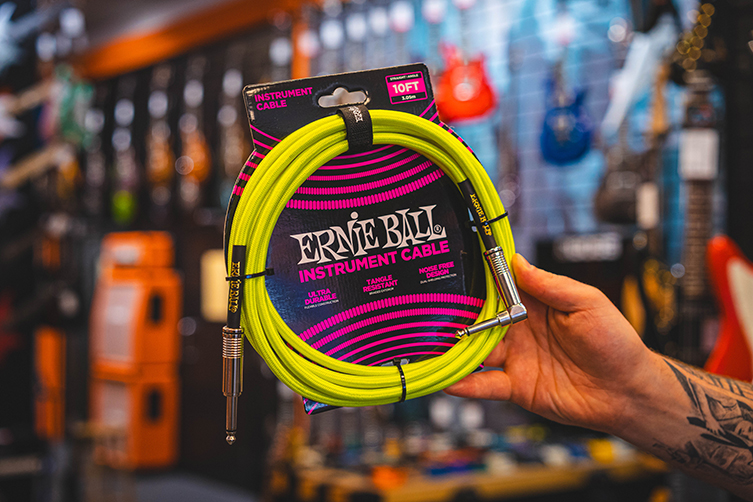
Cheap cables. We’ve all had them! Mass-produced, using cheap parts and sold at low prices. Cheap cables can be handy in the short term: having one or two in your guitar case isn’t a terrible idea for emergencies. That said, you’ll have far less emergencies in general if you buy better cables! When your guitar stops working mid-gig, you can generally blame one of three things:
- the sound tech (controversial!),
- a dead battery in your pedals,
- or a faulty cable.
None are ideal, but that last one doesn’t have to ever happen! I advise all guitarists playing in public to invest in good cables.
What to Look For in a Cable
Capacitance
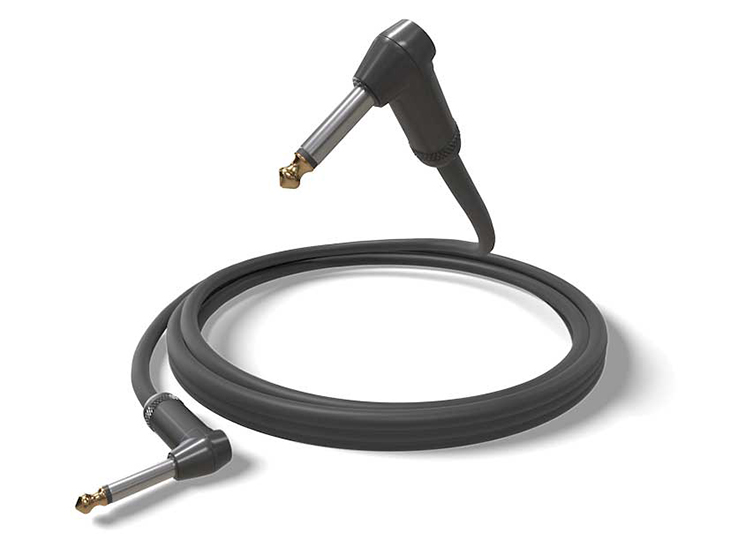
The first thing to consider is capacitance. Capacitance relates to how much of an electrical signal is ‘taken’ by the cable. Cables store up a little bit of electrical energy, and cheaper cables do this more than better quality cables.
Why? Better quality cables use higher-grade materials. This makes them better at passing an electrical charge (your sound) onwards to the amp. We talk about low capacitance being good for guitar cables. This is because more of the high frequencies come through, and so your guitar sounds brighter . Mostly, brighter is better.
In short, remember this:
“Low Capacitance cables = higher quality of tone”
Resistance
Resistance is another thing you don’t want too much of in your cabling. Certain factors play into this:
- Long cables tend to build up more resistance (more below)
- Thinner inner wires have more resistance than thicker ones.
- Resistance combines with capacitance to rob your tone of its high frequencies. Make this a choice, not a compromise!
If you use a multimeter, one ohm of resistance is good, two or three is acceptable. Anything more would have me looking for another cable.
Shielding
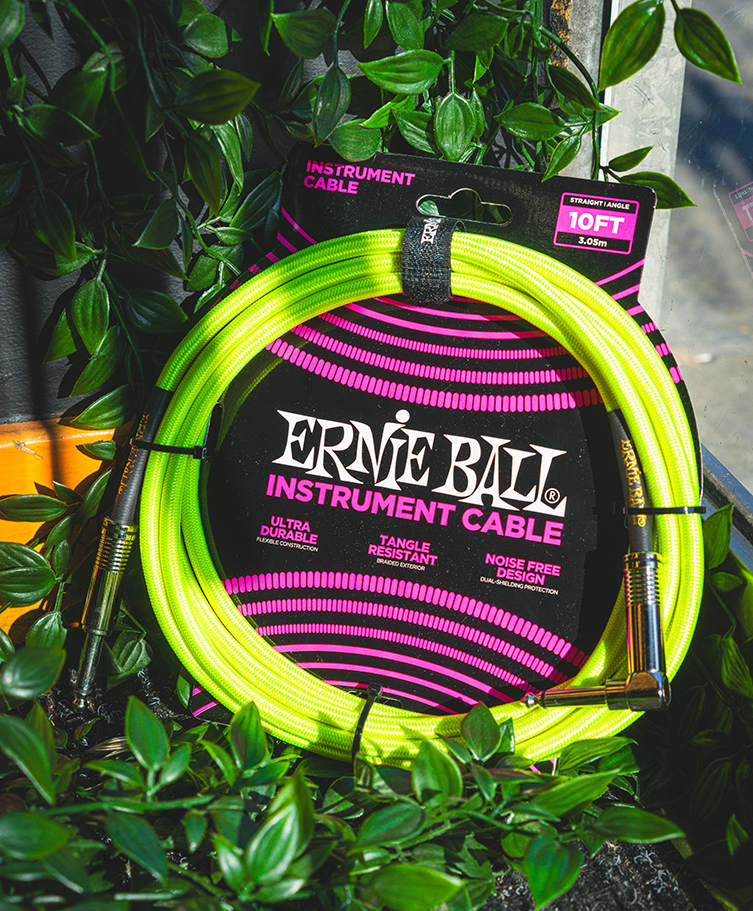
Shielding’s a big thing too. Shielding is when another material within the cable blocks electromagnetic interference. Shielding comes in various forms, and they are not all equal. Foil shielding is very effective at blocking the hum, but is also inflexible and prone to damage.
Braided shielding and spiral shielding are other good quality methods. Double-shielded is exactly that: two layers of shielding within the cable itself, offering double the service. These methods are worth investigating, since they offer good noise reduction without clipping away at your tone.
Components
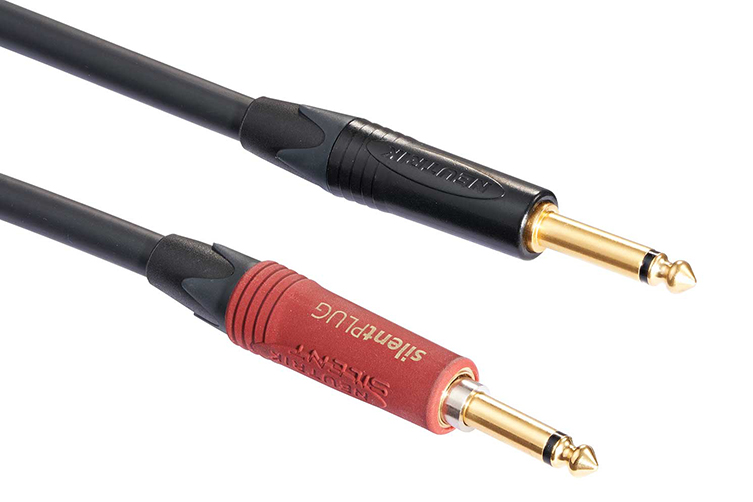
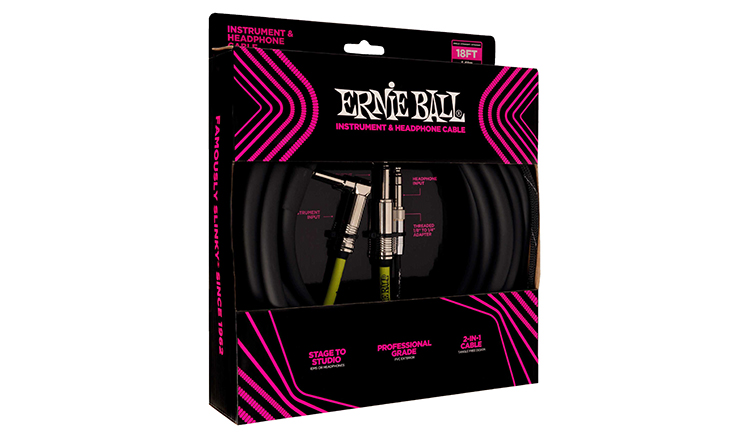
Generally speaking, the connectors are the main ‘cost’ in a cable. Cheap jack connectors are less conductive due to cheaper metals. They are also sometimes even a little bit physically shorter than they should be, believe it or not! This makes them fine to use in some guitars and not in others, depending on the guitar’s jack input.
You’ll see things like gold jack connectors on some expensive cables. This can add a lot to the cost, but it is at least based on physics! Gold conducts very well, and so is an excellent material to use in cabling.
Length
Does length make a difference? Yes, indeed it does. Every additional foot of cable eats up signal strength. Good quality cables will suffer less, since their components are already better at allowing your signal through. Cheaper cables compound the problems we’ve already noted today simply by adding more of each. If there is a high resistance, for example, then a longer cable length just adds more of that!
You obviously need the ‘right’ cable length for your needs, but not more. If you play at home with a 25ft cable, you may be losing decibels of gain as well as top end sparkle.
Worth it?
In my opinion, if you want to sound your best, then good cables play a significant part in that. If you spend big on a guitar and amplifier, it follows that you should have something decent to connect the two! It’s a fact that you lose output and high frequencies when you use a long, cheap cable. Imagine you just bought a Murphy Lab Gibson Les Paul - a dark sounding guitar with low output pickups? Using a cheap cable with such an instrument will definitely not bring out its true voice. You’ll be disappointed and that's a shame. These are magnificent instruments, but all guitars deserve to be heard in their best light. So do you as a player!
Do a little research and be ok with paying a few more quid for the cable. It’ll last longer and give you a fuller sound. Why wouldn’t you want that?