Are you looking to start a band with your friends? Do you want to film some songs and put them up on your social media accounts?
If so, today’s guide has everything you need to succeed. I’ll guide you towards inexpensive - but decent - equipment for each band member. I’ll talk about what you need and why, and I’ll make everything super-affordable so that nothing can hold you and your friends back!
Are you ready for this? Let’s do it…
The Vocalist
Let me start with the singer, since everybody secretly knows they are the most important member of the band, right? Well, I suppose it depends on the band! Anyway, the basics that your singer will require are the following:
- A microphone! There are many types so I won’t bore you with jargon: you want a dynamic mic. These are good for lots of jobs, and live vocals in particular.
- A mic stand: Choose between a straight one or a ‘boom’ stand (it has an elbow that can be angled). Just go with your preference.
- An XLR cable: microphones generally need XLR cables to run into a mixing desk or PA speaker. XLR cables are distinctive, with a ‘male’ and ‘female’ end, making it easy to make connections.
- Something to plug your microphone into: this can either be a single PA/monitor speaker, or it can be a full-on PA system, particularly if other bands members want to plug in too.
Some things to bear in mind:
- Cheap mics can sound okay, but slightly dearer mics often sound significantly better. It’s not like cheap guitars, which are often better than expected. Spend a little more on your mic and you’ll get one that lasts for years.
- Longer mic cables may lose a bit of signal strength, but their longer length is often worth the tiny compromise. Don’t go shorter than 20ft, in my opinion.
- Boom mic stands are infinitely more useful than straight ones.
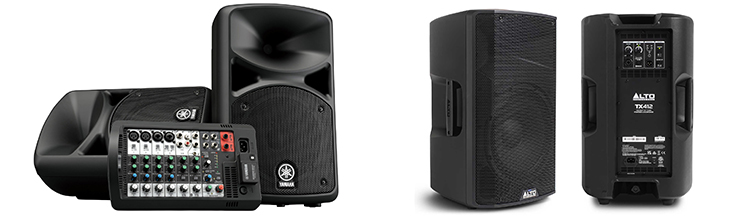
Here’s some recommended equipment. I’ve included a Yamaha Stagepas PA system as it’s small, affordable, practical and portable. Several instruments can go into this, not just the vocals! If, however, you just want a speaker for the vocals and don’t want to splash on a full PA system, I’ve included an option for a single Alto TX412 12” PA speaker. You can plug your mic directly into this if you want, and the good-sized speaker will allow your voice to sound powerful amidst the full band.
The Drummer
Hey drummers! You are the most important member of the band. Yes you are: a great drummer can really elevate an average band, and a poor drummer can ruin an otherwise decent band, so it all rests upon your shoulders! No pressure! Relax, I know you’ve got this.
Now, here’s my first bit of advice to you: go for a digital drum kit. Why? Here’s why…
- Digital drum kits are FAR quieter than acoustic kits in general. People can still hear you hitting the pads, but it’s a tiny fraction of the volume that a natural kit makes.
- You can use headphones, you don’t need to broadcast your practice to everyone through an amplifier. (You can if you want, though!)
- You’ll get lots of options for different drum kit sounds, so you don’t just have to stick with the one kit sound.
- There’s usually some form of practice function too, so you can work on your timing and playing whether the band is there or not.
- They weigh a lot less and can often fold up if space is tight.
- It’s much easier to control your overall volume at band rehearsals and achieve a nice ensemble sound.
- When the time comes to record, one cable will be enough to connect your full kit to your computer. No microphones, no preamps and no hassle!
I get that it’s a huge amount of fun to unleash hell on a fully acoustic drum kit. It’s one of life’s great pleasures, particularly when you’ve been playing long enough to have some skills on it. But for all of the reasons above, I believe a digital kit is the route to go down for you.
You’ll need drum sticks (go for size 5A to begin with), headphones (you may already have some?) and you can connect your kit to the PA system (if your singer bought one) or use a dedicated drum monitor such as the Laney Drum Hub DH40 or the Roland PM-03 Personal Monitor.
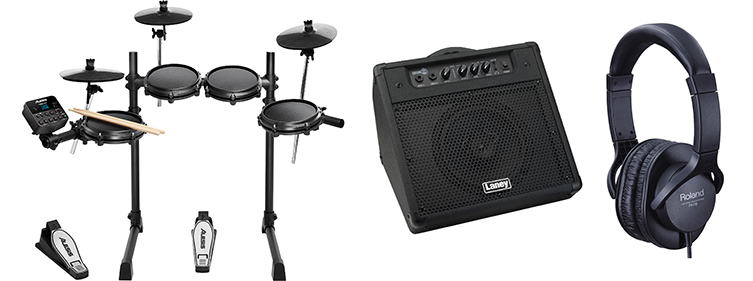
Digital drum kits can be used with dedicated drum monitor amps (centre) or headphones (right)
Here are a few options for digital drum kits that I’d recommend looking at, in increasing cost.
Digital Drum Kits
- Alesis Turbo X: immense bang-for-buck here with a full 7 piece kit that sets you up with everything you need.
- Alesis Turbo Mesh: An upgrade on the Turbo X, this has larger drum heads that are made of mesh for a more natural feel.
- Yamaha DTX402K: Yamaha’s entry level DTX kit is solid and features ten kits and a training mode.
- Roland TD-02K: Market leaders Roland impress with their most affordable kit. V-Drum tones and lots of features.
The Bassist
Hello bassists! I want you to know that your role is really significant and filled with authority. After all, it doesn’t matter what the guitarist plays: it’s not a ‘D’ unless YOU play a D!
Typically, bassists don’t need tons of gear, apart from the obvious stuff…
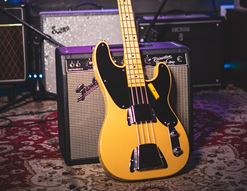
- Bass guitar: I think you should try a couple at your local guitarguitar and choose the one you connect with the most. That said, I’ll suggest a few below!
- Bass amplifier: it’s best not to use a regular guitar amp, since you just won’t get the full force of your low frequencies coming through. This is your greatest power, so don’t lose it! Bass amps can be very affordable, but I would say this: get the most powerful one (in terms of watts) that you can afford. Honestly, you need to bring the firepower.
- Guitar cable: This is the same as a guitar cable, just a normal ¼” jack to jack cable. 20ft should do you fine!
- Tuner: If you can, get a pedal tuner. Headstock tuners instantly remove all cool points, plus they tend to be less accurate then even cheap pedal tuners.
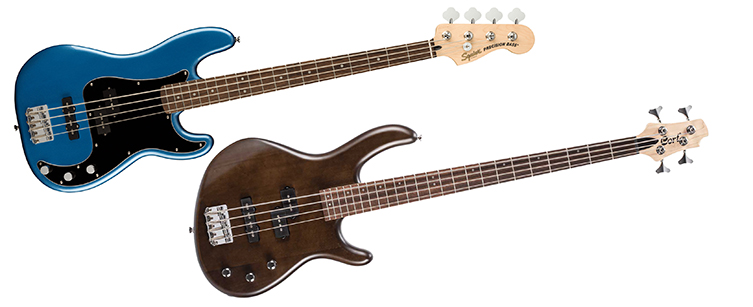
Equipment for the Bassist
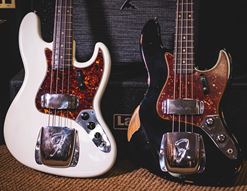
- Squier Affinity Precision Bass PJ: the most popular bass in the world for good reason, this affordable takes covers all of your needs.
- Cort Action PJ Bass: solid, rugged, reliable and has an ‘open pore’ finish that makes it feel pretty rough and rock ‘n’ roll.
- Ordo Bass Gig Bag
- Ashdown Studio 15 Combo: Bass amps are often more expensive than guitar amps because they are bigger, louder and meaner. I’ve picked this because it has 300w of power (that’s a lot) and a nice big 15 inch speaker. Start as you mean to go on: sounding HUGE!
- Ordo 20ft/6m Instrument Cable
- Landlord FX Lock In Tuner
- Dunlop Tortex Triangle picks: these feel good for bass playing, but try a few types and go with your own preference.
The Guitarist
Ahoy guitarists! It’s time for you to join a band and get out there. I’m going to assume that you do not already have equipment. If you do, scan this section for what you might not have, because it’ll all be handy to own!
One question you’ll need to ask yourself is one that previous generations of guitarists maybe didn’t have to: should you use a traditional amplifier, or go with a digital modeler? Modelers are filled with amp and effect sounds, and sit on the floor to be operated by your feet. You go directly into a PA speaker with these, so your band would need to have such a thing, or you’ll need an amp.
Thankfully, lots of amplifiers are also filled with lots of sounds and effects these days, and they aren’t necessarily expensive, either! Go with what works in your situation, and realise that there’s no right or wrong here: only what you want to do!
As for guitars, you have more choice than ever before. Your band’s genre may dictate the style of guitar that you pick, and for those reasons, I’ve selected three pretty different guitars that will all satisfy in different musical areas.
Below are some suggestions for good gear that will be up to the job, and options for amps and modelers.
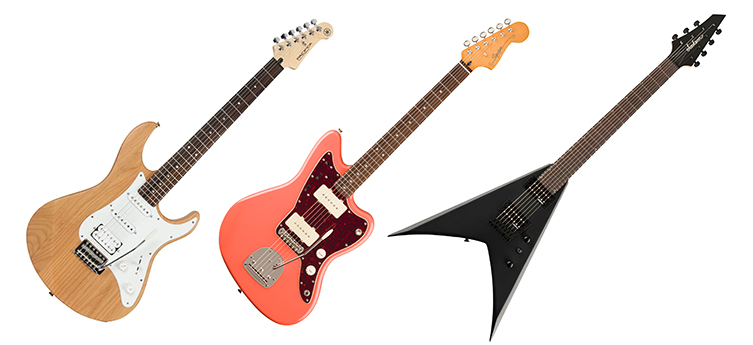
Equipment for the Guitarist
- Yamaha Pacifica 112V: a reliable do-everything guitar
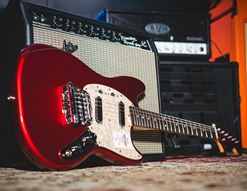
- Squier Classic Vibe 60s Jazzmaster: a very cool and trendy indie rock choice
- Jackson JS Series JS22 -7 : a 7 string for metal and beyond
- Ordo electric guitar gig bag: works for most guitars but not the Jackson King V!
- BOSS Katana 50 Gen3 guitar amplifier: great sounds, lots of tone options, loud and reasonably portable
- NUX Amp Academy Stomp Pedal: powerful digital modeler which is also easy to use and super-affordable
- Ordo 20ft Instrument Cable
- Dunlop Tortex picks
Time to Make Some Music!
These equipment suggestions are designed to get you armed and ready to make music with your bandmates! That’s what it’s all about, at the end of the day. The gear exists to facilitate us having fun and making art. Nowadays, pretty much everything you buy new is going to be of decent quality, it’s just a matter of finding what you want to use at prices that work for you. I’ve kept my suggestions affordable today, but there’s no reason why you can’t upscale some equipment choice if funds allow!
That’s where our staff come in. We are all experienced, gigging players ourselves, so we know what it’s like to make those first steps, because we’ve done it ourselves! And we know what’s out there in terms of gear: we know what works well and what maybe works less well. Most importantly, we’re happy to pass that info on, so make sure you chat to us next time you visit your nearest guitarguitar store!
Until then, have fun and make some noise!