Okay you metal maniacs, this one’s for you! Getting a great metal tone is one of the funnest things you can do with an electric guitar. Huge, chunky, saturated gain with fast attack and a tight low end is what it’s all about. The trouble is, it can actually prove quite difficult to attain with pedals and a clean amp. Most of the best metal tones out there are originally from heavy duty tube amps such as the MESA/Boogie Dual Rectifier and the EVH 5150.
Is it even possible to recreate these sounds with pedals?
Of course it is, and I’ll tell you exactly what you need. I’ll take you through the pedals required, the order to chain them up, and I’ll drop some tips on how to set them for maximum-mosh effect. Sound good?
The Set Up, FX Loops and a Word about Headroom
Before I chat to you about specific pedals, we should agree on our terms for this blog. I don’t want you to have expectations that aren’t met, so let’s be clear on some stuff first…
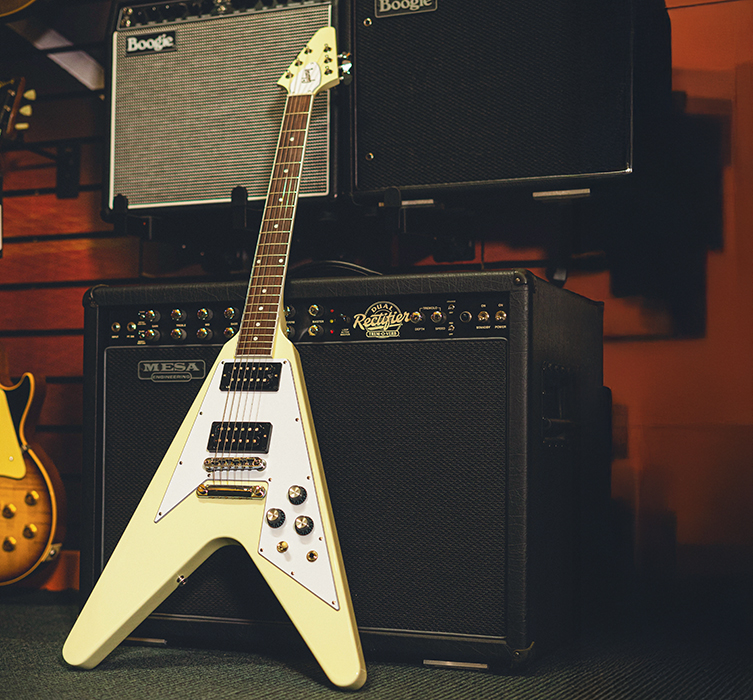
I’m assuming that you have an amplifier with a 12” speaker at least. If you don’t, then your sound will suffer a little in terms of size. What you want is an amp that has a big enough speaker to physically handle the frequencies we’re throwing at it without sonically buckling under the pressure of it all. You may have experienced this in the past, when you slammed your BOSS Metal Zone pedal into the front end of a Spider 15 amp or similar such thing: you get that horrific cardboard jar-of-bees sound, and that’s not what we want today!
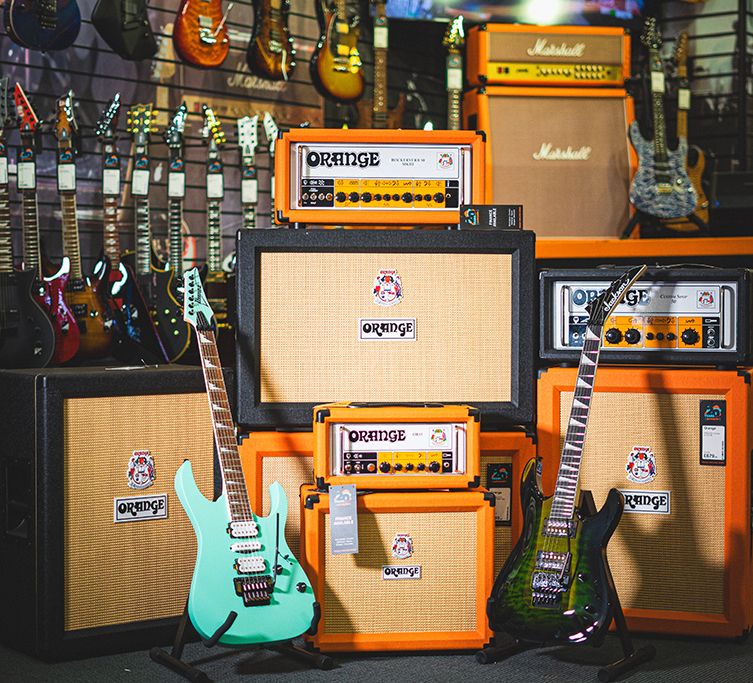
Headroom is a requirement for heavy sounds. Basically, hugely distorted tones are naturally highly compressed, and that tends to make them seem quieter than clean tones of corresponding volume. It’s a curious thing, but I’m sure you’ll have experienced it before. The way to combat this is to have enough clean power (wattage) on tap to really crank the volume (decibels) without any breakup, so that you achieve a huge crunchy gain sound when you engage your chosen pedal. You want a sound that is truly large, not ‘far away’ large.
Does that make sense? The more ‘headroom’ your amp has - and by that I mean how loud it can be without beginning to get slightly overdriven - the better it’ll be for our goal today.
Also, I’m assuming that you won’t be using an FX loop for this. The FX loop can be very effective for some pedals, but the whole point of today's blog is that you can show up anywhere, plug your pedalboard into the backline that’s there (which may or may not have an FX loop), and hopefully get your tone. Our pedal choices will all have to work in a direct line. So, I’ll not be referring to FX loop usage today, though I concede that they are super-useful for certain things!
Amp or Direct?
This is another thing I should address here. Are you even going to use an amp? You don’t need to, and in fact, I often think you’ll get a better, more consistent metal tone if you don’t. Lots of today’s high gain distortion pedals can operate as full preamp pedals, complete with Impulse Responses (IRs) - simulations of what different speaker cabinets add to your sound. This means that a guitarist can use such a pedal and go directly from their pedalboard to the mixing desk, and achieve a consistently great sound. They’ll get their sound back via floor wedges, in-ear monitors or even a physical FRFR (full range flat response) speaker.
Again, it’s about how you set up your equipment. To this end, I’ll address the ‘no-amp’ options as we go along, because it only affects the main tone/drive part of the pedalboard. It’s up to you how you use the info, but it’s a fact that you no longer need an amplifier to sound great.
What Guitar Should You Use For Metal?
What guitar should you be using for this task, I hear you yell from across the abyss? Well, it lies outwith the scope of this blog, and I also expect you’ll have your own ideas about what’s going to work best for the style(s) of metal you play, but you could always check out my Best Guitars For Metal blog for inspiration?
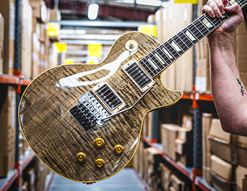
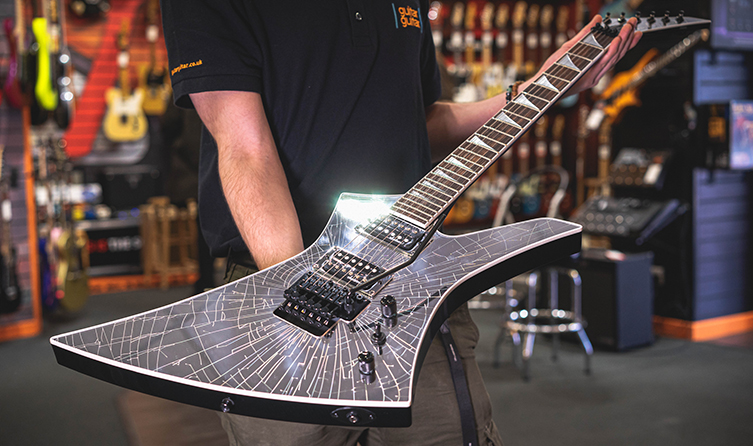
In brief, something with a solid body, a bridge position humbucker (active if possible) and easy playability are the main things. Go for a hard tail if you are a riff player, get a Floyd Rose tremolo if you want to make the air raid siren noises, and choose as sharp & pointy a body shape as your personal tastes allow. Or a Les Paul, since that’s a popular metal guitar too. I like EMGs and Fluences, but I know that you can get a superb metal roar from even a vintage PAF pickup, so go with what’s working in your hands.
The Pedal Chain
Now, I’ll detail the actual chain that we’ll be working with. When reading, please always assume that I’m beginning with the guitar and finishing with the amp/output, unless otherwise stated. Here’s how our chain today is going to look:
GUITAR - TUNER - WAH - OVERDRIVE - HIGH GAIN DISTORTION - EQ - NOISE SUPPRESSOR - MODULATION - DELAY - OUTPUT (AMP/MIXING DESK)
So, 8 pedals in total. You can choose if you need the wah or the modulation, but I’d argue that these colours are important to have in your heavy metal toolbox. Also, there is some worthy debate on just where the EQ pedal should go in the chain, but I’ll return to that subject later. Let’s dive into the pedals themselves!
Tuner Pedal
Let’s not make me waste time here by telling you why you need a tuner pedal. Keep your clip-on tuners at home (they are great, but not onstage: are you a rookie?) and put your tuner pedal first in line. Many tuners will allow you to mute the signal when it’s switched on, so definitely do that. Even purely for presentation reasons, this is a great idea.
Which tuner? Any of the following are great: BOSS TU-3, Peterson Strobostomp, D’Addario Chromatic tuner, Korg Pitchblack X and the Fender Strobo-Sonic Pro.
Wah Pedal
Do you need a wah pedal for your music? I feel like so many metal tunes have wah in their leads that it’s a mistake to not have one. They can also be used for cool special effects and tonal weirdness, so I’m voting in favour of a wah pedal.
Which one? Well, I’m calling a spade a spade here and thinking that the regular Crybaby GCB95 is pretty hard to beat. I think that will be perfect for 90% of the people reading this, because it gives the correct frequencies a good boost, and has a smooth pedal travel underfoot.
If you feel the need to dial in certain elements more - or if you have an extended range guitar - then try out the Crybaby 535Q. This lets you have more of a say over the frequency range, and where its most exaggerated point (the peak of the ‘Q’) sits, so you can adjust the effect for lower guitar tunings.
There are loads of wah pedals out there so pick the one you fancy. Some have extra features like boosts and so on, and some just have cool paint jobs. Make yourself happy with your choice!
Overdrive
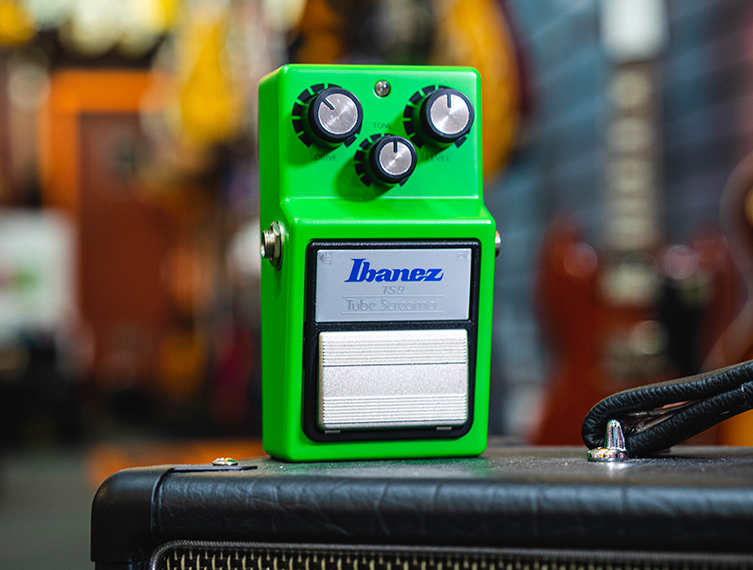
Do you know the ‘Tube Screamer trick’? You place an Ibanez Tube Screamer pedal - any of the variants - in front of your main gain stage, and you turn the gain to zero whilst maxing the other controls. Turn it on, leave it on. This adds a subtle but very good sounding ‘crunch’ to the tone. It tightens up the low end, pushes the mids a little and generally acts as a secret sauce to your metal tone. I almost guarantee that every metal guitar sound you love has this trick in place.
So you should do the same! Let’s face it, low-to-mid gain overdrives are handy things to have in general, so choose yours (BOSS SD-1 and BD-2 pedals work great for this too) and do as instructed!
High Gain Distortion
This is the most important part of your pedal board. This is where the real metal tone is going to be formed, and in my opinion, loads of distortion pedals are really bad at high gain metal tones. Fizzy, not tight enough, not giving that signature ‘bark’ that separates a fantastic high gain sound from a so-so mediocre effect. There are endless sub-par metal pedals, and that old maxim of ‘you get what you pay for’ is - unfortunately for your purse strings - very prevalent here. It’s a slightly annoying truth that the expensive ones are exceptional and the cheap ones are a false economy.
So, being as fussy as I am with these things, I will tell you the pedals that I believe are the best for getting you some actual, honestly great metal sounds, as long as you follow my headroom and speaker guidelines from earlier.
UAFX ANTI 1992
Universal Audio are recent players in the pedal game, but have decades of outstanding credentials in the recording world. In short, their stuff is super high quality and is pretty much always bang on the money. Their UAFX pedals, for example, are being used by world class players (The Edge used them instead of amps when U2 played at The Sphere in Las Vegas) which is proof enough of their effectiveness.
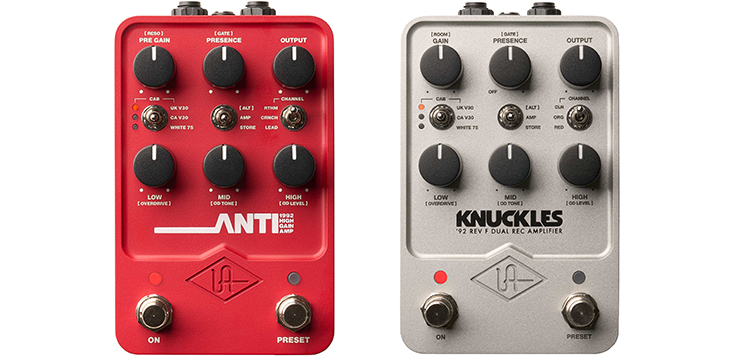
So, for metal tones? It’s clearly going to be the pedal that models the famous 5150 amplifier. The UAFX ANTI 1992 uses the ‘92 date in the title to make it clear that this is a Peavey 5150 sound, not the newer EVH 5150. Again, letting the smoke blow out the window here, that signature 5150 sound exists on both Peavey and EVH models of the amp, but I applaud UA for being specific. As an owner and user of such amps, I can honestly say to you that the ANTI has ‘it’ in spades: it really sounds like a fat, cutting, filthy 5150. This is one of the world’s great metal tones, and you can have it any old time you want it by using this pedal, which has built in IRs for recording and direct usage too. No amp? No problem! Top metal filth is available direct and wholly convincing via the UAFX ANTI 1992.
Seriously impressive.
UAFX Knuckles ‘92 Dual Rectifier
I’m adding this other UAFX Knuckles pedal here, too. It nails the famous sound of the MESA/Boogie Dual Rec so well, that you’d be very hard-pushed to tell the difference in a blindfold test. So much 90s metal from Sad But True to Blind all came from the legendary Dual Rec, and the distillation process here has been a complete one. Amazingly good, and the one to go for over the ANTI if your tastes lean more towards the Dual Rec, which I’m sure will be the case for many of you. Between them, these two UAFX pedals are about as good as high-gain distortion pedals will ever get.
Well, those two and this other one here…
Soldano SLO Plus
Another expensive one, but when you factor in that it’s about a tenth of the cost of the actual Soldano head it’s based on, it starts looking like good value! And also, what price can you really put on incredible, actually-brilliant sounding distortion? It’s an investment, but when you A/B a pedal like this or the UAFX ones against some other high gain pedals that exist, you’ll notice the difference, and you won’t want the lesser one. Trust me.
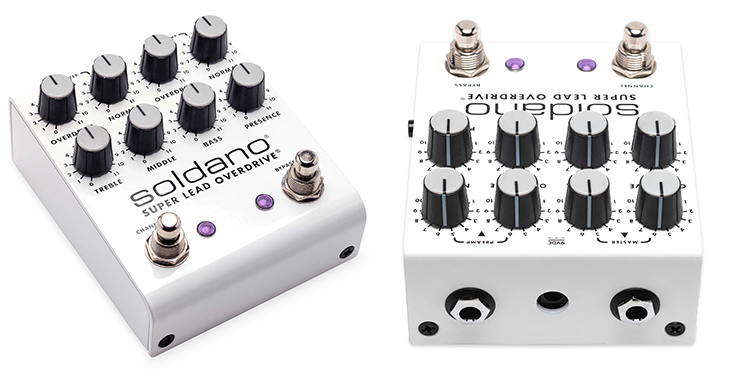
The Soldano SLO (Super Lead Overdrive) is the champagne of high gain boutique guitar amps. It has a super-charged, 3-dimensional sound that brings you depth and clarity, in a way that neither restricts nor gets in the way of your playing. The SLO Plus pedal, I’m glad to report, delivers a very convincing take on that tone. It’s actually kind of astonishing to hear that liquid gold sound coming from a little white pedal, to be honest, but it’s there!
Again, you need to put it through a power amp and something with a decent speaker or an IR etc, but we’ve been through all that. In terms of performance, this pedal sounds like the amp it seeks to model. The amp it’s modelling is a legendary thing of tonal beauty. Job done!
BOSS HM-2
Now, so far I’ve shown you three expensive pedals that do a great job of sounding like the expensive amps they’re modelled on. That’s probably what you want for great metal tones, except if you are looking to play, say, early 90s influenced death metal.
It’s a niche, but I know enough of you love this sound to make the inclusion of it here more than worthwhile. If you love the likes of Entombed, Grave, Dismember, Unleashed or any other Scandinavian group of intensely antisocial hellions, then you already know that there’s only one pedal that will give you the sound you need.
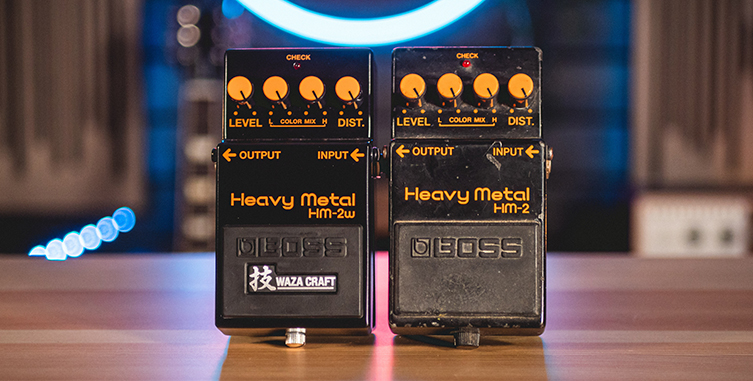
Yesssss, it’s the BOSS HM-2. After years in the guitar wilderness, this long-discontinued blowtorch of a pedal is back, as the BOSS HM-2W. Made by the Waza team in Japan, the HM-2W delivers a graveyard full of that famously divisive death metal guitar tone. They call it the ‘chainsaw’ sound and all you have to do is turn every control all the way up. Done. If you can play through an old Peavey Bandit 112 solid state amp then all the better, but I have found this pedal to be consistently horrifying through every amp I’ve tried it with.
If that’s the metal sound you favour, then don’t even bother trying anything else: you’ve found what you need!
Equaliser Pedal
Ah, yes. You saw this one earlier in the pedal chain and thought: ‘nah, I can miss that one out, it’s boring and I don’t need it’. Lots of guitarists do that, and they are all missing out. They all sound mediocre too, so unless you want that as your fate, I recommend taking heed of my advice here.
Having an EQ pedal in your chain gives you a huge amount of control over how you sound, and its applications are pretty wide ranging. For more details, have a look at my blog 7 Reasons Why You Need an EQ Pedal, but for the purposes of today, here’s a couple of reasons:
- Put the EQ after your gain section (as suggested earlier) for some powerful final shaping of your tone. Boost what you need, cut what you don’t, and it’s in the best position to be as effective as possible.
- Putting it after the gain also allows the EQ to act as an effective solo boost. Add more mids and volume, and lose some low end. Done!
- Put the EQ before the gain to serve as a preamp, or to change how the subsequent distortion behaves and clips.
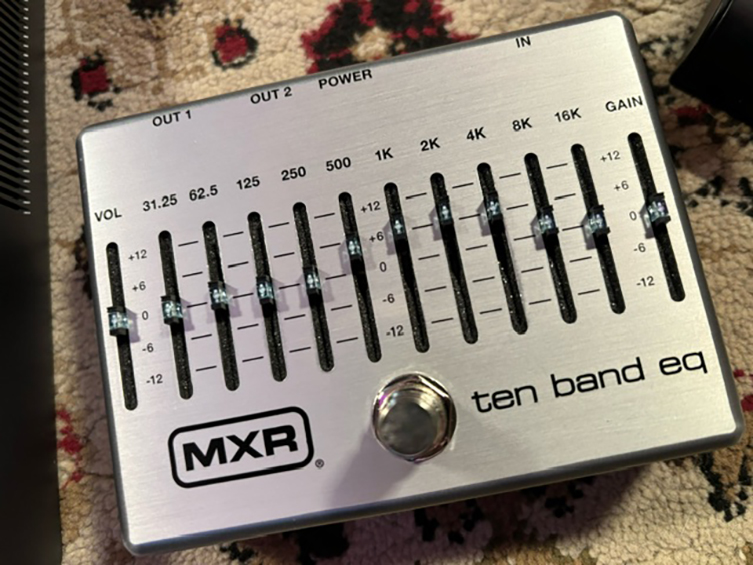
My preference is after the gain, so that’s my recommendation. As for EQ pedals themselves, I find it hard to fault the MXR 10 Band EQ for its comprehensiveness. If pedalboard space is at a premium, the 6-band MXR EQ is also great, as is the ol’ faithful BOSS GE-7.
Noise Suppressor
Here’s another boring ‘utility’ pedal that isn’t exciting to buy, but makes one hell of a difference to your final sound. Playing metal guitar parts without the aid of a noise suppressor is just not a professional thing to do. You will sound like a clueless poser who doesn’t know what they are doing, and I know you don’t want that! You want your playing to sound sharp and tight, and background hiss will ruin all of that. Modern metal genres demand a noise suppressor, but older styles will still benefit from a noise gate kicking in when required.
Get a noise suppressor, stick it after your gain and EQ, and dial the gate threshold as high or as low as your music dictates. There will be an effective sweet spot that clamps out the hiss without chopping off your notes, so just take a little time to find that point. You may want to turn it off for solos (so you don’t lose sustain) but remember to engage it again afterwards!
Most of these will do a fine job:
- BOSS NS-2 Noise Suppressor
- MXR Smart Gate M135
- Darkglass NSG (a bass brand, yes, but this works great on guitars)
- Ibanez Pentatone PT GAE
Modulation
Modulation in metal is something that is best used in a few-and-far-between sense. You may feel like this is the dispensable part of the chain, and I’d understand that. If money is tight, spend what you can on getting a great high gain distortion, and leave the modulation for when things aren't so tight for you.
Having said that, if you are able to, then a modulation pedal can really open up your sound and playing, when used correctly. I think a well-placed chorus on clean sounds can add texture and shade to your sound; it’s also necessary if you want Zakk Wylde’s No More Tears tone, and things from that era. Too much chorus will sound boring and drown your sound though, so be sparing!
A careful dose of flanger and phaser can draw attention to special moments within a song, making the whole ensemble sound more memorable. Again, too much is too much, but think of the intro to Pantera’s Cowboys From Hell and you’ll be nodding along with me, right? The intro to Iron Maiden’s Number of the Beast is another example of less-is-more employment of modulation.
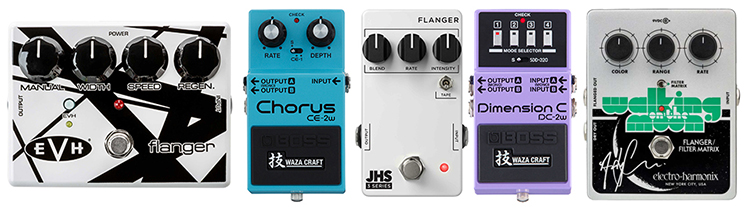
Okay, so you’ve decided that it's a good idea to have something. But what? Well, my preference is for a flanger, and that’s for two reasons: one, I think flangers are awesome, and two, you can get a very ‘chorusey’ sound from a flanger, but you can’t get a ‘flangery’ sound from a chorus pedal, so the flanger seems more useful. That’s just me, so go with your own preferences, and here are a few that I have personally used and can recommend…
Delay Pedal
Our last pedal is a delay pedal. Not a reverb. I genuinely think that, as a metal guitar player, you’ve got no real use for a reverb, and anyway, as soon as you are in a venue and playing loud, the room itself will add reverb to your sound. So why bother?
Delay, on the other hand, is space, size, texture and focus. A delay sound on your guitar solos can add grandness. It can give it a separate sonic space and atmosphere compared to your un-delayed rhythm guitar sound, and it can fill up some of the emptiness that occurs when you stop riffing in order to play a lead.
Delay pedals are essential for clean parts because - let’s face it - those clean arpeggio breakdown sections are needing a little bit of sonic spice in order to sound their best, aren’t they? Clean arpeggios without some ambience feel unfinished.
You don’t need a crazy-complicated delay pedal for what we’re just spoken about. In many ways, a humble BOSS DD-3T will give you what you require and last a nuclear age as it does so, but let me throw a few more choices at you…
MXR Carbon Copy M169 - extremely popular choice for those who just need a little extra atmosphere. People like you, basically.
Line 6 DL4 MKII - hugely popular and much more powerful, this offers lots of choice, lots of control and even a built in looper! It’s not hard to use, either.
Death By Audio Dream Station - I’m slightly cheating here, since this is a combination of delay and reverb, but DBA’s pedals are always so fun and inspiring that this may unlock some stuff in your playing.
Nothing Can Defeat Metal
Throughout this blog, one thing I hardly touched on was the notion of subgenres. I didn’t do that on purpose, because the equipment I've talked about today is going to be as good for 80s thrash as it is for 2020 djent metal; as useful for prog metal as for post-hardcore. A good heavy tone is a good heavy tone, whatever your band decides to do for breakdowns and beatdowns. Use a fuzz for stoner metal, sure, but also, just turn your guitar’s tone back and you’ll get what you need.
This pedalboard is suitable for all metalheads. I’ve curated the choices to enable you to cover all of your metal bases like a pro, with great equipment that actually follows up on its tonal promises. Take your time to dial in the tones (pay very close attention to your midrange frequencies, particularly when playing with your band), and you’ll sound like a million bucks, for the price of considerably less.
Throughout the blog, I offered a few options for most of the sections, but I always knew what I was after if it were my own board. As a recap, and to clarify my own thoughts for you, here’s my choices in order, from guitar to amp:
My Pedal Choices for METAL
- GUITAR (anything with a humbucker: a Les Paul, a BC Rich Warlock, a Jackson Kelly…)
- BOSS TU-3
- CRYBABY 535Q
- IBANEZ TS9 TUBE SCREAMER
- UAFX ANTI 1992
- MXR 10-BAND EQ
- DARKGLASS NSG NOISE GATE
- MXR EVH117 FLANGER
- BOSS DD-3T
So now you know what I’d go for. Does that match up with your own ideas? I'd choose this stuff if I were playing an old Les Paul Custom, an LTD with EMGs or an 8-string Ormsby. In all cases, I’d hear the sounds I’d want to hear.
Please use my choices as a jumping-off point for your own tonal adventures. If I were to give any advice - and I guess you were asking, since you are reading this! - then I’d tell you the following:
- Cheaping out on patch cables and power supplies will 100% come back to bite you in the ass sooner or later. Invest in good stuff and life will be easier.
- If you aren’t getting the tone you want, cutting frequencies is massively more effective than boosting them.
- You still don’t want to buy an EQ pedal, do you? Trust me, it’ll be one of your best investments.
- Let me remind you to lose the clip-on tuner when you are on stage. They are great everywhere but there. They will suck every last ounce of cool out of you.
- Corners can generally be cut when buying pedals if you are on a tight budget, but the high gain distortion pedal is not where to go cheap. Everybody will hear it, including you, forever. Spend the cash, sound incredible, and see what that does for your playing!
Okay, that’s us at the end of this one. I hope it’s been helpful, and I’ll see you again for another one soon. Check out the links below and don’t let yourself go an entire day without moshing.