Guitar fans, let’s talk about one of Gibson’s most underrated guitars. It’s a tonal powerhouse, a gorgeous looker and a real piece of history. It’s time you stopped overlooking it in favour of its siblings, because the Gibson ES-330 is really something special.
Interested in finding out more? Step right up and let’s get going!
What is the Gibson ES-330?
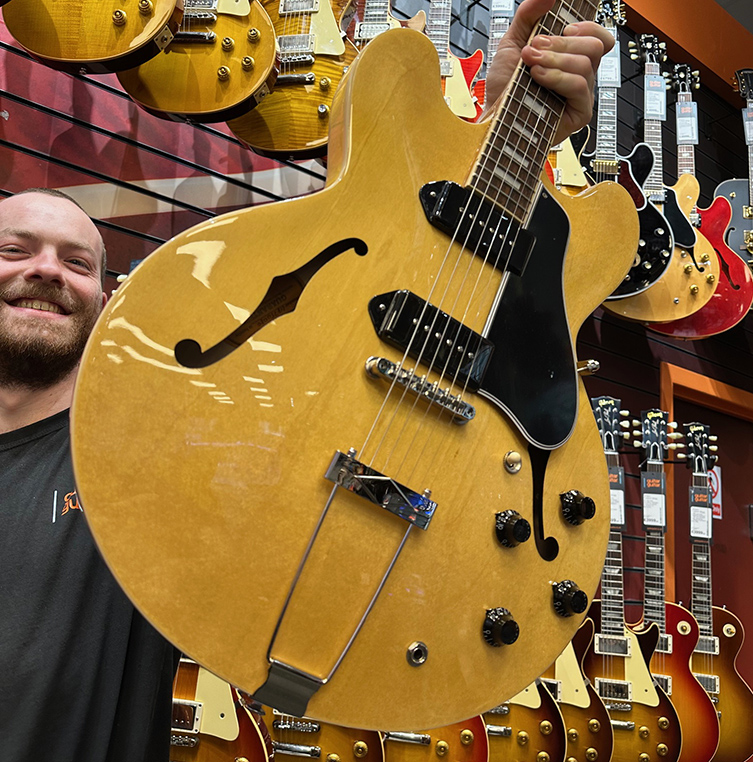
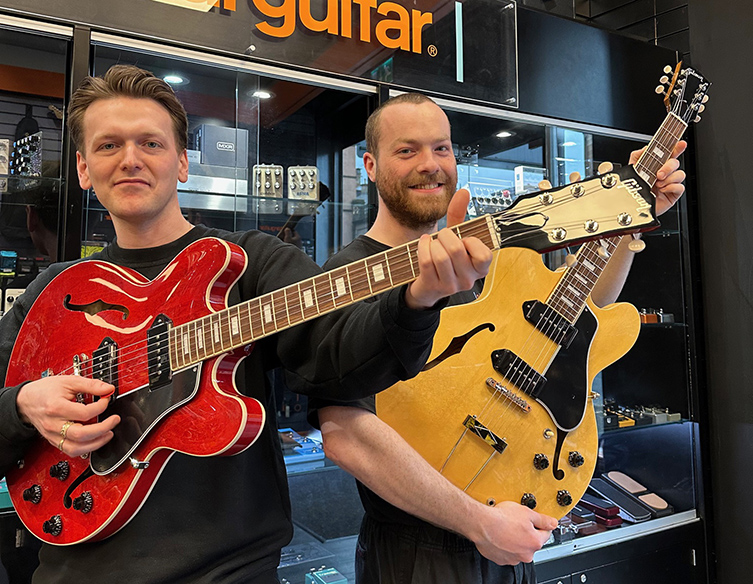
The Gibson ES-330 is a hollowbody electric guitar made in Nashville, TN by Gibson. The ES-330 debuted in 1959, one year after its sister model, the ES-335. It is a similar guitar to the 335 in many ways, but in a few important respects it is quite different.
The main difference is the lack of a centre block in the body, meaning that the Gibson ES-330 is a true hollowbody guitar, not a semi-hollow guitar. This fact is reflected in the sound and in the weight of the instrument.
Upon its release in 1959, the ES-330 was thought of by Gibson as a budget version of the more expensive ES-335. In reality, there was only five dollars’ difference in the pricing, since both guitars were named after their respective costs at the time.
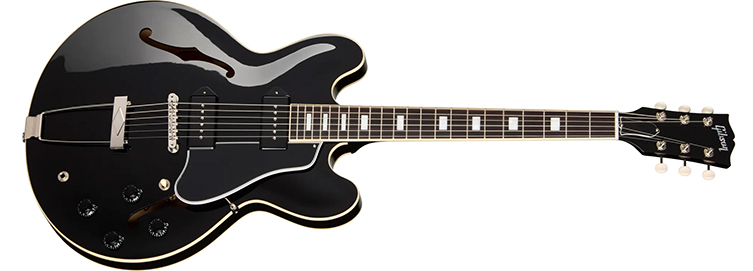
What’s Different About the Gibson ES-330?
There are a few things about the ES-330 that mark it out as different from other semi-acoustic guitars.
- It is fully hollow: there is no solid centre like you’d find on an ES-335, for example.
- It has P90 pickups, not humbuckers as you’d mostly find on such guitars.
- The neck joins the guitar body significantly closer in, at the 16th fret.
- The ES-330 has a trapeze tailpiece, which ‘floats’ above the guitar body, instead of a stop-bar ‘stud’ tailpiece.
What Does an ES-330 Sound Like?
All of these differences (see above) mean that the ES-330 has an obviously different sound, when compared to an ES-335. It has a very rhythmic, percussive sound with lots of jangle and bite, though it’s still smoother than a guitar like a Telecaster, for example. The fully hollow body gives the ES-330 a sound that other guitars just don’t have. It’s a ‘fully hollow’ sound.
The ES-330 has P90 pickups, which are chunky sounding single coil pickups.
A 330 has less sustain than a 335, and is more susceptible to feedback due to its hollow body. This, and its superlative ‘spanky’ sound, means that most players who enjoy these guitars do so with light overdrive, and more vintage tones, which help the ES-330 to really shine.
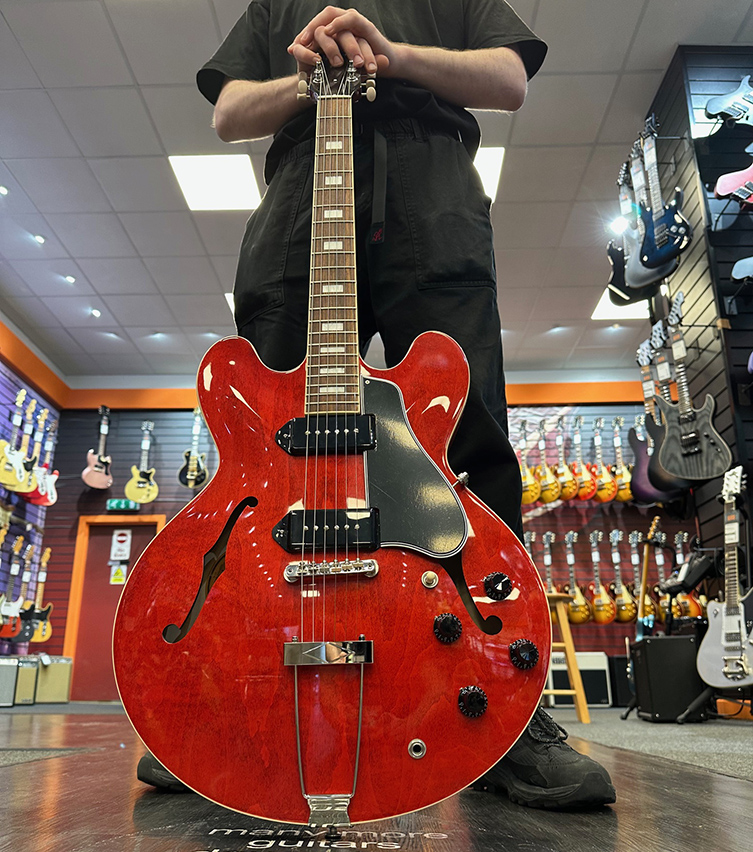
What’s So Good About P90 Pickups?
P90 pickups come in two varieties: ‘soapbar’ and ‘dogear’ versions. The difference is cosmetic: dogears have extra areas at each side for mounting screws, and soapbars have theirs in the middle of the pickup. Sonic differences are minimal, but the P90 in general has a very distinctive and musical sound. It’s a single coil pickup, but is physically larger and has more copper windings, so the sound is hotter and punchier than, say, a Stratocaster single coil pickup.
People talk about P90s as being halfway between a single coil and a humbucker. Allowing for the fact that they don’t buck any hum, I’d have to say that this is pretty spot on: you get the best of both pickups in a lot of ways.
What is the Gibson ES-330 made from?
The Gibson ES-330 is generally made these days from a 3-ply combination of maple, poplar and maple. We talk about this as laminated construction, but it does use thin slices of actual timber, as opposed to ‘plywood’ which is altogether less good quality. Original examples were made with maple plies back in the late 50s and 60s. The laminates are pressed into shape in order to give the guitar its carved look.
Otherwise, the 330 is pretty typical for a Gibson in that it has a mahogany neck, set-in to the body, and a rosewood fingerboard.
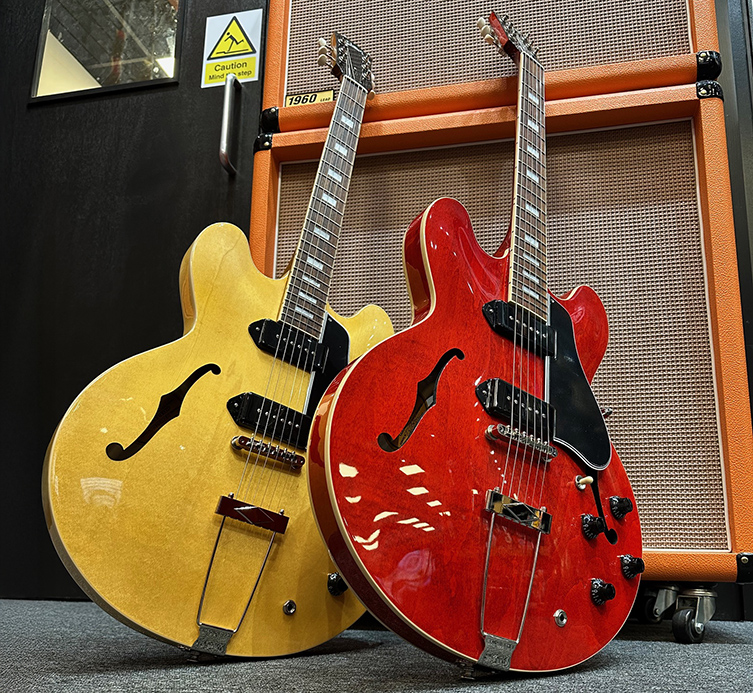
Who Uses the Gibson ES-330?
The Gibson ES-330 has been used over the years by a large number of well-known players. Here’s a selected list of some top guitarists who love an ES-330:
- The Rolling Stones (Brian Jones, Keith Richards)
- The Beatles (John Lennon, Paul McCartney)
- Grant Green
- Martin Barre (Jethro Tull)
- Gary Clark Jr
- Steven Drozd (Flaming Lips)
- Johnny Marr
- Pete Doherty
- George Vjestica (Nick Cave and the Bad Seeds)
Is the Epiphone Casino a Version of the Gibson ES-330?
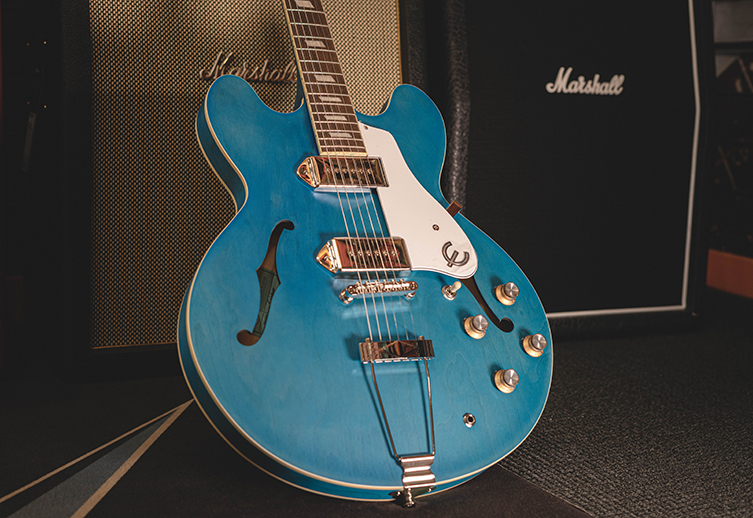
The Epiphone Casino is a very similar guitar to the Gibson ES-330, though it is a separate model. The Epiphone Casino was released in 1961, so it came out after the ES-330, and after Gibson had bought the Epiphone brand.
Both guitars have more or less the same body size and shape, and both are fully hollow. Both also have P90 pickups, mahogany set-necks and a trapeze tailpiece. If I were to call a spade a spade, I’d say that yes, they are pretty similar guitars! Remember, Epiphones from the 60s were made in Gibson’s Kalamazoo factory, so for those early Casinos, the similarities vastly outweigh the differences.
The Most Underrated Gibson Semi
I’d call the Gibson ES-330 the most underrated semi-acoustic out there. It’s a very songwriter-friendly guitar due to the hollow percussiveness that promotes strumming and rhythmic invention. It’s a great guitar for texture, thanks to a sound that is both bright and warm. The 16th fret neck join makes it a quite cosy, intimate thing to play with on the couch too, so it’s one of those guitars that quickly becomes a real companion.
Like the Rickenbacker 360 or the Gretsch Country Gentleman, it’s a somewhat idiosyncratic guitar that is 100% its own thing, and isn’t trying to be anything else. I put a lot of value on that, and feel like it’s a highly musical, useful and underrated guitar.
We have a few beautiful Gibson ES-330 models in stock just now, so why not see what you’ve been missing out on?