Welcome to this guitar buying guide, PRS fan! So, you know you like the PRS brand and want to own one, but aren’t sure about which of their offerings to choose for yourself.
I’m here to help! Over the years, I’ve played and sold many PRS guitars, owned a few and enjoyed a couple of conversations with Paul Reed Smith himself. I’ve always had an eye on the brand, and have written multiple articles on them. All of this, I hope, supports the notion that I am a reliable source of info and support on the subject.
So: I already know you want a PRS. That’s why you’re here giving me your time! My job is to make that time worthwhile and guide you towards the best PRS guitar for you. I’m going to look at each major range, including SE, S2, Bolt-on, Core and Private Stock. I’ll highlight different playing styles too, because PRS guitars appeal to a wide selection of guitarists.
Does that sound helpful to you? If so, grab a comfy seat and join me!
The Good News
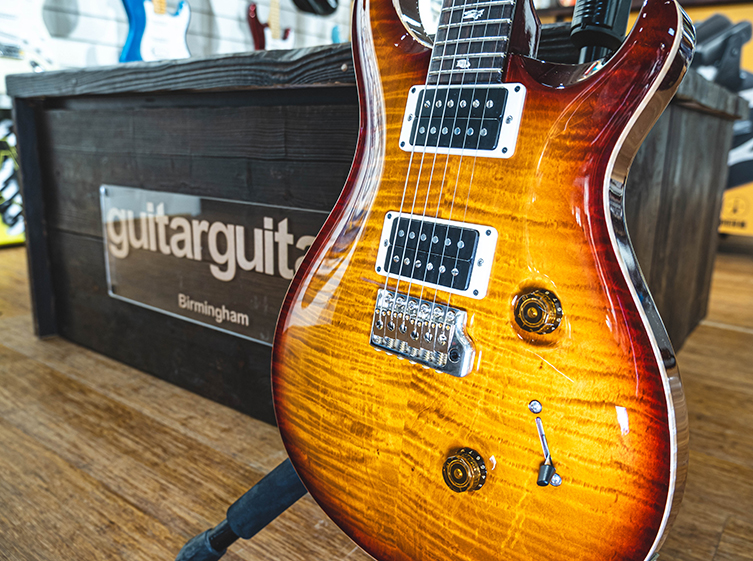
So, the good news about this subject? All PRS guitars are really good. They do not put out inferior stuff, and that goes for the stuff that’s under £500 as much as over £5000! Now, this isn’t to say that there are no differences between them, because that would be ridiculous! There are significant differences, and you’ll encounter them with me today as we progress. What I mean to say is that each instrument is amongst the best in its class for build quality, features and feel. Comparing within price points is the way to go, and assessing individual merits.
We have lots of PRS guitars available, and my aim today is to give you a good understanding of the main models, and whether they might be what you’re after. We’ll start cheap, and go north from there! But before that, I’d like to outline certain specification ‘house style’ areas that almost (not all) PRS guitars demonstrate. These are partly why they feel and sound different to comparable guitars…
- 25” scale length - roughly halfway between Fender and Gibson. Unless otherwise stated, all PRS guitars carry this spec.
- 10” fingerboard radius - Again, standard unless otherwise noted. Flatter than Fender’s typical ‘modern’ spec on 9.5”, and not as flat as Gibson’s 12” or Gretsch’s 15”.
- Patented Gen III Tremolo - basically an improved version of the vintage Fender 6 point tremolo, PRS’ patented tremolo which uses counter-sunk screws to provide a ‘knife-edge’ which allows the tremolo to return to pitch and stay in tune more accurately.
PRS SE
The PRS SE line used to be a ‘beginner’s range’ (SE officially stands for Student Edition) but that term stopped applying years ago. Built in Indonesia rather than the USA, the SE guitars are economically built - to a degree - but there’s really nothing ‘beginner’ about these guitars at all. In Indonesia - the famous Cortek facility, more specifically - these guitars are built by a dedicated team who make only PRS guitars in a premises which is used only by PRS. So, it’s not a production line that builds for a dozen varied companies before lunchtime. This singularity allows PRS’ top people, including Jack Higginbotham (PRS’ Chief Operating Officer) to routinely travel out there, supervise special training and see that the guitars being built are ‘PRS guitars made in Indonesia’ and not affordable licensed copies, if you get me.
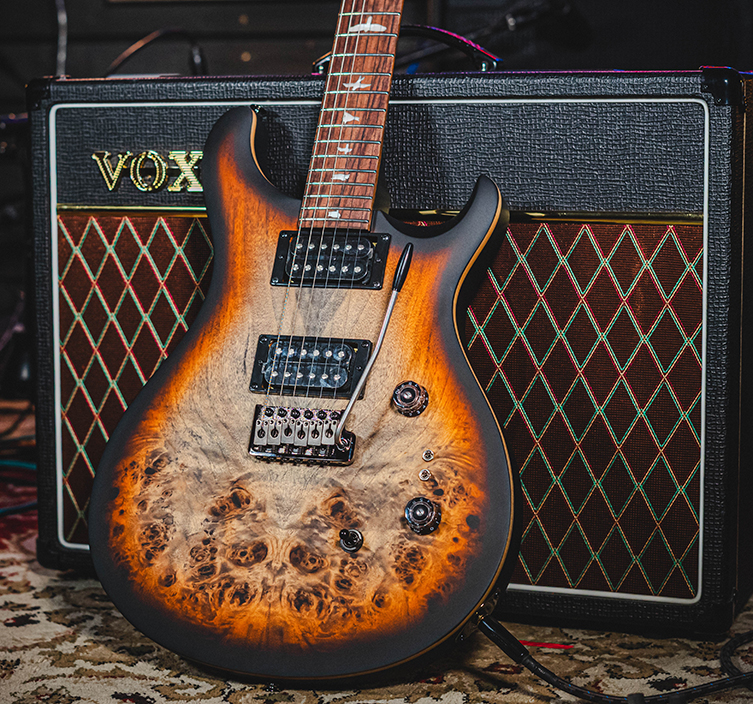
They sweat the details, and I have to say, the results make that extra work pretty obvious. The SE line is, in my opinion, as good as guitars at their price can be. They are not consolation prizes for those who love PRS but cannot stretch to a Maryland-made guitar. They are serious instruments, filled with 40 years of design know-how and R&D from Paul and his team, distilled into a range of affordable instruments that can be taken from the box and gigged.
That’s not an easy thing to achieve, and it’s not something us players should take lightly!
Buy anyway, on to the choices:
PRS SE CE24 Standard Satin
This PRS SE CE24 Standard Satin offers mindblowing value for money. I’ve actually dedicated an entire blog to it, so if you want the deep dive, click on My Favourite PRS Costs Under £500. In brief, though, this very modestly-priced instrument retains a fantastic feel (Wide Thin neck, medium jumbo frets, 10” fingerboard radius), a great selection of sounds from its coil-tappable humbuckers, and a very understated look. This is because the model eschews a figured maple veneer or a glossy finish, which for me is more of a stylistic choice and a sideways step rather than a step back. It cuts costs for sure, but it doesn’t cut any cool points in my eyes.
The CE24 is a bolt-on neck guitar, and this actually gives the guitar its own identity.
Bang-for-buck is enormous, and the attention to fit and finish is very high. It’s just impressive, and if the utilitarian vibe suits you, then you need look no further for a reliable gig-worthy axe.
PRS SE Custom 24
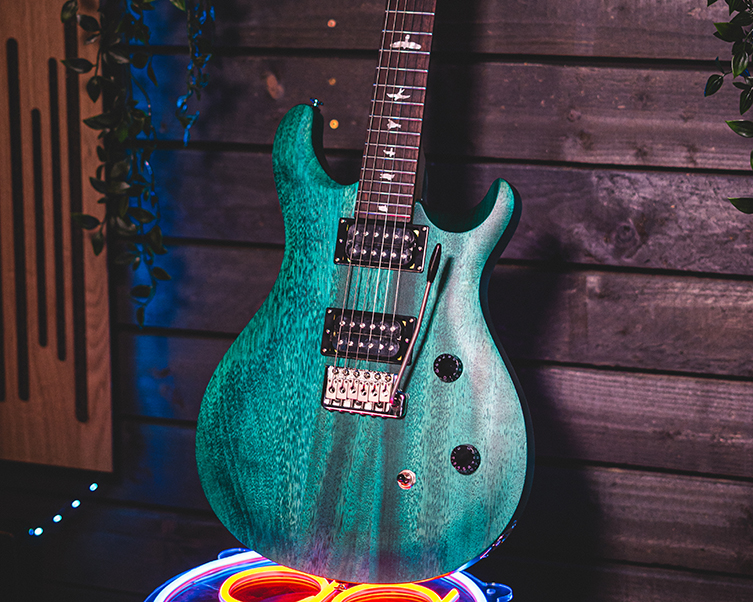
However, if you’re a PRS fan, there’s a high chance that you really do want a fantastically figured top! In this case, you still don’t have to spend a king’s ransom. Looking to the brand’s famous Custom 24 - the American version is their flagship guitar - you’ll be able to choose a quite stunning looking SE model that looks from a distance to be pretty darn similar to the US guitars.
True, it’s a thin veneer of figured maple as opposed to a thick slice, and that glossy finish is polyester and not nitrocellulose, but those are more than acceptable compromises when the guitar delivers so much overall. Built to excellent standards and featuring a versatile, rock-oriented voice, the SE Custom 24 is a looker and a performer. Indeed, the biggest question may well be which of the lovely colours to opt for!
Other PRS SE Models to Check Out
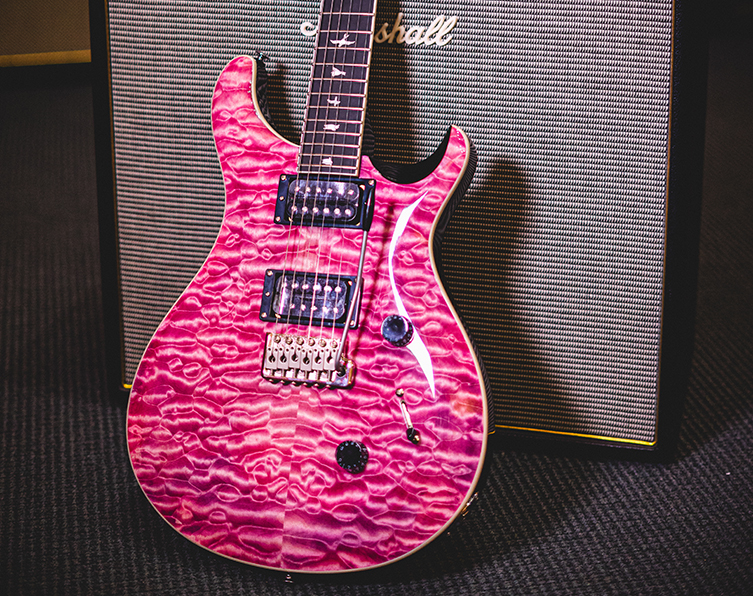
PRS SE DGT: an excellent alternative that is similar to a Custom 24 but with a different neck feel, a more vintage tone and other tweaks.
PRS SE Silver Sky: I’ll talk more on the Silver Sky later, but rest assured the SE model is extremely impressive!
Who Are PRS SE Guitars For?
- Gigging players on a tight budget
- Guitarists requiring a quality second guitar for other sounds or as a good backup
- Beginners who want an instrument that will last long beyond typical beginner guitars
- Hobby players who want a beautiful looking, affordable guitar with a range of sounds
- Rock players who want versatility and a classy look at a great price
PRS S2
Now we move away from Indonesia and begin to look at American PRS guitars. The S2 range (it means Stevensville 2, i.e. the second line of guitars from the PRS home of Stevensville, Maryland) are quite a distinct group of guitars.
If the SE range looks to offer cheaper versions of Core PRS guitars, then the S2 offers more affordable American PRS models that often have a different vibe from the Core altogether. They have their own shapes, models, specs and colours for the most part, and when they do converge with the rest of the PRS family - say, in the form of the S2 Custom 24 - it’s still quite easy to tell them apart.
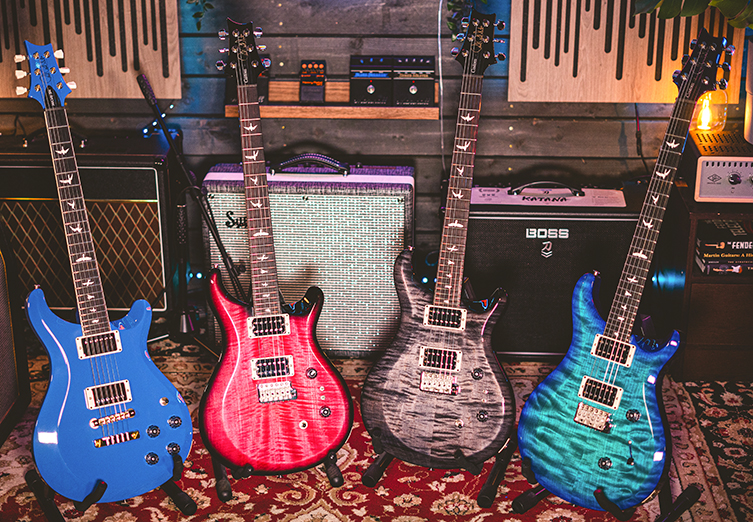
The idea behind the S2 range is to offer workhorse instruments to busy, gigging players, made in the ‘proper’ PRS factory but produced to certain parameters that allow them to come in at significantly cheaper prices to Core line instruments. You still get the great feel, the tones, the Bird inlays and the PRS attention to detail, it’s just in a simpler package with less decoration, less carving and sometimes a pickguard to speed up the build process.
PRS S2 McCarty 594
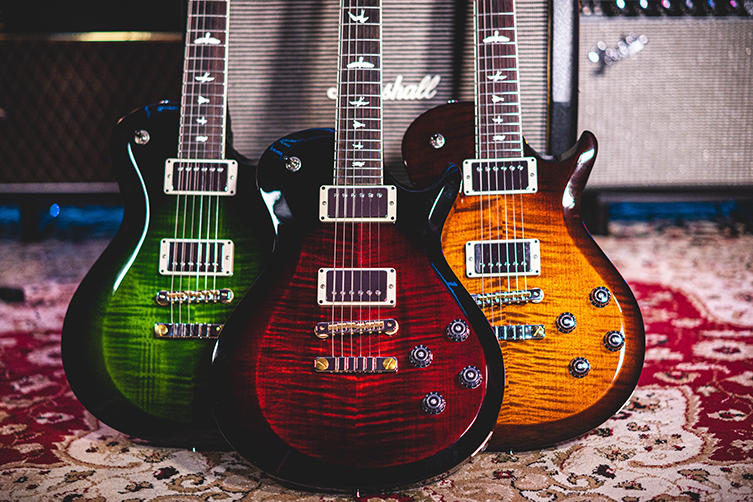
Now, the guitar I’ve chosen here is relatively specific, so it’s not intended to showcase the S2 range per se. What the PRS S2 McCarty 594 does successfully showcase is an interesting side to PRS’ constant reworking and innovating.
So, Ted McCarty was Gibson’s president during the golden age of the 50s and 60s. He became something of a mentor to a young Paul Reed Smith, and the gifts passed down from him to Paul have been paid tribute in the McCarty range of guitars. These actually somewhat fly in the face of the usual PRS spec, and are what I’d brazenly call ‘more Gibson-ey’. Look at the control layout: you see it, right? There’s also the ‘594’, which is a reference to the scale length being 24.594”, closer to a Gibson measurement (24.75”) than PRS’ usual 25”. Add to that the vintage ‘low wind’ pickups, which to my ears do a grand job of summoning that old-time PAF cut and bloom, and you have yourselves a PRS that almost isn’t! It even comes as a Singlecut!
This guitar is for lovers of the Les Paul and SG, who want a guitar that’s made to PRS standards and offers that extra versatility, that great neck feel, and a hundred other decisions and tweaks that make the brand stand out.
Who Are PRS S2 Guitars For?
- Gigging players who want USA quality at more affordable prices
- PRS fans who need a slightly more subtle looking guitar for gigs
- PRS players who maybe don’t want to take their heirloom Private Stock guitar on the road
- Guitarists who want an American electric guitar, and also something a little different.
PRS Bolt-On
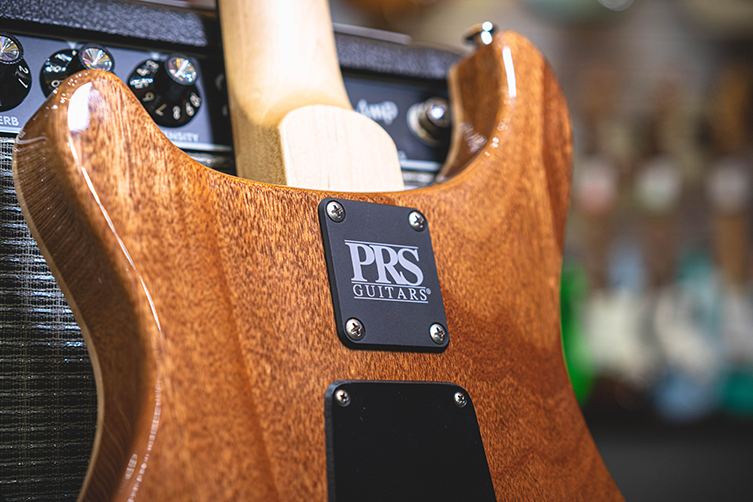
It used to be that all PRS guitars had set necks. It was simply how they were, until enough people asked for a bolt-on option, and the CE range sprung to life. CE - Classic Electric - are very similar looking to the famous Custom 24: same body shape, carved top, figured maple etc etc. They just have a bolted-on neck which lends a certain snappiness and rhythmic influence to the sound.
PRS CE24
The PRS CE24 came first, followed by the CE22, which isn’t permanently part of the catalogue, it seems. For me, there’s an added ruggedness to the bolt-on models that I find enormously appealing, and in many cases preferable to the set-neck equivalent. That’s just me though, and you do lose a little bit (not much) of sustain due to this build style.
If you need a little bit more ‘glass’ or ‘quack’ from your clean sounds - OK, I’ll just say it: ‘Strattyness’ - then I recommend you try a selection of CE24 models. It is currently available as part of the SE range and as an American-made model.
PRS Silver Sky
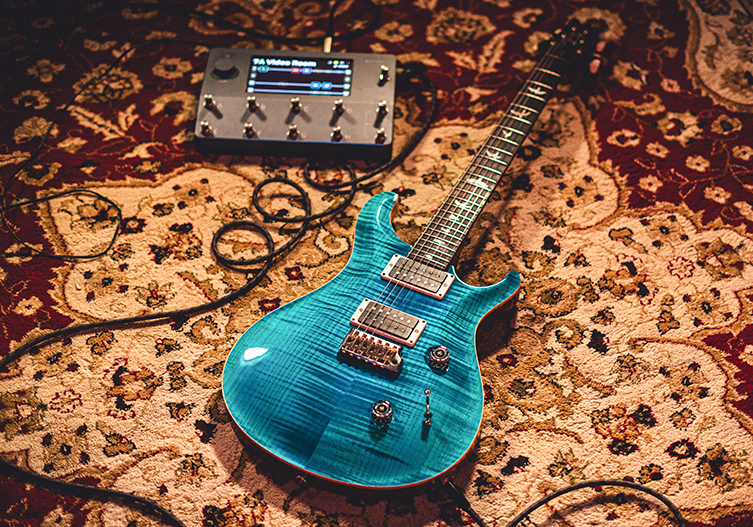
Speaking of Strattyness, I don’t suppose any major guitar manufacturer could get any closer to a Strat than this without also invoking a lawsuit! This bold release is a collaboration with blues-rock smoothie John Mayer, who left Fender to make this with PRS. The Silver Sky is undoubtedly a very close take on Fender’s finest, and you’ll either resonate with that as a concept or not.
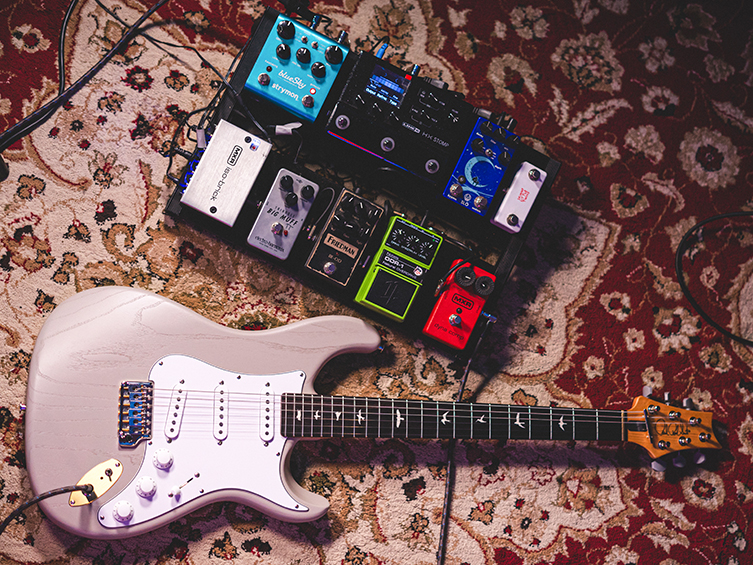
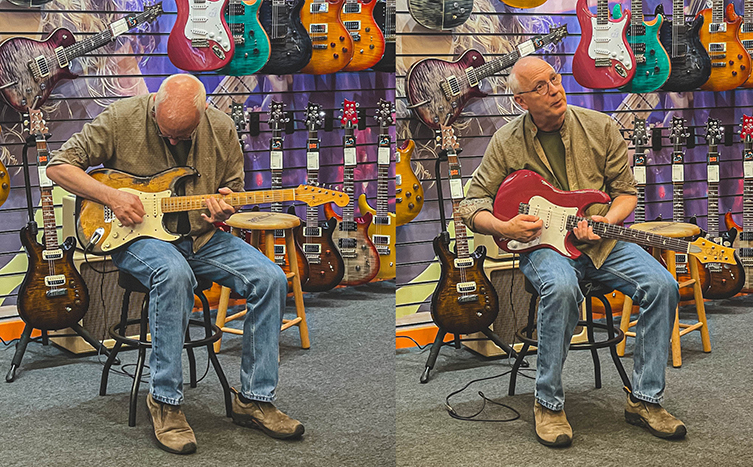
What’s not in debate is how successfully the Silver Sky manages to create a super-authentic 60s Strat tone. I can say from personal experience - Paul Reed Smith playing them both in front of me in our Glasgow guitarguitar store - that yes, there is really no tonal difference between a genuine vintage Stratocaster and a PRS Silver Sky. It’s controversial stuff in guitar circles, but I saw and heard it for myself, so there you go! And it was one of our stock Silver Skies, pulled off the wall hanger by Paul with no mods done to it prior to his visit, so it proved the concept for me!
PRS Bolt-on guitars are mainly for guitarists who like that spanky, funky sound. You know the one! The CE24 delivers lots more, but it still has that, too, and that’s why it’s one of my personal favourite PRS guitars.
PRS Core Range
The PRS Core Range is the brand's flagship line of Maryland-made guitars. This is where the aspiration begins. For many, it’s not really a PRS until you get to here, the home of the Custom 24 and its brethren.
PRS Core guitars represent a very interesting place where high performance meets investor collectibility, and is unlike most any other brand in this respect. Despite being only 41 years old as a company, fans have their favourite manufacturing years for choosing Custom 24 models. That’s behaviour normally reserved for golden age Fender and Gibsons!
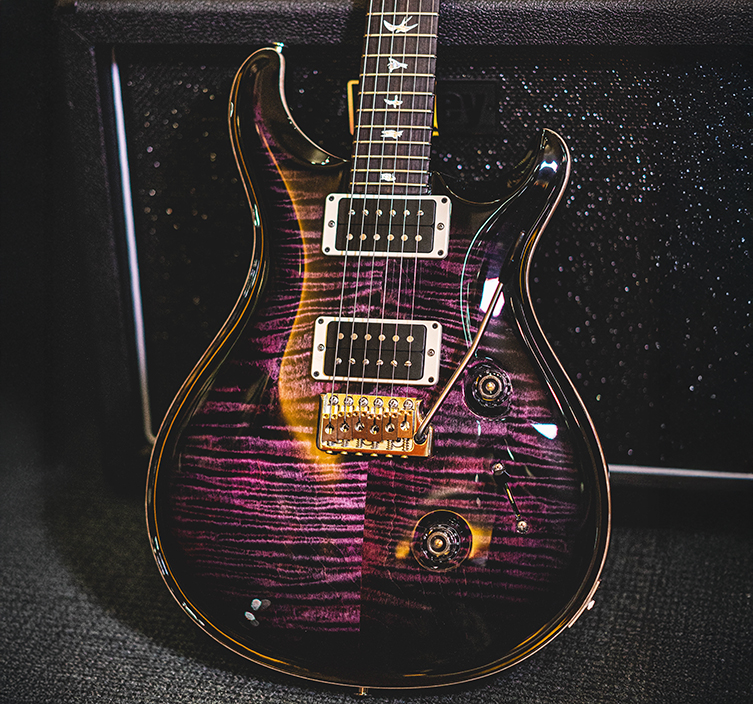
Core guitars are made with hand-picked wood, selected and dried to perfection. All guitars are built following Paul’s ‘rules of tone’ (21 guidelines written in 2006), which each PRS artisan holds as sacrosanct. Pickups are wound in-house to exacting numbers, using American alnico magnets (not weaker ones from overseas); and the guitars are all finished in a thin-skin coat of nitrocellulose. This makes clear the comments about PRS’ standard guitars being like another brand’s custom shop pieces. They upped the game for everybody else in 1985, and a lot of manufacturers still haven’t caught up with them.
PRS Custom 24
No PRS blog is complete without assessing their trademark guitar, the Custom 24. I suspect you’ll already know this guitar well, but it doesn’t hurt to check out certain angles again.
For one, this is one of the few guitars that can genuinely tackle almost any sound and genre without compromise. An HSS Stratocaster will cover most things, but they don’t convince in the hard rock stakes that way a heavily overdriven Custom 24 does. I think it’s the mahogany and set neck, along with the resonant woods and super-tight build quality, but there’s definitely a strong tone here, full of clarity.
To reiterate, the Custom 24 is an exceptional lead guitar, whether your flavour is classic 70s rock, 80s hair metal, 90s shred or whatever. This means by default that it is also a great blues lead guitar. Work with the control knobs to dial out a little of the sizzle (or don’t!) but you can easily evoke the sound of 60s Chicago or 80 Texas with one of these. Easily.
When you start looking at Custom 24 models, you’ll see many variations of top, finish and hardware colour, but otherwise the Custom 24 is more-or-less unchanged from its inception in the mid 80s, give or take some small details. If ever a guitar were greater than the sum of its considerable parts, it would be the PRS Custom 24.
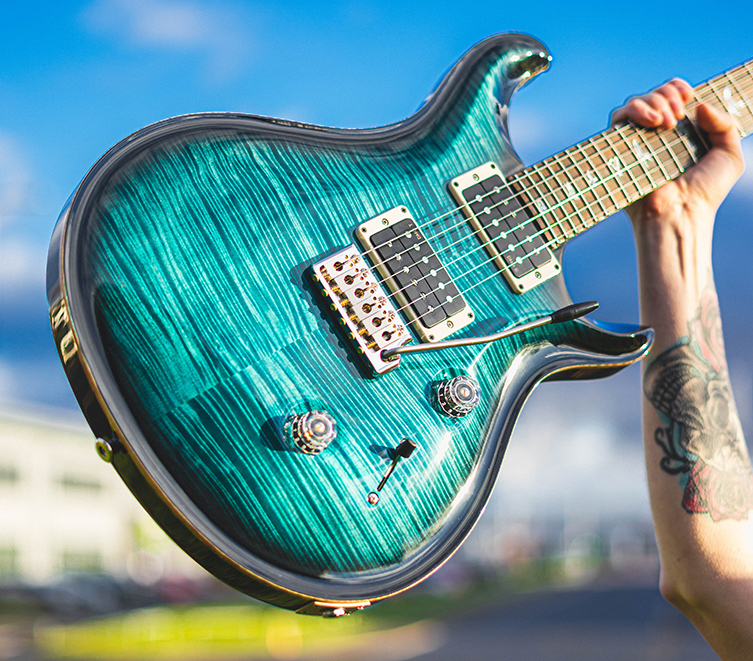
Since we’re on the subject, here are a select few of those Custom 24 variations…
- PRS Custom 24-08: the addition of two micro switches for independent coil tapping adds extra variety, making a total of 8 pickup combinations.
- PRS Custom 24 Piezo: this adds a set of acoustic-like tones to the deal via an under-saddle piezo pickup. Run the piezo separately or blend the pickups together.
- PRS Custom 24 Floyd: a Custom 24 fitted with a double locking Floyd Rose tremolo and locking nut. Rock-solid tuning stability and endless potential for whooping divebombs!

Other Core Models
Of course, it’s not just the Custom 24 here. The PRS Core lineup offers a number of beautiful guitars for different types of player. Let me briefly outline a small number of examples…
- PRS Hollowbody: larger body, and hollow with an f-hole. Perfect for jazz and also loved by many country players.
- PRS Custom 22: two frets less than a Custom 24, which actually changes the whole feel of the guitar, not to mention the tone, since everything sits in a slightly different place. For vintage guitar fans, thanks to its less modern feel.
- PRS Modern Eagle: similar to a Custom 22 but with an H-S-H pickup layout and additional switching for further tonal options. An amazing studio guitar.
Who Plays a PRS Core Guitar?
- Pro players who want the best guitars to record and tour with. They want high performance guitars with a hint of ‘vintage’, that can be relied upon like a trusty wrench, and that happen to look like oil paintings.
- Guitar fans who like elements of Fender and Gibson guitars, and want the best of both in one instrument.
- Guitarists of any calibre who appreciate high quality, high performance and high levels of beauty.
- Musicians who appreciate the past but also want to look towards the future.
- Professionals who require to cover a lot of tonal bases during a session, with a guitar that offers unlimited performance.
Private Stock
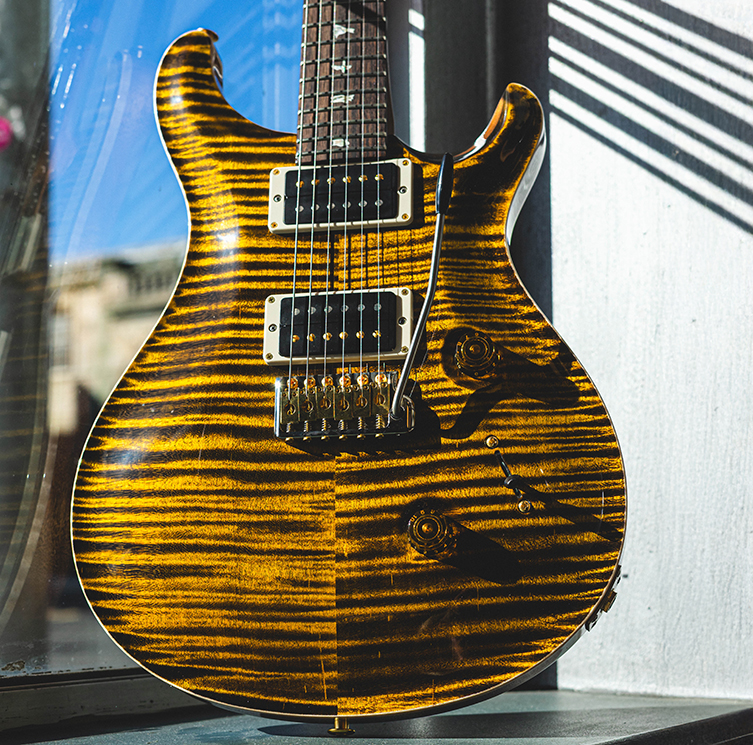
Ok, now we’re at the top end of the line. The summit of the mountain. Up here in the PRS Private Stock world, there’s less rigidity in terms of specific models, and more openness to possibilities. Begun in 1996, this is the best of the best: the best timbers, the most detail, and the most time spent on the build. It’s where all of the Limited Edition guitars come from, and the rare Built To Order instruments.
With PRS Private Stock, it’s about building truly exceptional one-off pieces with a greater allowance to the art of it all, and there’s more scope for creativity. Dragons? You’ve heard of the PRS Dragons, right? Well, they are from here, and if you don’t know about them then please click my PRS Dragons blog and let me introduce you to your new favourite guitars!
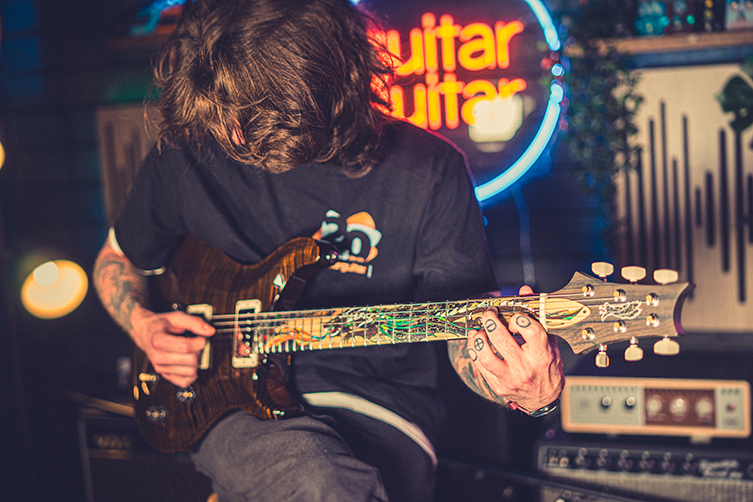
PRS Private Stock guitars lie in that crossroads between premier musical instruments, works of art, and pieces of magic. The Private Stock is a dream factory, where individual heirloom instruments are finely crafted, for those who want only the finest examples of musical instrument art in the world.
If that sounds like you, then get in touch because we are PRS Private Stock dealers, with over 20 years’ experience. Let’s get that dream build started!
Which PRS is For You?
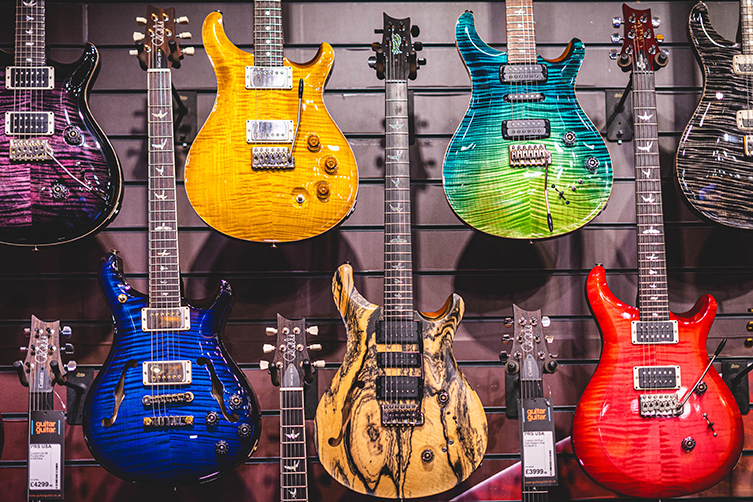
So, friends, we’ve come to the end of this PRS buying guide. I hope I’ve touched on some areas that interested you, and illuminated a few others. One thing I haven’t touched too heavily on is musical genres. I feel like it’s not actually very necessary. Why? Well, one word that has popped up again and again is ‘versatile’. The fact is, if you play rock, pop, blues, jazz or fusion, then a PRS guitar is going to work for you. If you play metal, a PRS will definitely work, but choose certain models over certain others (the SE Mark Holcomb SVN is a good place to start!); and if you play retro indie music, then my guess is that you haven’t even made it this far into the blog, since PRS won’t be your thing!
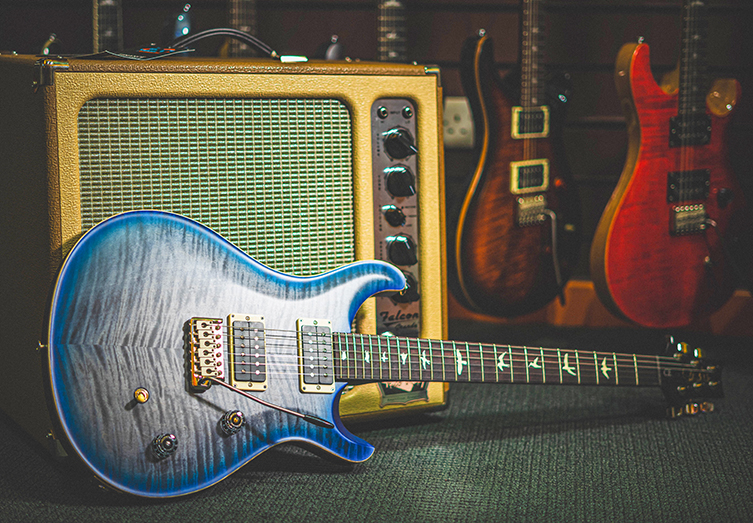
For most players, it’s more a matter of budget, then it’s a choice of feel and looks. That’s why I took you through the ranges one by one. When selecting a PRS, I’d definitely recommend trying models across the board: for example, just because you prefer Les Pauls, doesn’t mean that you’ll automatically prefer a McCarty 594, as I found for myself!
But okay, let me be specific for the sake of completion. Here’s how I’d suggest you go, at least to begin with:
- Best PRS for players on a budget: PRS SE CE24 Standard Satin
- Best PRS for classic rock and vintage tones: PRS McCarty Singlecut
- Best PRS for hard rock: PRS SE Tremonti, PRS S2 McCarty or PRS Custom 24
- Bet PRS for metal: PRS SE Mark Holcomb SVN or PRS Custom 24 Floyd
- Best PRS for jazz, blues and fusion: PRS SE Hollowbody II or PRS Hollowbody II
- Best PRS for Versatility: PRS Custom 24 Piezo or PRS Modern Eagle
- Best Overall PRS: PRS Custom 24.
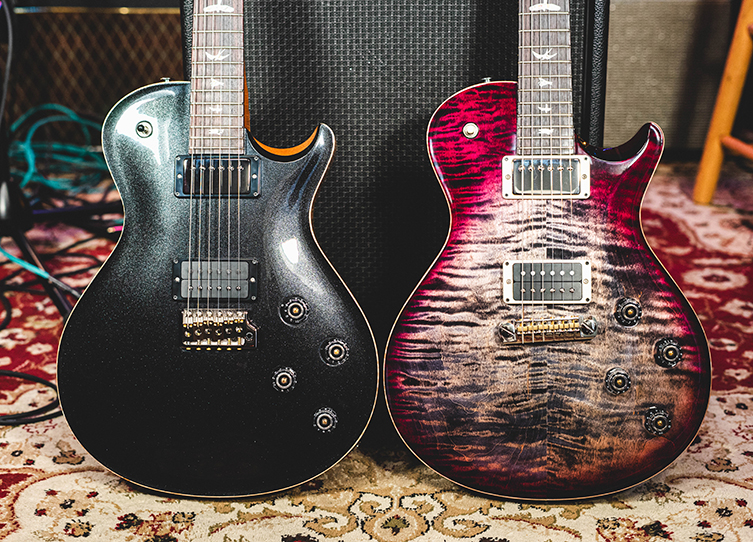
How was that for you? I haven’t included every PRS guitar that’s available by a long shot, because that’s beyond the scope of this article. I chose key models that demonstrate the ethos of the brand, and what to expect from them in general. Use my advice as a springboard for your own tastes and sensibilities, and it won’t be long before you land on your perfect PRS.
I’ll come back to my early words about all PRS guitars being good. They are, and if you buy the best PRS guitar that you can afford, then you’ll not have wasted a penny. I can’t advise you on your preferences, but I can tell you that you’re going to have a great time no matter which one you pick!