What shape is your acoustic guitar? Given that acoustic guitars all fundamentally do the same simple thing, it’s amazing how much their looks, size and style can vary. If you are new to the world of guitars, you may need a helpful, straightforward guide to the different shapes out there. Even if you are more seasoned in the guitar-playing lifestyle, there could be some areas that are not so clear to you.
For example, what is the difference between a classical guitar and a flamenco guitar? Well, not tons, as it happens, but there are differences, so given my years of experience playing, recording and writing about guitars, I’m as good a person as any to run you through this subject!
I’ll take you on a tour of the main contenders, showing off some prime examples in pictorial form as I do so. Hopefully you’ll pick up on the difference and develop opinions on what you like and what isn’t for you. There are so, so many different acoustic guitars out there that there’s bound to be one that’s just perfect for you! Let me help you find that today.
Dreadnought Guitars
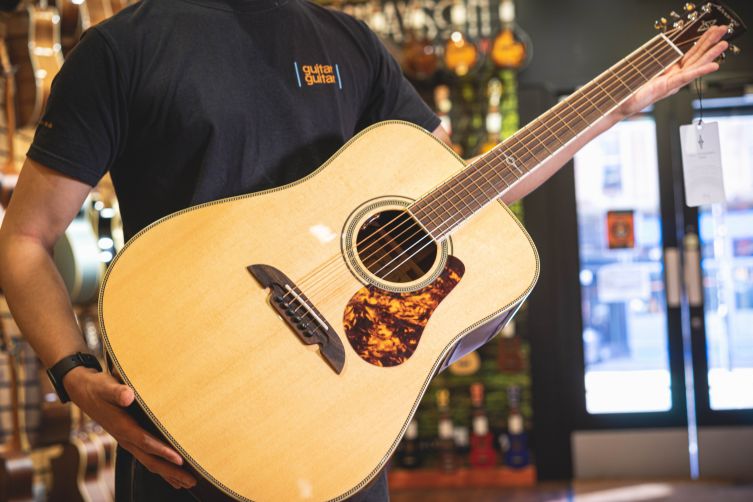
It’s the stratocaster of acoustic guitars, if you like! The dreadnought guitar is the default ‘acoustic guitar’ shape, the defining design that most of the populace will recognise.
The dreadnought - named after a large style of battleship due to the guitar’s relative size - came about as a response to guitarists in the pre-amplification world needing more volume to compete with other instruments.
As such, the dreadnought is large - though not the largest acoustic - and deep bodied, so the resulting sound is loud. The ‘shoulders’ of the guitar - where you’d maybe have cutaways if it were an electric guitar - can be described as being square (like a Gibson Hummingbird or Martin D-28) or round-shouldered, like a Gibson J-45.
Orchestral OM/000 Guitars
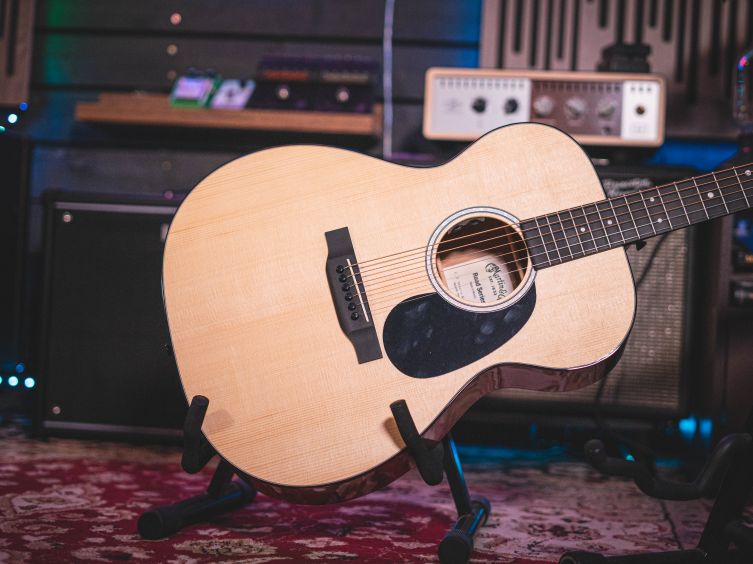
The orchestral style guitar, also known as a 000 or triple-oh, is a slightly smaller, narrower and thinner acoustic. Martin & Co. pioneered this one, as they did the dreadnought, and its slightly more compact size is quite obvious to see compared to a dreadnought. Orchestral models are known as ‘OM’ and the main difference between them and a 000 is actually the scale length: the 000 is traditionally shorter with a 24.9” scale, whereas the OM has a slightly larger 25.4” scale.
'Folk' Guitars
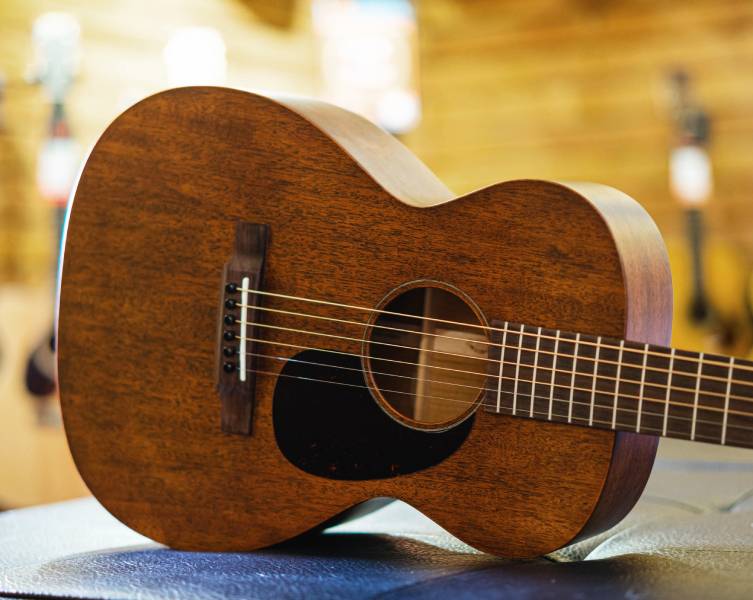
I put this one in quotes because there isn’t a specific size or shape for folk models other than being similar to a 00 or in between a 00 and 000. So basically, this is an acknowledgement of the other myriad shapes out there that look like OMs or 000 models but are perhaps a little bit smaller. As I mentioned, acoustic guitar builders make all manner of tiny varieties, so one company’s ‘folk’ guitar may not match another company’s offering.
These 'folk' guitars get that name because smaller, shallower guitars with shorter scale lengths feel really good for fingerpicking, and are used less often for strumming because they are quieter. Folk styles use more fingerpicking styles (generally speaking), so the glove fits the hand here!
Grand Auditorium Guitars
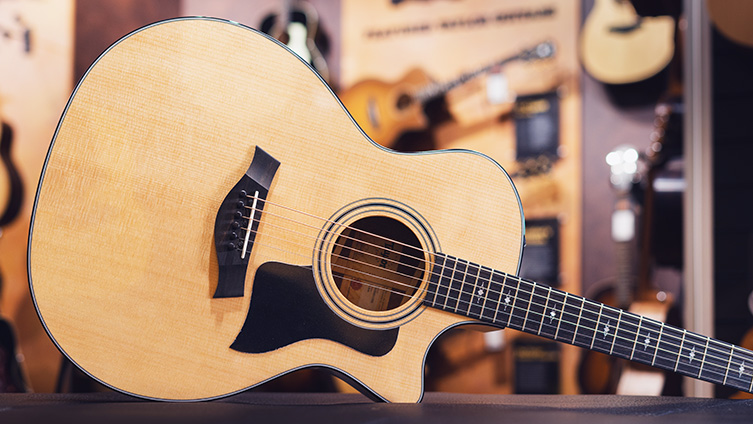
The Grand Auditorium guitar shape belongs to the Taylor brand, though I’d say that lots of other companies use a similar size and shape too (Takamine, Yamaha and Ibanez spring to mind). The Grand Auditorium is a little smaller than a dreadnought and has more of a waist, as it were. It was designed to be equally effective for strummers and pickers, which is very much the case. The smaller size means that grand auditorium guitars are generally a little quieter than dreadnoughts and project less than a jumbo guitar.
Cutaway Guitars
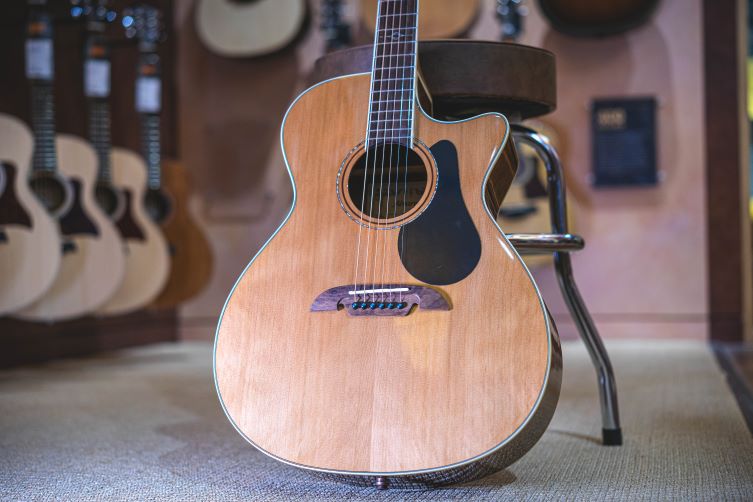
A ‘cutaway’ acoustic guitar or electro acoustic guitar is simply any design that has the shape slightly altered (cut away) to enable easier upper fret access. As such, there’s no definite style of shape to a cutaway acoustic: you get cutaway dreadnoughts, cutaway grand auditoriums and plenty more in all shapes and sizes. A ‘CE’ after the name of an acoustic guitar (for example, an Alvarez MF60CE) simply denotes it as a Cutaway Electro, or a guitar with a cutaway and a pickup system.
Travel Guitars
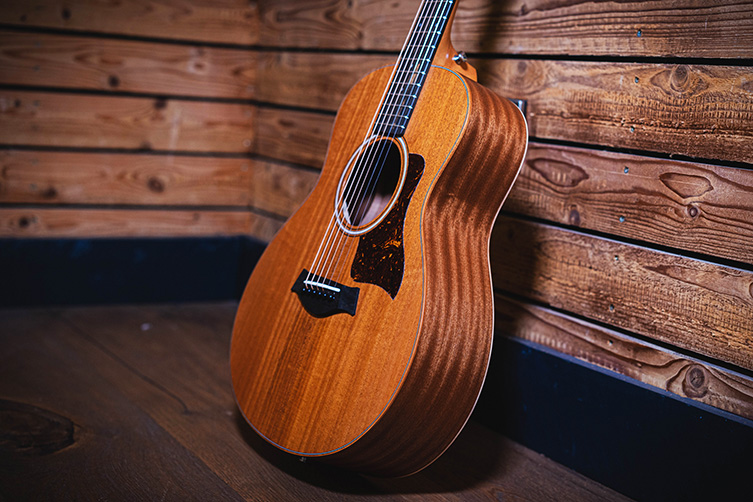
Not so much a ‘shape’ as a subsection of the market, travel guitars are downsized acoustic guitars designed to be played on the move. Portability is key, but compromised tone is not, so many of these models are designed carefully to sound louder and bigger than their size might suggest.
Lots of companies offer their take on travel acoustics: the Taylor GS Mini is easily the most popular, but Martin, Yamaha, Sheeran by Lowden and many more companies offer great examples too. Shapes range from shrunken dreadnoughts to downsized grand auditoriums and classicals. The aforementioned GS Mini is a small Grand Symphony, which is in fact Taylor’s jumbo design.
Parlour Guitars
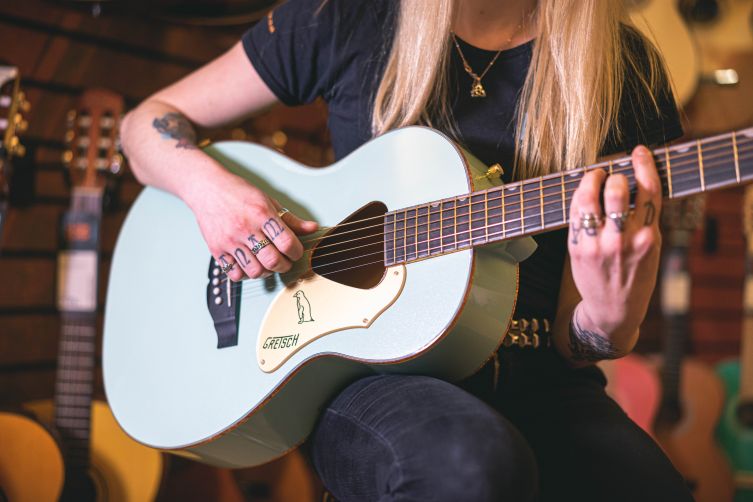
Parlour acoustics guitars are pretty easy to identify because they are small and have a sort of elongated, almost lute-like shape. Not as small as travel guitars (which are only a recent invention, really), parlour guitars are the next logical step down size-wise from a folk/OM/000 guitar. The smaller size offers a more intimate playing experience.
Jumbo Guitars
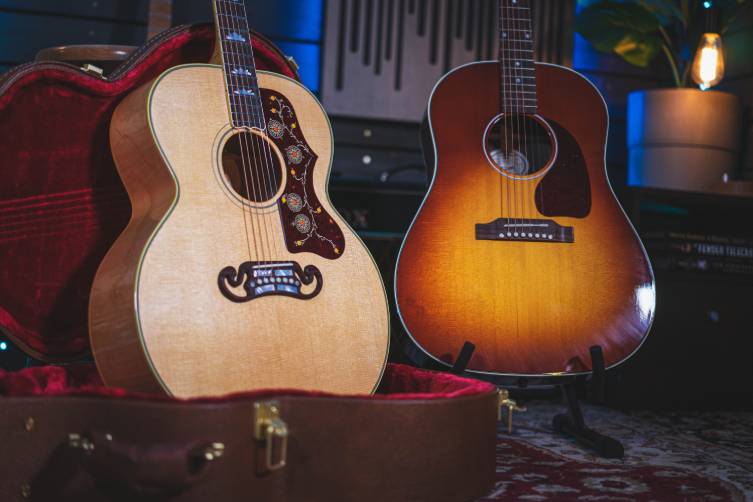
Jumbo guitars are what happen when you go the opposite way to the OM, parlour etc and go big instead. Designed to be even louder than dreadnoughts, jumbos are significantly bigger and louder. Size is the main tell here, and most jumbos have a rounder body shape to better suit the size and intended sound. The most famous jumbo acoustic is probably the Gibson SJ-200 (shown on the left, below), used by Elvis, Sheryl Crow, Bob Dylan and a great many more.
Classical Guitars
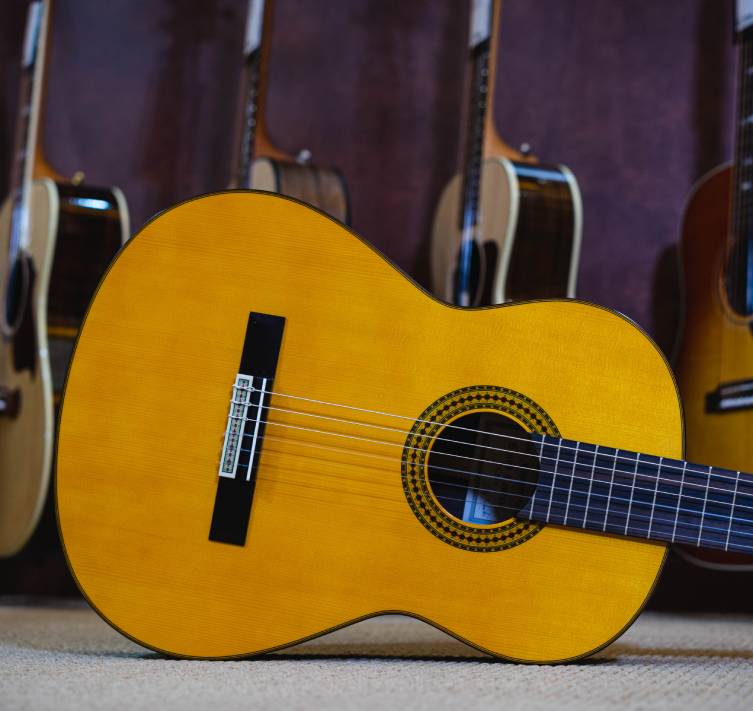
Classical guitars are specifically different to other acoustics in a number of ways. You’d best recognise them by their nylon strings, of course, but their shape is also quite specific: rounded and slightly smaller than a dreadnought, with the fingerboard joining the guitar’s body at the 12th fret.
Classical guitars tend to have less decoration on them, and whilst cutaways are now popular these days, the majority of classical guitars still do not have one.
Flamenco Guitars
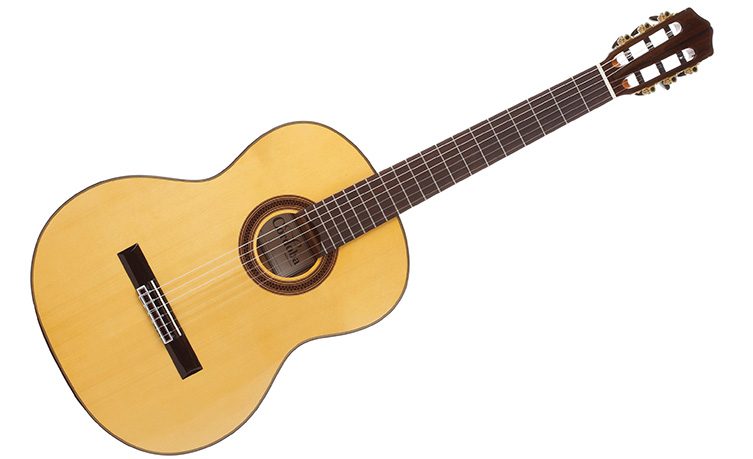
One variation on the theme of classical guitars is the flamenco guitar style. Superficially very similar to a classical guitar, flamenco models have a few differences to separate them, and these are generally based on the music that’s made on them.
So the main shape remains the same as a classical (cutaways are more usual than they used to be) but the depth of the flamenco body is a little thinner than a regular classical guitar. Also, this is not a ‘shape’ thing, but the string height on a flamenco is noticeably lower, too. This facilitates the faster techniques required by the style.
Resonator Guitars
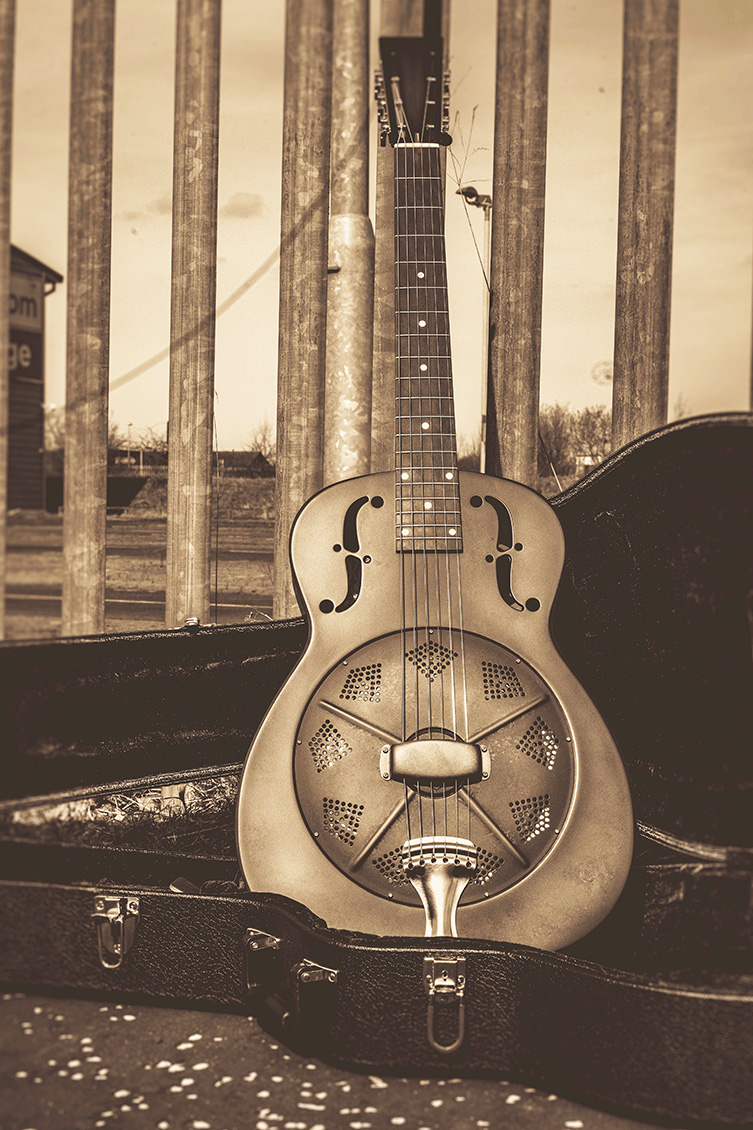
Resonator guitars are fairly unique, not only in how they look but how they get their sound. In terms of shape, they can be a number of styles but are often vaguely dreadnought in design. The big difference, of course, is that they are made from metal, and use devices called resonator cones within the body to create their distinctive sound.
Most resonator guitars have typical ‘round’ neck shapes, but ‘square neck’ resonators actually have huge, chunky necks that aren’t made for playing in the normal manner at all. For these, you sit them flat - or your lap or a table - and play them the same way you’d use a lap steel.
But Which Acoustic Guitar Shape is the Best?
Ah yes, that old chestnut: which shape out of them all is the best one? I suspect you already know the answer to this, but let’s end the blog properly by summing it up. That right acoustic guitar shape for you is simply the one you gravitate towards and enjoy using the most. Whether it’s a matter of comfort, sound, looks or all three, what works for you is what to go for. There is no ‘right and wrong’ here, just what’s right or wrong for you, so be bold, trust yourself and try lots of different guitar shapes and styles. One will definitely click with you more than the others! Best of luck.